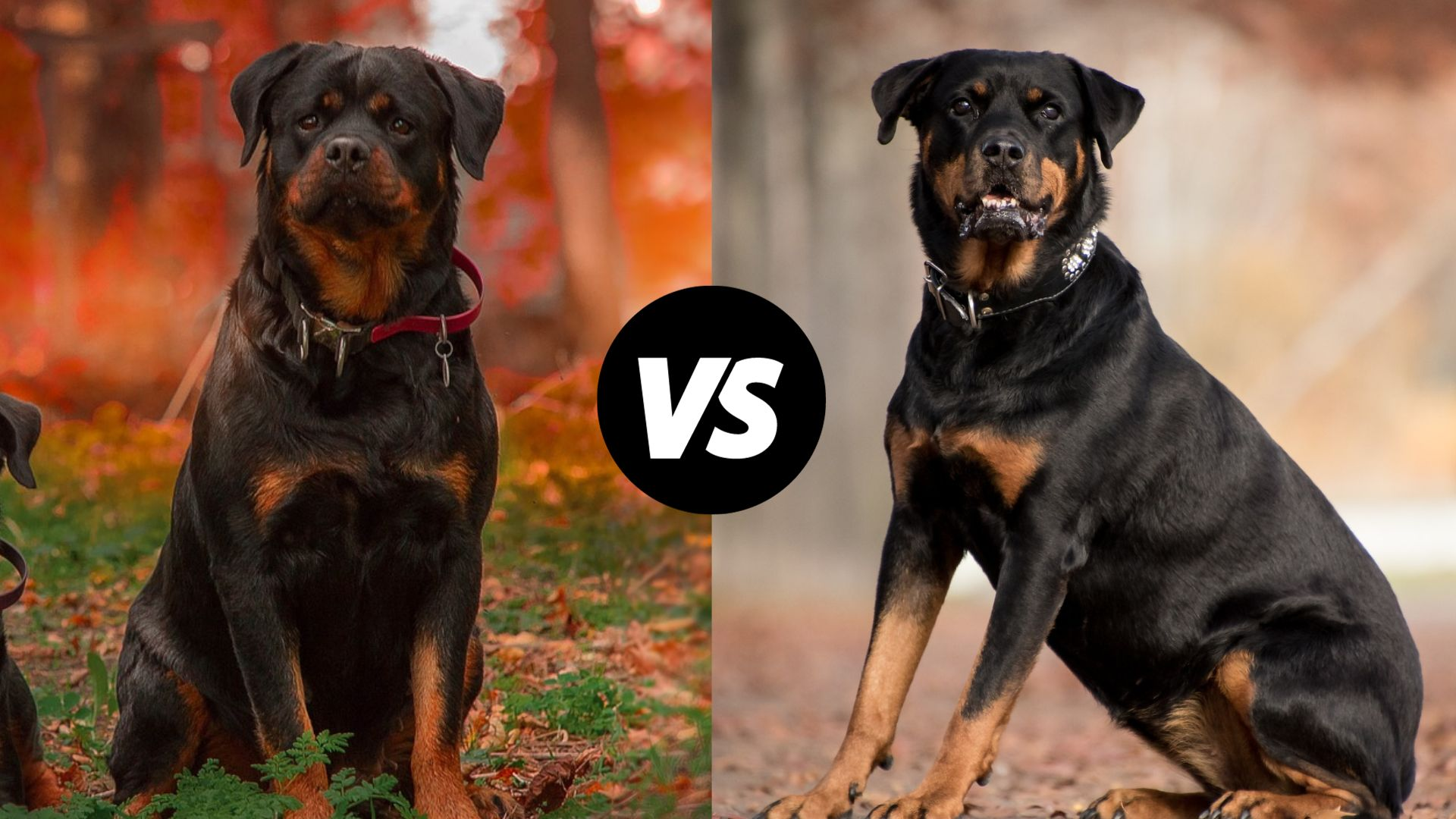
When it comes to choosing a Rottweiler, many owners discover that there are two main bloodlines — American and German. While both share the same ancestry and breed name, subtle differences in appearance, temperament, and breeding standards set them apart.
Deciding between these two lines can shape your experience as an owner. Whether you’re looking for a family companion or a working protector, understanding what makes each line unique will help you find the perfect fit for your home and lifestyle.
Origins and Breed Standards
Both the American and German Rottweiler lines stem from the same ancient breed that originated in Rottweil, Germany. These dogs were developed as working animals — driving cattle, pulling carts, and guarding property.
Over time, breeding practices in different countries created two distinct standards. In Germany, breeders follow strict regulations through the ADRK (Allgemeiner Deutscher Rottweiler Klub). Their focus remains on working ability, structure, and temperament.
In the United States, the American Kennel Club (AKC) governs breeding standards. American lines often lean toward show appearance and companion suitability, with slightly more flexibility in structure and style.
The result? Two Rottweiler types that look similar at first glance but reflect different breeding priorities.
Physical Differences Between the Lines
While both lines are strong, athletic, and powerful, their physical builds show subtle variations.
German Rottweilers
- More muscular and compact in build
- Broader heads with pronounced jaws
- Thick necks and deep chests
- Natural tails (tail docking is banned in Germany)
- Strictly defined black coats with rich rust markings
American Rottweilers
- Slightly taller and leaner
- Longer legs and narrower bodies
- Tails often docked (a traditional U.S. standard)
- More variation in markings and head shape
- Sometimes bred more for appearance than work
These visual differences might seem small, but they influence how each dog moves, performs, and behaves in different settings.
Temperament and Personality Traits
Both American and German Rottweilers share a foundation of loyalty, intelligence, and protectiveness. However, the nuances in breeding focus shape how these qualities express themselves.
German Rottweilers are bred primarily for their working temperament. They are alert, confident, and disciplined — dogs that thrive when they have a purpose. They make exceptional protection, police, or service dogs because of their focus and composure under pressure.
American Rottweilers often lean toward family life. They are still protective but tend to be more social and easygoing when raised correctly. This makes them a better fit for households looking for a loyal family guardian rather than a high-drive working dog.
Regardless of the line, both types need firm, calm leadership, consistent training, and early socialization. A Rottweiler’s temperament depends more on upbringing than location of birth.
Training and Socialization
Training is where the differences between the lines become most apparent.
A German-line Rottweiler responds best to structured routines, advanced obedience work, and mental challenges. They crave leadership and respect confident, fair owners. Without clear guidance, they may become dominant or overly protective.
An American-line Rottweiler, while still intelligent and trainable, often shows more flexibility in adapting to different environments. They do well in obedience, agility, and even therapy work — provided they receive consistent boundaries and plenty of positive reinforcement.
No matter which line you choose, Rottweilers need early socialization. Introduce them to people, animals, and different environments from a young age. Positive exposure shapes confidence, prevents fear-based behavior, and helps your dog develop a balanced temperament.
Energy Levels and Exercise Needs
Rottweilers, no matter their lineage, are energetic dogs with powerful bodies and minds. However, the German line typically carries a higher work drive.
German-line Rottweilers require more physical and mental stimulation. They thrive on structured activities such as obedience drills, tracking, or protection training. They love having a task and may become restless or bored without one.
American-line Rottweilers still need daily exercise — around 60 to 90 minutes — but can adapt better to family life with play sessions, long walks, and casual obedience training.
In both cases, neglecting exercise can lead to behavioral problems like chewing, barking, or digging. Rottweilers are working dogs at heart, and a tired Rottweiler is a happy one.
Health and Longevity
Health depends largely on breeder ethics, not geography. Still, the ADRK’s strict regulations in Germany help ensure that only dogs meeting specific health and temperament standards reproduce.
German Rottweilers generally undergo mandatory testing for hips, elbows, and heart health before breeding approval. This careful selection helps maintain structural soundness and working capability.
American Rottweilers, on the other hand, can vary more in quality depending on the breeder. Some prioritize looks over health, which can lead to issues like hip dysplasia or joint problems.
Whichever line you choose, always work with a reputable breeder who conducts health screenings and raises well-socialized puppies.
Which Rottweiler Line Fits You Best?
Choosing between American and German Rottweilers depends on your lifestyle, experience, and goals as a dog owner.
You might prefer a German Rottweiler if:
- You’re an experienced owner familiar with strong working breeds
- You want a serious training partner or working dog
- You have time for intensive training and exercise
You might prefer an American Rottweiler if:
- You want a loyal, protective family companion
- You have moderate experience with large breeds
- You live in a home where adaptability and sociability matter most
Both lines are intelligent, loyal, and loving. The real question is: what kind of relationship do you want to build?
Conclusion
The debate between American and German Rottweilers isn’t about which is better — it’s about which aligns with your lifestyle and expectations.
German Rottweilers are the powerhouse workers, bred for discipline and purpose. American Rottweilers, on the other hand, often bring a touch more flexibility and sociability while retaining their guardian instincts.
Whichever line you choose, you’ll find a loyal, intelligent companion devoted to you and your family. With proper care, training, and love, a Rottweiler of any lineage will be a steadfast friend for life.
FAQ
1. Are American and German Rottweilers different breeds?
No. They’re the same breed but bred under different national standards that emphasize different traits.
2. Which line is larger, American or German?
German Rottweilers tend to be shorter and stockier, while American lines are often taller and leaner.
3. Are German Rottweilers more aggressive?
No. They’re confident and protective but not aggressive when properly trained and socialized.
4. Can an American Rottweiler be trained for work?
Yes. With proper training and structure, American Rottweilers can excel in obedience, protection, and service work.
5. Which Rottweiler lives longer?
Both lines have similar lifespans, averaging 8 to 10 years, though healthy breeding and proper care can extend that.