Reactive rottweiler training is not about suppressing your dog’s personality. Instead, it is about guiding powerful emotions into calm, controlled responses. If your Rottweiler barks, lunges, or stiffens at other dogs, strangers, or sudden noises, you are not alone. Many devoted owners face the same challenge.
The good news? Reactivity is manageable. With consistency, patience, and structure, you can help your Rottweiler build calm and confidence. Think of it like teaching a strong athlete to master balance, not just strength. Power without control creates chaos. Power with calm focus creates trust.
Understanding Reactive Behavior in Rottweilers
Before you begin reactive rottweiler training, you need to understand why reactivity happens. Rottweilers are intelligent, loyal, and protective. Those qualities make them wonderful companions. However, those same traits can fuel intense reactions if they feel unsure.
Reactivity often comes from fear, frustration, or overexcitement. It is rarely true aggression. For example, your dog may bark at another dog because he feels threatened. Alternatively, he may lunge because he wants to greet but lacks impulse control.
Because Rottweilers are strong and confident by nature, small emotional triggers can look dramatic. Yet beneath the surface, there is usually insecurity or overstimulation.
Therefore, effective reactive rottweiler training focuses on emotional regulation, not punishment. When you address the feeling, the behavior changes.
Why Calm and Confidence Matter
Calm behavior does not mean a dull personality. It means controlled energy. Confidence does not mean dominance. It means emotional security.
When your Rottweiler feels confident, he does not need to overreact. He does not bark to create distance. He does not lunge to control space. Instead, he observes and waits for guidance.
Reactive rottweiler training builds this internal stability step by step. You are teaching your dog to pause before reacting. You are replacing explosive responses with thoughtful ones.
Imagine your dog as a coiled spring. Without direction, it snaps outward. With training, it becomes steady steel.
Start Reactive Rottweiler Training at Home
Many owners try to fix reactivity outside first. However, progress begins in low-distraction environments.
At home, you can build foundational skills:
- Eye contact on cue
- Loose leash walking indoors
- Calm “place” training
- Reliable sit and down stays
- Impulse control exercises
These basics create structure. Moreover, they teach your Rottweiler to look to you for guidance.
For example, practice short sessions where your dog earns rewards for calm eye contact. Keep sessions brief. Five minutes is enough. Over time, this simple exercise strengthens focus.
Additionally, work on relaxation training. Teach your dog to settle on a mat. Reward slow breathing and stillness. This practice builds emotional control, which is essential in reactive rottweiler training.
Identify Triggers Before Facing Them
You cannot manage what you do not measure. Therefore, start tracking triggers.
Ask yourself:
- Does your dog react to other dogs?
- Does he react to bicycles or joggers?
- Is the reaction worse at close distances?
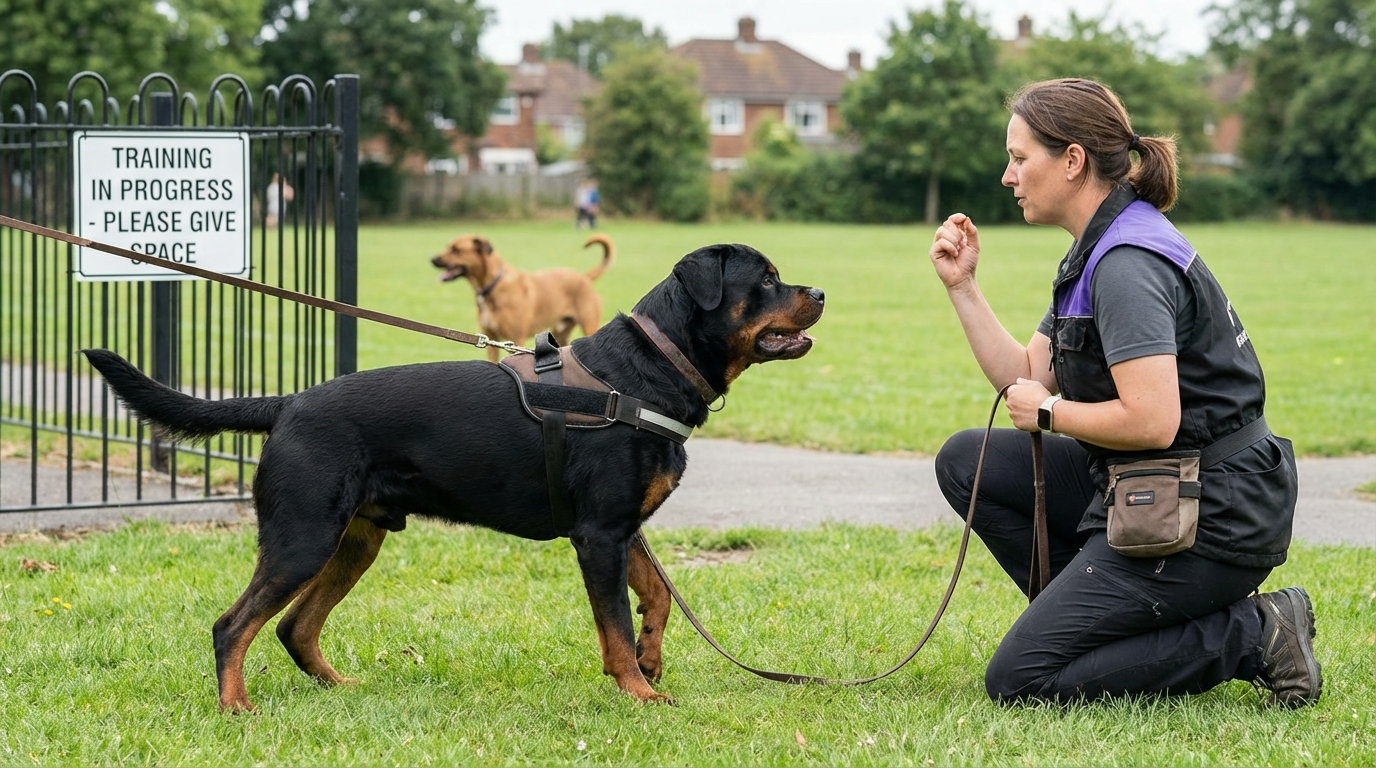
Distance matters. Reactivity increases when triggers feel too close. This is called the threshold. Reactive rottweiler training works best when you stay below that threshold.
If your dog explodes at 10 feet, begin training at 40 feet. At that distance, he may notice the trigger but remain manageable. That is your starting point.
Progress will be gradual. However, consistency pays off.
Desensitization and Counterconditioning Techniques
Reactive rottweiler training often uses two key methods: desensitization and counterconditioning.
Desensitization means exposing your dog to a trigger at a low intensity. Counterconditioning means pairing that trigger with something positive.
For example, when your dog sees another dog at a safe distance, reward calm behavior immediately. Use high-value treats. Timing is crucial. The reward must come while your dog is still calm.
Over time, your Rottweiler begins to associate the trigger with positive outcomes. Instead of tension, he anticipates rewards.
This process takes repetition. However, it rewires emotional responses.
If your dog becomes overwhelmed, increase distance. Training should feel challenging but achievable. Pushing too far can set progress back.
Impulse Control Exercises for Reactive Rottweiler Training
Impulse control is the backbone of calm behavior. Without it, strong dogs act before thinking.
Incorporate exercises like:
- “Wait” at doorways
- Controlled leash exits
- Structured feeding routines
- Delayed toy release
These small rituals teach patience. They reinforce the idea that calm behavior unlocks rewards.
Furthermore, impulse control carries over into outdoor environments. A dog who can wait for food can also pause before reacting.
Reactive rottweiler training thrives on these daily habits.
Leash Handling and Body Language
Your posture affects your dog. If you tighten the leash in anticipation, your Rottweiler senses tension. Consequently, he prepares for conflict.
Instead, practice relaxed leash handling. Keep slack when possible. Breathe deeply. Move confidently.
Dogs read body language better than words. Therefore, your calm presence influences their response.
Additionally, avoid jerking the leash. Sudden corrections can increase anxiety. While some structure is necessary, harsh reactions often escalate reactivity.
Balanced, consistent guidance works best.
Building Confidence Through Controlled Exposure
Confidence grows through success. Therefore, structure controlled exposures.
Start in quiet areas. Gradually introduce mild distractions. Celebrate small wins.
For instance, if your dog sees another dog at a distance and remains calm for three seconds, reward that moment. Next time, aim for five seconds.
Reactive rottweiler training is like building muscle. Small repetitions lead to strength.
You may also incorporate confidence-building activities:
- Obedience games
- Nose work exercises
- Agility foundations
- Structured play sessions
These activities give your Rottweiler a job. A dog with purpose feels secure.
Socialization the Right Way
Socialization does not mean forced greetings. In fact, pushing interactions can worsen reactivity.
Instead, focus on neutral exposure. Allow your dog to observe without pressure. Calm coexistence is more valuable than chaotic play.
For reactive rottweiler training, quality matters more than quantity. Choose controlled environments. Avoid crowded dog parks early on.
If possible, work with a calm, stable dog partner. Short, structured sessions are best. End on a positive note.
Managing Setbacks in Reactive Rottweiler Training
Setbacks happen. Even with progress, your dog may have a reactive moment.
Do not panic. Do not punish harshly. Instead, assess the situation.
Were you too close? Was your dog tired? Were there multiple triggers?
Learning from setbacks strengthens your plan. Progress is rarely linear. However, persistence brings lasting change.
Remember, reactive rottweiler training focuses on emotional stability. That takes time.
The Role of Professional Guidance
Sometimes, professional support accelerates progress. A qualified trainer can observe body language and refine techniques.
Look for trainers experienced with large working breeds. Positive reinforcement methods are highly effective. In some cases, balanced approaches may be used thoughtfully.
If reactivity is severe, a veterinary behaviorist may help. Occasionally, anxiety management tools are recommended. This support can create space for training to succeed.
Seeking help is not failure. It is commitment.
Consistency Builds Calm Confidence
Reactive rottweiler training is a daily practice. It is built through repetition, patience, and clear communication.
Short, focused sessions work best. Celebrate improvement, no matter how small. Over weeks and months, patterns shift.
Your Rottweiler begins to trust your leadership. Instead of reacting instantly, he pauses. Instead of lunging, he looks at you.
That pause is progress.
Living With a Calm, Confident Rottweiler
When calm and confidence replace reactivity, daily life changes. Walks feel manageable. Guests feel less stressful. You feel more relaxed.
Importantly, your dog feels safer. Confidence creates freedom. It allows your Rottweiler to move through the world without constant tension.
Reactive rottweiler training is not about creating a perfect dog. It is about building a balanced partnership. You guide. Your dog listens. Together, you navigate challenges.
Strong dogs need strong guidance. However, strength does not mean force. It means clarity, patience, and steady leadership.
In the end, helping your reactive Rottweiler build calm and confidence is an investment. It requires time. Yet the reward is profound. You gain trust, safety, and a deeper bond that lasts a lifetime.
FAQ
- Can reactive rottweiler training completely stop barking and lunging?
While training greatly reduces reactions, complete elimination depends on consistency and individual temperament. Most dogs show significant improvement. - How long does reactive rottweiler training take?
Progress varies. Some owners see changes in weeks, while deeper confidence building may take several months. - Is reactivity the same as aggression?
No. Reactivity is often fear or frustration based. Aggression involves intent to harm. Proper evaluation helps clarify the difference. - Should I avoid all triggers during training?
Avoid overwhelming situations, but controlled exposure is necessary. Staying below threshold is key. - Can older Rottweilers improve with training?
Yes. Age does not prevent growth. With patience and structured guidance, older dogs can build calm and confidence.