
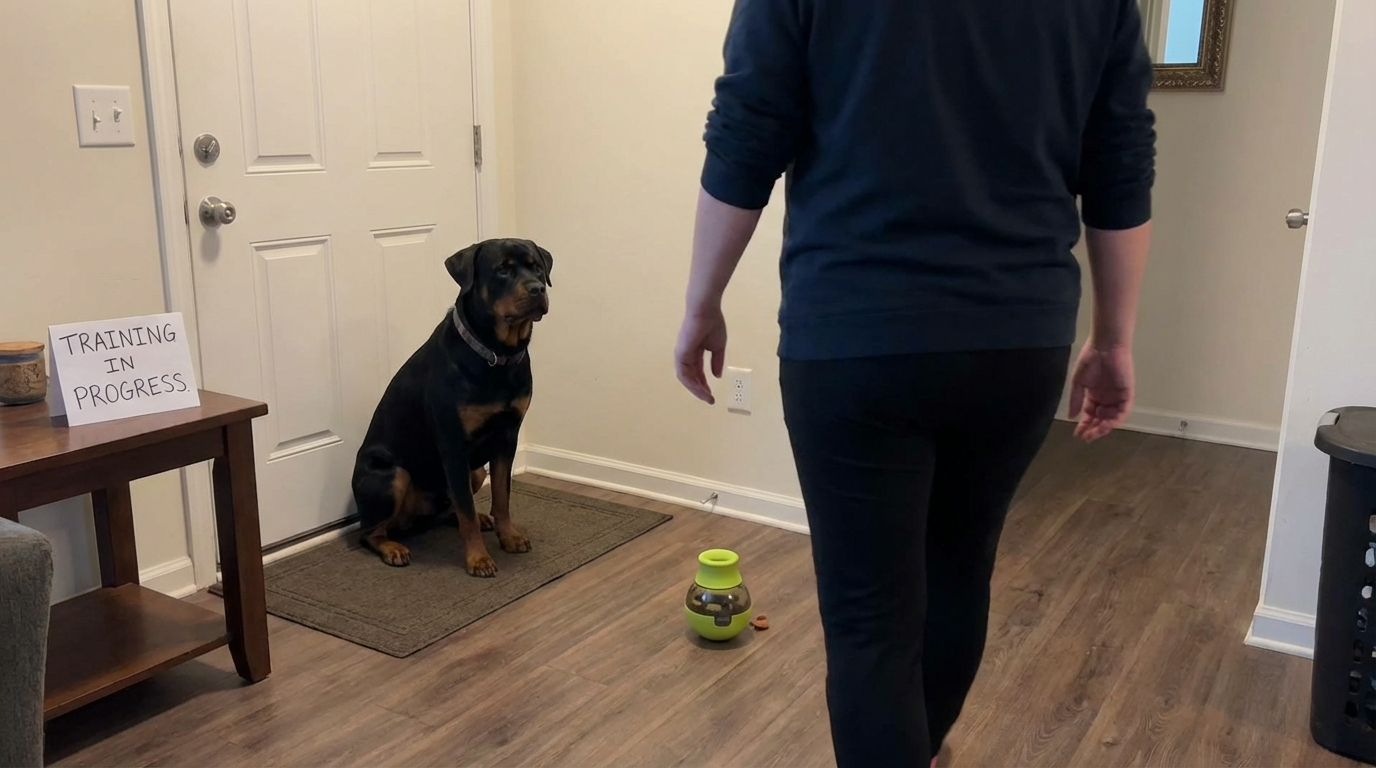
Rottweiler separation training is essential if your dog struggles when left alone. These loyal, intelligent dogs form deep bonds with their families. However, that loyalty can turn into anxiety when the house grows quiet and you step out the door.
Have you ever returned home to chewed furniture or nonstop barking complaints from neighbors? If so, you know how stressful separation issues can be. Fortunately, independence can be taught. With patience, structure, and consistency, your Rottweiler can learn that being alone is safe.
Think of independence like a muscle. It does not grow overnight. Instead, it strengthens through repetition and small victories. When you approach rottweiler separation training the right way, calm confidence replaces panic.
Understanding Why Rottweilers Struggle When Left Alone
Before you begin rottweiler separation training, it helps to understand why the problem develops. Rottweilers were bred as working dogs. They guarded livestock and stayed close to their handlers. Because of this history, proximity feels natural to them.
When suddenly left alone for hours, a Rottweiler may feel insecure. Some dogs pace. Others bark or whine. In severe cases, destruction occurs. Although it looks like bad behavior, anxiety is usually the root cause.
Moreover, sudden routine changes often trigger separation stress. A new job schedule, a move, or even a family member leaving can shift your dog’s emotional balance. Therefore, independence must be introduced gradually.
Importantly, rottweiler separation training does not rely on punishment. Yelling after the fact only increases confusion. Instead, calm structure teaches emotional resilience.
Signs Your Rottweiler Needs Separation Training
Not every Rottweiler dislikes being alone. Some rest peacefully. However, certain signs suggest independence skills need improvement.
You may notice:
- Excessive barking after you leave
- Scratching at doors or windows
- Chewing furniture or personal items
- Drooling or panting heavily
- Accidents despite house training
These behaviors are communication. Your dog is saying, “I do not feel safe alone.” Therefore, rottweiler separation training focuses on building security step by step.
The goal is not emotional detachment. Rather, it is healthy independence.
Start Rottweiler Separation Training with Small Absences
When building independence in Rottweilers left alone, short practice sessions work best. Start with departures that last only a few minutes.
Put on your shoes. Pick up your keys. Then sit back down. Repeat this process several times daily. These actions are departure cues. By practicing them without leaving, you reduce their emotional charge.
Next, step outside for one minute. Return calmly. Do not make a dramatic greeting. Instead, keep your energy neutral. Over time, extend the duration gradually.
Consistency is crucial. If your dog remains calm for five minutes, increase to seven. However, if anxiety appears, shorten the time again. Rottweiler separation training should feel manageable, not overwhelming.
Think of it as climbing stairs, not leaping floors.
Create a Safe and Comfortable Environment
Environment matters greatly in rottweiler separation training. A predictable, comfortable space reduces stress.
Choose a quiet area of your home. Some dogs feel secure in a crate if crate training has been done positively. Others prefer a gated room. Soft bedding helps. Familiar scents offer reassurance.
Additionally, background noise can reduce isolation. Gentle music or white noise may mask outside triggers. However, avoid overstimulation. The space should promote relaxation.
Avoid leaving your Rottweiler with high-energy toys during early training stages. Instead, focus on calm enrichment such as a stuffed food puzzle. This associates your departure with something pleasant.
Over time, the environment itself signals safety.
Build Independence Through Structured Routine
Dogs thrive on routine. Therefore, rottweiler separation training benefits from predictable daily patterns.
Feed at consistent times. Walk at regular intervals. Schedule rest periods. When life follows a rhythm, your Rottweiler feels more secure.
Before leaving, provide physical exercise. A brisk walk or short training session burns nervous energy. However, do not overstimulate right before departure. Allow a cool-down period.
Mental stimulation also supports independence. Obedience drills, nose work games, and problem-solving tasks tire the brain. A mentally satisfied dog relaxes more easily when alone.
Structure builds stability. Stability builds confidence.
Avoid Common Separation Training Mistakes
While working on rottweiler separation training, certain mistakes can slow progress.
First, avoid long emotional goodbyes. Although it feels loving, dramatic exits increase anxiety. Keep departures calm and brief.
Second, do not punish destruction caused by separation stress. Your dog connects punishment with your return, not the earlier action. Consequently, trust may weaken.
Third, avoid leaving suddenly for extended periods during early training. Rapid changes overwhelm sensitive dogs.
Finally, resist the urge to “test” your dog too soon. Gradual progress ensures lasting results.
Teach Calm Behaviors Before You Leave
Teaching a calm settle cue strengthens rottweiler separation training. Practice asking your dog to lie on a mat. Reward relaxed body posture. Praise slow breathing.
Gradually increase the duration of this settle behavior. Then, practice stepping away while your dog remains on the mat. Return and reward calmness.
This exercise builds emotional control. Your Rottweiler learns that distance does not equal abandonment.
Additionally, impulse control exercises support independence. For example:
- Wait before exiting doors
- Sit calmly before receiving meals
- Pause before play begins
These habits reinforce patience. Patience carries over into alone time.
Gradual Desensitization to Departure Cues
Many dogs react before you even leave. Picking up keys or putting on a jacket can trigger stress. Therefore, rottweiler separation training includes desensitizing these signals.
Throughout the day, randomly pick up your keys and put them down. Put on your coat and remove it. Open and close the door without exiting.
When these actions no longer predict absence, anxiety decreases. This step may feel repetitive. However, it rewires emotional responses.
Over time, departure cues lose their power.
When to Use Professional Support
Sometimes, building independence in Rottweilers left alone requires expert guidance. If your dog injures himself, escapes confinement, or shows extreme panic, consult a professional trainer or veterinary behaviorist.
In certain cases, anxiety management plans are recommended. This support does not replace training. Instead, it creates a calmer foundation for progress.
Seeking help reflects dedication, not failure.
Maintaining Progress in Rottweiler Separation Training
As your dog improves, maintain practice sessions. Even when independence grows, occasional short departures reinforce stability.
Continue offering structured exercise. Maintain predictable routines. Keep greetings calm.
If setbacks occur, return to shorter durations temporarily. Regression can happen during life changes. However, consistency restores confidence.
Rottweiler separation training is not a one-time fix. It is an ongoing partnership built on trust.
Emotional Independence Strengthens Your Bond
Some owners worry that independence weakens connection. In reality, the opposite happens.
When your Rottweiler feels secure alone, he greets you with balanced energy. Anxiety no longer clouds your relationship. Instead, calm confidence replaces panic.
Imagine your dog resting peacefully while you handle daily responsibilities. That image becomes reality through steady training.
Building independence in Rottweilers left alone is an investment in emotional health. It creates freedom for both of you.
Conclusion
Rottweiler separation training transforms anxiety into resilience. Through gradual exposure, structured routine, and calm leadership, independence grows steadily. Although progress requires patience, the rewards are profound. Your Rottweiler learns that being alone is safe, temporary, and manageable. In turn, your home becomes peaceful, your bond strengthens, and confidence replaces fear. With consistency and compassion, calm independence is absolutely achievable.
FAQ
- How long does rottweiler separation training take?
Progress varies by dog. Mild cases may improve within weeks, while deeper anxiety can require several months of consistent work. - Can older Rottweilers learn independence?
Yes. Age does not prevent growth. With structured training and patience, older dogs can build calm confidence. - Should I crate my Rottweiler during separation training?
Crates can help if introduced positively. However, some dogs prefer a gated room. Choose what feels safest for your dog. - Is separation anxiety the same as boredom?
No. Boredom improves with enrichment. Separation anxiety involves emotional distress and requires gradual desensitization. - What if my Rottweiler regresses after improvement?
Temporary setbacks happen. Return to shorter absences and rebuild gradually. Consistency restores progress.