Raising a Rottweiler puppy is exciting, but it also comes with a serious responsibility. This breed is loyal, intelligent, powerful, and deeply connected to its family. Because of that, Rottweiler Puppy Obedience Training should begin early, long before the puppy grows into a strong adult dog. Early training is not about being strict or harsh. Instead, it teaches your puppy how to understand your expectations, trust your guidance, and make better choices in everyday situations.
A young Rottweiler learns quickly, especially during the first few months at home. Therefore, the habits you allow now can shape the behavior you see later. A small puppy jumping on guests may seem cute today. However, the same behavior can become unsafe when that puppy reaches adult size. In the same way, pulling on the leash, guarding toys, ignoring commands, or rushing through doorways can become much harder to manage if they are not addressed early. That is why early obedience gives your puppy a clear and fair foundation.
Obedience training also helps build communication. Your puppy is not born knowing what “sit,” “stay,” “leave it,” or “come” means. As a result, patient repetition helps your Rottweiler connect words, actions, and rewards. Over time, this creates a calmer dog that understands how to respond instead of guessing. For a breed as strong and confident as the Rottweiler, that kind of communication is essential.
Early training also supports the bond between you and your puppy. When training feels positive, consistent, and rewarding, your puppy learns that listening to you leads to good things. This builds trust rather than fear. In addition, it gives your puppy mental stimulation, which is especially important for a working breed. A bored Rottweiler may create its own entertainment, and that can lead to chewing, digging, barking, or attention-seeking behavior. Training gives that active mind something useful to do.
Why Early Training Shapes a Better Adult Dog
Rottweilers mature into large, muscular dogs with natural confidence. Because of this, early structure matters more than many new owners realize. Rottweiler Puppy Obedience Training helps guide that confidence in a healthy direction before your puppy becomes strong enough to challenge boundaries physically. It teaches impulse control, patience, and respect in simple daily moments.
Puppies learn through repetition and consistency. If your Rottweiler learns that sitting politely earns attention, that habit can replace jumping. If your puppy learns to wait before eating, going outside, or exiting the car, patience becomes part of daily life. These small lessons may seem basic, yet they create a dog that can stay calmer when excitement rises.
Early training also prevents confusion. Without clear rules, a puppy may test different behaviors to see what works. For example, if barking sometimes earns attention, the puppy may bark more often. If pulling sometimes gets them closer to another dog, they may pull harder next time. However, when your responses stay consistent, your Rottweiler learns faster. Clear routines reduce stress for both the dog and the owner.
Another major benefit is confidence. Some people assume obedience is only about control, but good training also helps a puppy feel secure. A puppy that understands basic cues knows how to succeed. Because of that, training can reduce anxiety in unfamiliar places. Your Rottweiler learns to look to you for direction rather than reacting on their own.
Social maturity also improves when obedience starts early. A trained puppy can learn to greet people politely, walk calmly near other dogs, and settle in busy spaces. These skills are important because Rottweilers can look intimidating to strangers, even when they are friendly. A well-mannered Rottweiler helps others feel safer and helps your dog enjoy more freedom in public settings.
Rottweiler Puppy Obedience Training also helps prevent behavior problems before they become patterns. Many common issues do not appear suddenly. They grow from repeated small moments. A puppy that gets rewarded for rough play may become mouthy. A puppy that is allowed to guard food may become more protective. Early training gives you a chance to guide these behaviors while your puppy is still learning.
Building Trust Through Positive Structure
A Rottweiler needs leadership, but leadership does not mean intimidation. The best approach is calm, confident, and consistent. Rottweiler Puppy Obedience Training works best when your puppy sees you as trustworthy. That means you set rules, reward good choices, and correct mistakes without anger. This creates respect without damaging the bond.
Positive reinforcement is especially useful with Rottweilers because they are intelligent and often eager to work. Food rewards, praise, toys, and play can all motivate your puppy. However, timing matters. Reward the behavior you want right away, so your puppy understands what earned the reward. For example, if your puppy sits instead of jumping, praise and reward the sit immediately. This helps the puppy repeat the better choice.
Structure should appear throughout the day, not only during formal training sessions. Short lessons are usually better than long sessions because puppies have limited attention spans. You can ask for a sit before meals, a wait before opening the door, or a calm response before play begins. As a result, obedience becomes part of normal life rather than a separate task.
Consistency matters across the whole household. If one person allows jumping while another corrects it, the puppy receives mixed messages. Therefore, everyone should use the same cues and rules. This does not need to feel complicated. Simple agreements, such as no jumping, no biting hands, no rushing through doors, and no pulling on the leash, can make daily training much easier.
Rottweilers also respond well to routines. Predictable feeding times, potty breaks, walks, rest periods, and training moments help puppies feel secure. When a puppy knows what to expect, they often become calmer. In addition, routines make it easier for owners to notice behavior changes, energy patterns, and training progress.
Rottweiler Puppy Obedience Training should also include gentle handling. Your puppy should learn to accept having their paws touched, ears checked, collar held, and body brushed. These lessons help with grooming, vet visits, and everyday care. Start slowly and reward calm behavior. Over time, your puppy learns that handling is normal and safe.
Leash manners deserve early attention as well. A small Rottweiler puppy may not pull very hard yet, but that changes quickly. Teaching loose-leash walking early helps prevent future struggles. Start in quiet areas with few distractions. Reward your puppy when they walk near you, check in with you, or respond to their name. Gradually add more distractions as your puppy improves.
Socialization and Obedience Work Together
Socialization is not just exposure. It is the process of helping your puppy have safe, positive experiences with the world. Obedience gives your puppy the tools to handle those experiences. For that reason, Rottweiler Puppy Obedience Training and socialization should work together from the beginning.
A well-socialized Rottweiler puppy learns that different people, sounds, places, surfaces, and situations are normal. However, socialization should never mean overwhelming the puppy. Instead, introduce new experiences gradually. Let your puppy observe from a comfortable distance, then reward calm behavior. If your puppy seems worried, create more space and try again later.
Early obedience can also reduce reactivity. Rottweilers are naturally alert, and many notice changes in their environment quickly. This trait can be helpful, but it needs direction. If your puppy barks at every new sound or lunges toward every dog, the behavior may grow. However, if you reward calm observation and teach focus cues early, your puppy can learn to stay composed.
Meeting other dogs should be done carefully. Not every dog is a good match for a young Rottweiler. Choose calm, healthy, well-mannered dogs for early introductions. Avoid chaotic dog parks during the early training stage, especially if your puppy is still learning recall and impulse control. Controlled meetings are usually safer and more useful.
People introductions matter too. Rottweilers can become deeply loyal to their families, so they need positive experiences with different kinds of people. Your puppy should meet adults, children, visitors, people wearing hats, delivery workers, and people moving in unusual ways. Still, each meeting should be calm and respectful. Do not let people overwhelm, tease, or roughhouse with your puppy.
Rottweiler Puppy Obedience Training can help your dog become a good ambassador for the breed. Sadly, Rottweilers are sometimes judged by appearance alone. A calm, obedient, friendly dog can change that impression. More importantly, your dog will be safer, more relaxed, and easier to include in family life.
Preventing Common Puppy Problems Early
Many Rottweiler puppy problems are easier to prevent than fix. Mouthiness, jumping, leash pulling, guarding, and ignoring commands often start small. Therefore, early training should focus on building better habits before the wrong ones become rewarding.
Mouthing is common in puppies, especially during teething. However, Rottweilers have strong jaws, so they must learn gentle behavior early. Redirect biting to safe chew toys and stop play briefly when teeth touch skin. Then, reward calm play. Over time, your puppy learns that gentle behavior keeps fun going.
Jumping is another habit to address early. Puppies jump because they want attention, and many owners accidentally reward it by touching, laughing, or talking to the puppy. Instead, reward four paws on the floor or a sit. Ask visitors to follow the same rule. This helps your puppy learn polite greetings before size becomes a problem.
Food manners are also important. Teach your puppy to wait calmly before meals and accept your presence near the food bowl without tension. However, avoid bothering your puppy while eating just to “test” them. Instead, build trust by occasionally adding something better to the bowl or trading for treats. This creates a positive association with people near food.
Recall is one of the most important safety skills. Start indoors, then practice in fenced areas before trying more distracting places. Use a happy tone, reward generously, and never punish your puppy for coming to you. If coming when called leads to something unpleasant, your puppy may hesitate next time. Rottweiler Puppy Obedience Training should make recall feel rewarding and reliable.
Crate training can also support obedience and household calm. A crate should never feel like punishment. Instead, it can become a safe resting space. Use treats, soft bedding, and short positive sessions. A crate-trained puppy may settle better, sleep more peacefully, and avoid destructive behavior when unsupervised.
Another common challenge is overexcitement. Rottweiler puppies can be playful and energetic, especially around family members. Teach calm breaks during play. Ask for a sit, reward it, then restart the game. This shows your puppy that calm behavior does not end fun. In fact, it helps fun continue.
Rottweiler Puppy Obedience Training also teaches owners to notice progress. Training is not always perfect, and puppies will make mistakes. Still, small improvements matter. A quicker sit, a calmer greeting, a better leash moment, or a shorter barking episode all show growth. When you reward progress, your puppy gains confidence and motivation.
How to Make Training Part of Everyday Life
The most successful training plans are simple enough to repeat every day. You do not need long sessions or complicated methods. Instead, focus on short, positive moments that fit naturally into your routine. Rottweiler Puppy Obedience Training becomes easier when it feels like part of daily care.
Start with basic cues such as sit, down, stay, come, leave it, drop it, and watch me. These cues help in real situations. “Sit” can create polite greetings. “Down” can support calm behavior indoors. “Leave it” can prevent your puppy from grabbing unsafe items. “Drop it” protects your hands and your belongings. “Watch me” helps redirect attention.
Keep sessions short, especially with young puppies. Five minutes of focused practice can be more useful than twenty minutes of frustration. End while your puppy is still interested. This helps training feel fun. In addition, use rewards your puppy truly values. Some Rottweilers love food, while others respond strongly to toys or praise.
Train in different places once your puppy understands a cue. Dogs do not automatically generalize commands. A puppy that sits in the kitchen may not sit at the park without practice. Therefore, begin in quiet spaces, then slowly add distractions. This builds real-world reliability.
Your tone also matters. A calm voice helps your puppy stay focused. If you become frustrated, pause the session and try again later. Puppies learn better when they feel safe. Because of that, patience is not just kind; it is effective.
Physical exercise helps, but mental exercise is just as important. Rottweilers were bred to work, think, and cooperate with people. Training, puzzle toys, scent games, and structured play can reduce boredom. A mentally satisfied puppy is often easier to live with and more responsive during lessons.
Rest is equally important. Puppies need sleep to grow and process learning. An overtired puppy may bite more, bark more, or ignore cues. If training suddenly gets worse, your puppy may need a nap rather than more correction. Balanced routines help prevent unnecessary behavior struggles.
Rottweiler Puppy Obedience Training should grow with your dog. As your puppy matures, increase expectations gradually. Practice longer stays, better leash manners, calmer greetings, and stronger recall. However, keep rewarding good behavior. Even adult dogs benefit from encouragement and continued practice.
It is also wise to consider a reputable puppy class or professional trainer. Choose someone who uses humane, reward-based methods and understands large working breeds. A good trainer can help you improve timing, read body language, and handle challenges before they escalate. Group classes can also provide controlled socialization when managed well.
The Long-Term Value of Early Obedience
Early training gives your Rottweiler more than commands. It gives your dog life skills. A trained Rottweiler can relax around guests, walk safely in public, respond during distractions, and settle at home. These skills make daily life more enjoyable for everyone.
Obedience also supports safety. Because Rottweilers are strong, reliable control matters. A dog that comes when called, waits at doors, walks politely, and releases objects can avoid many dangerous situations. These lessons may protect your dog, your family, and other people.
Training can also reduce stress for your puppy. Dogs do not enjoy constant confusion. When rules are clear and fair, your puppy knows how to earn praise and rewards. This creates emotional security. Over time, your Rottweiler learns that you provide direction, safety, and consistency.
The earlier you start, the more natural these habits become. Waiting before meals, checking in on walks, responding to a name, and settling indoors can become normal parts of life. However, this only happens when owners practice consistently. Rottweiler Puppy Obedience Training works best as a lifestyle, not a one-time project.
A strong conclusion is simple: your Rottweiler puppy will grow quickly, but good habits can grow with them. Early obedience helps shape a dog that is confident without being pushy, protective without being reactive, and powerful without being difficult to manage. With patience, structure, and positive guidance, your puppy can become a steady companion who understands their place in the family.
Raising a Rottweiler well is not about controlling every move. Instead, it is about teaching your puppy how to live safely and calmly in a human world. Start early, stay consistent, and celebrate small wins. The time you invest now can make the adult years smoother, safer, and far more rewarding.
FAQ
1. When should I start training my Rottweiler puppy?
You can start simple training as soon as your puppy comes home. Begin with name recognition, sit, come, gentle handling, potty routines, and calm greetings. Keep sessions short, positive, and easy to understand.
2. Are Rottweiler puppies hard to train?
Rottweiler puppies are usually intelligent and capable learners. However, they need consistency, patience, and clear rules. They can become stubborn if training feels confusing or if boundaries change from day to day.
3. What commands should a young Rottweiler learn first?
Start with sit, come, stay, leave it, drop it, watch me, and loose-leash walking. These commands help with safety, manners, and everyday control as your puppy grows stronger.
4. How do I stop my Rottweiler puppy from jumping?
Reward calm greetings and ignore jumping when possible. Ask for a sit before giving attention. Also, make sure visitors follow the same rule, because mixed responses can slow progress.
5. Can early training prevent aggression later?
Early training can reduce the risk of fear, frustration, poor impulse control, and unmanaged guarding behavior. However, genetics, socialization, health, and handling also matter. For serious concerns, work with a qualified professional trainer or behavior expert.
Featured Image Alt Text:
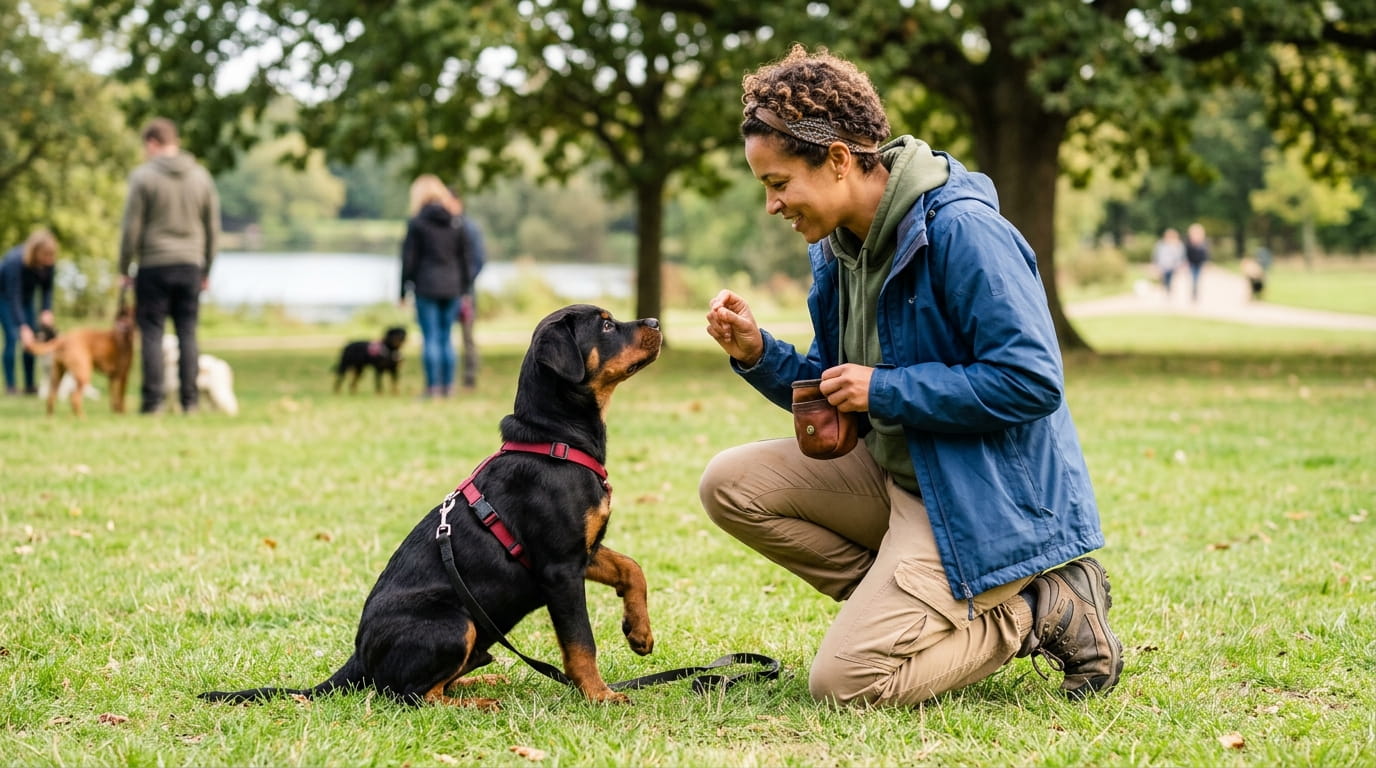
Rottweiler puppy learning early obedience training with owner in a calm home setting.