Successful rottweiler puppy house training is a cornerstone of responsible pet ownership, setting your puppy up for a lifetime of good habits. It requires patience, consistency, and positive reinforcement. Starting early is key to avoiding accidents and establishing a predictable routine for your new family member. This comprehensive guide will walk you through every essential step, ensuring a smooth and stress-free process for both you and your beloved Rottweiler puppy.
Understanding Your Rottweiler Puppy’s Natural Instincts
Before beginning rottweiler puppy house training, it is helpful to understand your puppy’s natural instincts. Puppies, like their wild ancestors, instinctively prefer to keep their sleeping areas clean. This innate desire is the foundation of effective house training. Furthermore, young puppies have small bladders and limited bladder control. Consequently, they need frequent opportunities to relieve themselves. Recognizing these natural behaviors allows you to work with your puppy, not against them. Moreover, Rottweilers are intelligent and eager to please, which makes them highly trainable with the right approach.
The Importance of Early Start and Patience
Starting rottweiler puppy house training as soon as you bring your puppy home is crucial. The earlier you begin, the fewer opportunities your puppy will have to develop undesirable habits. Patience is also paramount throughout this process. Accidents will happen, and that is a normal part of puppyhood. Responding with calm consistency, rather than frustration, will foster a positive learning environment. Remember, your puppy is learning a completely new skill, and it takes time and repetition to master it.
Establishing a Consistent Routine for Potty Breaks
The most critical element of rottweiler puppy house training is consistency. Take your puppy out frequently: first thing in the morning, after every meal, after waking from naps, after playtime, and right before bedtime. For instance, a young puppy (8-12 weeks) may need to go out every 1-2 hours. As they grow, their bladder control will improve, and the intervals can gradually lengthen. Use a specific phrase like “go potty” or “outside” each time to create an association. This verbal cue will eventually help your puppy understand what is expected of them.
Rewarding Good Behavior
Reward immediately with praise and a small, high-value treat when they eliminate outside. The timing of the reward is critical; it must occur within seconds of them finishing their business. This immediate positive reinforcement helps your puppy connect the act of eliminating outside with a pleasant outcome. Furthermore, make outdoor potty breaks a positive experience. Avoid rushing them or making it stressful. Allow them a few moments to sniff around before doing their business.
Handling Accidents Indoors
Avoid punishment for accidents inside. Scolding or rubbing your puppy’s nose in their mess will only make them fearful of you and potentially cause them to hide their accidents in the future. Instead, clean thoroughly with an enzymatic cleaner to remove odors that might attract them back to the same spot. Puppies are attracted to the scent of their previous eliminations. Therefore, eliminating the odor is essential for preventing repeat occurrences. A consistent schedule, furthermore, helps them learn when and where to relieve themselves, significantly reducing indoor accidents.
Crate Training Integration and Supervision
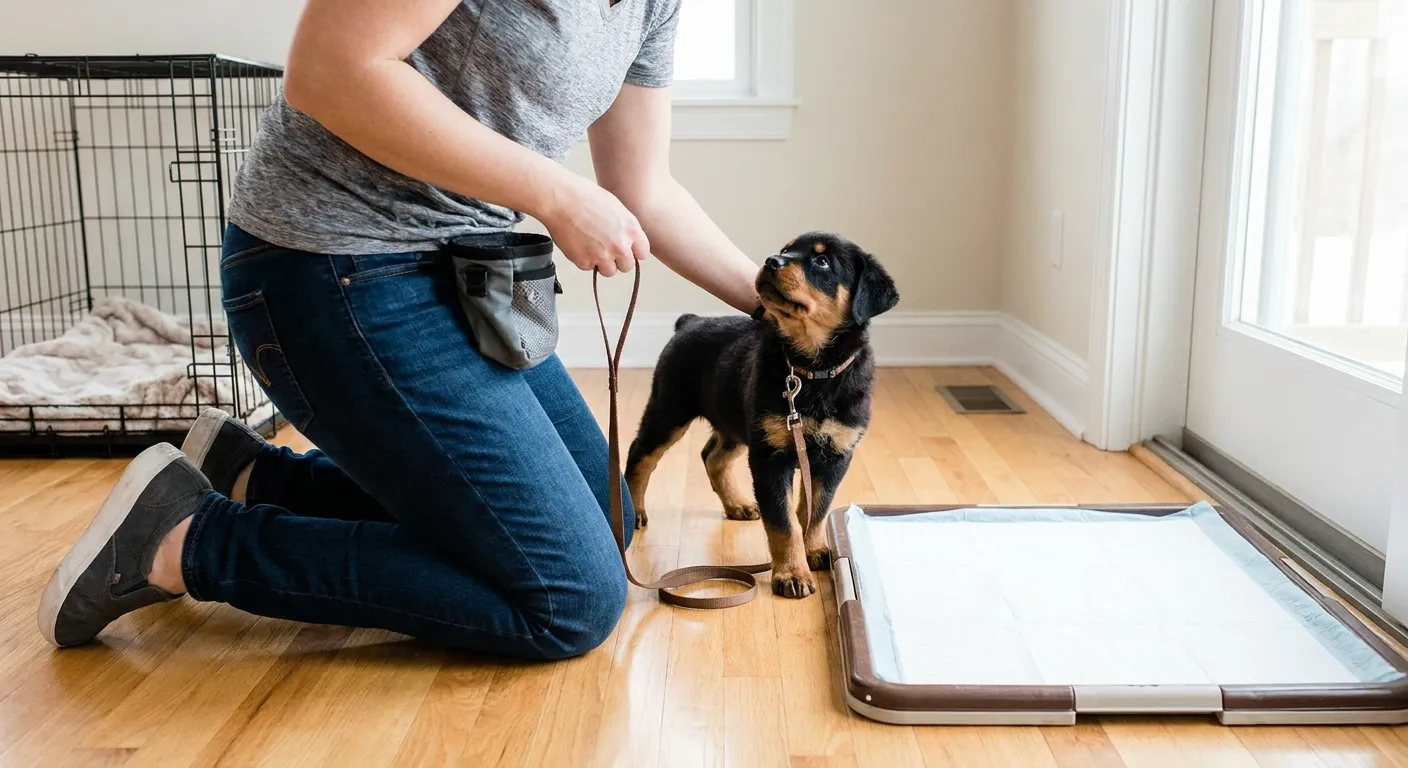
Crate training can be an invaluable tool in rottweiler puppy house training. Dogs naturally avoid soiling their sleeping area, so a properly sized crate (just enough room to stand, turn around, and lie down comfortably) can help your puppy hold it. Never use the crate as punishment. The crate should be a safe, comfortable den for your puppy. For suitable options, consider browsing Crates, Bedding & Home Setup on our site. Introduce the crate gradually, making it a positive place with treats and toys.
Intensive Supervision Outside the Crate
When your puppy is outside the crate, supervise them closely. Consider using a leash indoors or keeping them in the same room as you to prevent unsupervised accidents. This technique is often called