By the Rottweiler Dog Guide editorial team.
Disclaimer: This article is for general educational purposes only and is not a substitute for professional veterinary advice, diagnosis or treatment. Always consult your veterinarian about your own dog before travel, and check local road rules where you drive.
Rottweiler car travel takes a little more planning than travel with a small dog. A large dog needs proper space, a secure setup and a calm routine. This page is a reading list plus a checklist for everything from short trips to the vet to longer road trips. Open the primary pages first, write down what they say, and then work through the plan below.
Primary pages to open first
- AVMA — Traveling With Your Pet
- Center for Pet Safety — a nonprofit that publishes crash-test information on pet travel products
Read those pages yourself. If this article and those pages ever disagree, follow the source pages and your veterinarian.
What those pages emphasize (write it in your notebook)
Write the ideas in their words, not ours:
- The AVMA travel page encourages owners to plan ahead, including a vet visit before longer trips.
- It encourages proper identification and bringing your pet’s records.
- It encourages restraining pets safely in the vehicle.
- The Center for Pet Safety site publishes its own testing results for pet travel products, so you can check a product before you buy.
Do not invent crash statistics or claim that any product is “safe” without a source. Check the testing results yourself.
What this guide covers, and what it does not
This guide covers choosing a setup, getting your dog used to the car, packing, planning stops and handling heat and cold. It does not recommend specific product brands, does not give medication advice for travel sickness or anxiety, and does not cover air travel or crossing borders. Ask your vet about medicine, and check official sources for border rules.
Choose a secure setup
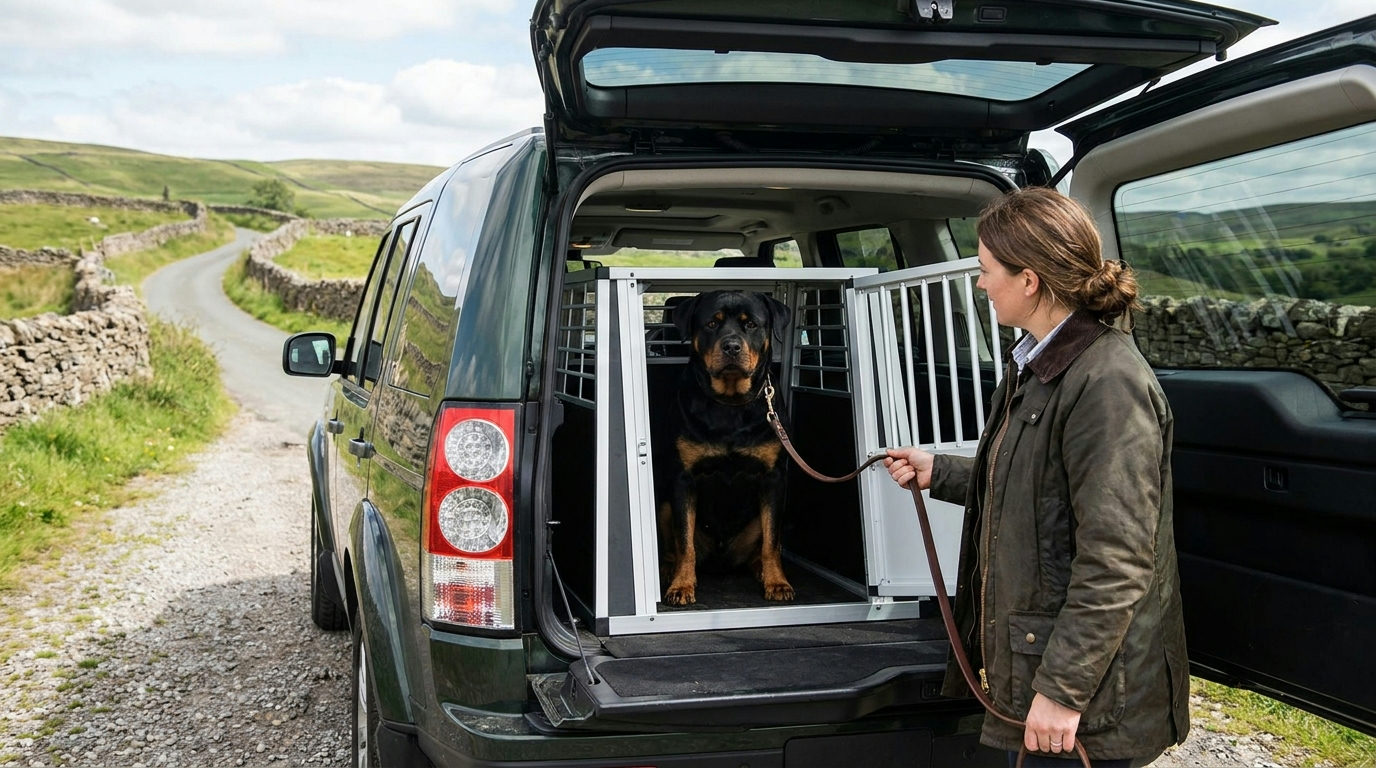
A loose large dog in a car can distract the driver and move around in a sudden stop. Think about these options and talk them through with your vet and a reputable retailer:
- A travel crate: secured so it cannot slide, and large enough for your dog to sit, stand and turn around.
- A car harness: attached to the vehicle’s seat belt system as the maker describes.
- A cargo-area barrier: in larger vehicles, to keep the dog in the back.
Before you buy, check whether the product appears in the Center for Pet Safety testing results. Never attach a car restraint to a collar. Keep your dog out of the front seat.
Get your dog comfortable with the car
Many dogs only ride in the car to go to the vet. That can make the car feel stressful. Build good associations slowly:
- Sit in the parked car with your dog for a minute, with treats. Then get out.
- Next time, start the engine for a moment, reward and stop.
- Take a very short drive around the block.
- Build up to short trips that end somewhere fun, such as a favorite walking spot.
- Gradually increase trip length as your dog stays relaxed.
If your dog drools heavily, pants, shakes or vomits in the car, talk to your vet before your next long trip.
Getting in and out
Jumping in and out of a high vehicle can be awkward for a heavy dog, a growing puppy or an older dog. Ask your vet whether a ramp or step would be sensible for your dog. Practise using it at home with treats before the trip.
Packing checklist
- Leash, collar with current ID tag, and a spare leash
- Microchip details checked in the database before you leave
- Copies of vaccine records and any medicines your vet has prescribed
- Your dog’s usual food, bowls and plenty of water
- Waste bags and paper towels
- A familiar blanket or bed
- An old towel for wet or muddy paws
- Your vet’s number, plus an emergency clinic near your destination
Plan your stops
Write a stop plan before you leave. At each stop:
- Put the leash on before you open the door.
- Let your dog out only on the leash, away from traffic.
- Offer water and a short toilet walk.
- Give your dog a few minutes to stretch and sniff.
- Settle your dog back into its setup before you drive on.
Ask your vet how to time meals around the drive, especially if your dog is prone to car sickness.
Heat, cold and parked cars
Never leave your dog alone in a parked car. Temperatures inside a car can change quickly, and cracking a window does not make it safe. Plan your trip so someone can always stay with your dog, or choose dog-friendly places to stop.
In hot weather, travel during cooler parts of the day where possible and keep the car well ventilated. In cold weather, bring a blanket and keep stops short. If you are unsure about your own dog’s tolerance for heat or cold, ask your vet.
Keep the car clean and comfortable
A comfortable car makes every trip easier. Before a long drive, vacuum the cargo area and lay down a washable cover or old blanket. Check that nothing loose could slide toward your dog, such as shopping bags, tools or sports gear. Keep the space tidy so your dog’s setup is never squeezed by luggage. After the trip, wash the blanket and wipe down the crate or barrier. A clean, familiar space helps your dog settle quickly next time. Finally, keep a small travel bag packed in the car with spare waste bags, a towel and a water bowl, so short trips never catch you out.
Arriving at your destination
- Walk your dog around the new place on a leash before letting it explore.
- Check fences and gates if there is a garden.
- Set up your dog’s bed and water in a quiet corner.
- Keep the usual routine for feeding and walks as far as you can.
- Note the nearest vet clinic on your phone.
Our guide to daily enrichment routines has ideas to keep your dog settled away from home.
Questions to ask your vet (write their answers)
- Is my dog healthy enough for the trip I am planning?
- What can I do if my dog gets car sick or anxious?
- Should I change feeding times on travel days?
- Does my destination have any health risks I should prepare for?
- Would a ramp help my dog get in and out of the car?
FAQ
Can my Rottweiler ride in the front seat?
This guide suggests keeping dogs out of the front seat and secured in the back or cargo area.
Which crate or harness is best?
This guide does not rank products. Check the Center for Pet Safety testing results and ask your vet.
Can I give my dog something to calm it for the trip?
Only what your vet prescribes or recommends. Do not give human medicines.
Is this veterinary advice?
No. It is a reading list plus a travel checklist.
What not to do
- Do not leave your dog alone in a parked car.
- Do not let your dog ride loose or with its head out of the window.
- Do not attach a car restraint to a collar.
- Do not skip the AVMA and Center for Pet Safety pages before you buy equipment.
Closing tip
This week, open the AVMA travel page and the Center for Pet Safety site, write five notes in their words, and take your dog for one short, happy car ride that ends somewhere fun. Rottweiler car travel goes best when the setup is secure and the car feels like the start of something good.