By the Rottweiler Dog Guide editorial team.
Disclaimer: This article is for general educational purposes only and is not a substitute for professional veterinary advice, diagnosis or treatment. Always consult your veterinarian about your own dog. In an emergency, contact your vet or an animal poison control service straight away.
Fall hazards for Rottweilers are easy to miss because they hide in ordinary autumn jobs: clearing the garage, setting out pest control, walking through wet leaves and putting the garden to bed. This page is a reading list plus a walk-through checklist for your home, yard and walking routes. Open the primary pages first, write down what they say, and then work through the room-by-room list below.
Primary pages to open first
Read those pages yourself. If this article and those pages ever disagree, follow the ASPCA pages and your veterinarian.
What those pages emphasize (write it in your notebook)
Write the ideas in their words, not ours:
- The ASPCA autumn page lists seasonal risks such as rodent poisons, some wild mushrooms and car products used as the weather cools.
- It encourages owners to store chemicals where pets cannot reach them.
- The poison control page explains how to reach the ASPCA service and what information to have ready.
- Both pages point owners to professional help rather than home treatment when a pet may have eaten something harmful.
Do not invent toxic doses, survival rates or “safe amounts”. Those questions belong with a vet or poison control, never a blog.
What this guide covers, and what it does not
This guide covers where autumn hazards tend to sit around a home, how to store them, how to plan safer walks and what to have ready in case of an emergency. It does not list symptoms for specific poisons, does not suggest home remedies, and does not tell you to make your dog vomit. Those decisions belong with your vet or a poison control service.
Put the emergency numbers in place first
Do this before anything else on the list. It takes five minutes and matters most.
- Save your vet’s number in your phone and on the fridge.
- Find the nearest after-hours emergency clinic and save that number too.
- Open the ASPCA poison control page and save the contact details it lists. Note whether the page mentions a fee.
- Write your dog’s approximate weight and any medicines it takes on the fridge note.
- Agree with everyone in the house: if in doubt, call first and ask.
If your dog ever eats something worrying, keep the packaging or a sample. Bring it, or a photo of the label, to the phone call or the clinic.
Garage and shed checklist
Autumn is when many owners top up car fluids and pack away summer supplies. Walk through your garage with this list:
- Car products such as antifreeze and windscreen fluid stored on a high shelf or in a closed cupboard
- Drips and spills wiped up straight away, not left on the floor
- Lawn and garden chemicals in their original containers with lids closed
- Paints, solvents and cleaning products out of reach
- Bags of fertilizer or compost sealed and stored off the floor
- The garage door closed whenever your dog is outside
Write the date you checked. Then add a reminder to check again when the seasons change.
Pest control checklist
As temperatures drop, many people set out baits for rodents. The ASPCA autumn page names rodent poisons as a seasonal risk for pets. So, before you put anything down, run through these questions:
- Could I use a method that does not involve poison?
- If a pest-control company visits, have I told them there is a large dog in the house?
- Where exactly has bait been placed, and is every spot out of my dog’s reach?
- Do I have the product name written down in case I need to call for help?
Keep a note of the product name and where it was placed. That information is what a vet or poison control service will ask for first.
Yard and garden checklist
- Walk the yard after rain and look for mushrooms. Remove them with gloves and bag them, since this guide cannot tell you which are safe.
- Rake fallen leaves regularly so you can see what is underneath.
- Keep compost bins closed and out of reach.
- Pick up fallen fruit, nuts and acorns from any trees in the yard, and ask your vet if you are unsure about a tree you have.
- Check fences and gates after storms.
Our guide to foods that pose risks to Rottweilers covers kitchen items to keep away from your dog as well.
Safer autumn walks
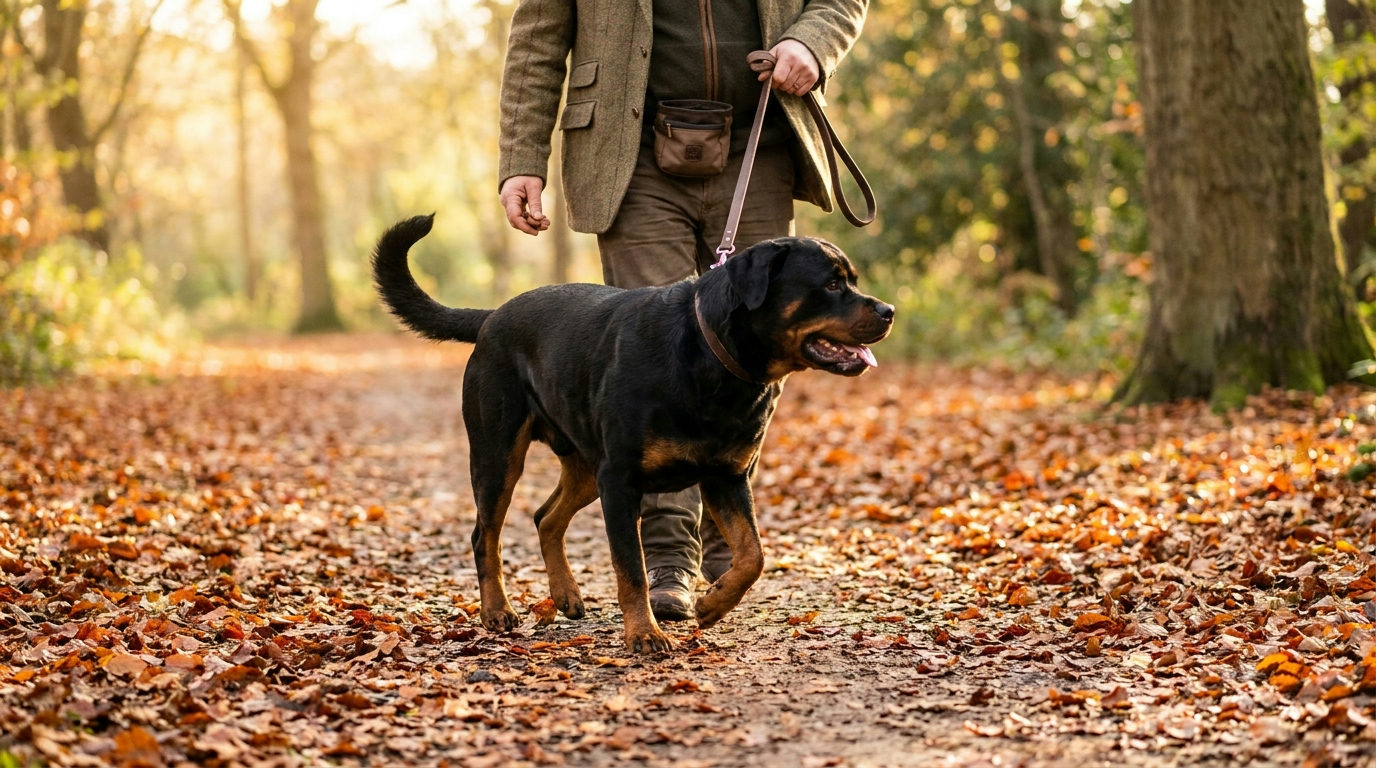
Shorter days and wet weather change your walking routine. A few habits help:
- Keep your dog on a leash in parks and woods where mushrooms or litter are common.
- Practise a “leave it” cue with high-value rewards, and use it on every walk.
- Carry a small torch or wear reflective gear on early-evening walks.
- Add a reflective collar, harness or light for your dog.
- Wipe your dog’s paws after walks on roads or paths that may have been treated with chemicals.
If your dog grabs something unknown, stay calm, trade it for a treat if you safely can, and call your vet if you think any was swallowed.
Inside the house
Autumn brings new items indoors too. Check these:
- Seasonal decorations, potpourri and candles out of reach
- Heaters and fireplaces guarded
- Bags of school snacks, sweets and lunch leftovers kept off low tables
- Bins with secure lids, especially after holiday meals
Questions to ask your vet (write their answers)
- Which seasonal hazards do you see most often in this area?
- Is there anything in my yard or neighborhood I should watch for?
- What should I do first if I think my dog has eaten something harmful?
- Where is the nearest emergency clinic you recommend after hours?
- Does my dog’s current parasite plan need changing as the weather cools?
Write the answers in your vet’s words and keep them with the emergency numbers on your fridge.
FAQ
My dog ate something in the yard. Should I wait and see?
No. Call your vet or a poison control service and describe what happened. Keep the item or a photo if you can.
Should I make my dog vomit?
Only if a vet or poison control professional tells you to. This article does not give instructions for it.
Are all mushrooms dangerous?
This guide cannot tell safe mushrooms from harmful ones. Remove them from your yard and call your vet if your dog eats any.
Is this veterinary advice?
No. It is a reading list plus a home safety checklist.
What not to do
- Do not invent “safe amounts” of any chemical or plant.
- Do not try home remedies found on social media.
- Do not leave car or garden products open on the floor, even for a minute.
- Do not skip the primary ASPCA pages and rely on memory.
Closing tip
This week, open both ASPCA pages, save the emergency numbers in your phone, then walk the garage and yard with the checklist above. Handling fall hazards for Rottweilers is mostly about storage, supervision and knowing exactly who to call.