eaving your dog alone at home can be stressful — for both of you. Many dogs experience boredom or separation anxiety when left by themselves, leading to destructive behaviors or constant pacing. The good news? There’s a simple, science-backed solution that helps: puzzle feeders for dogs.
These interactive feeders transform mealtime into mental enrichment, giving your dog something meaningful to focus on while you’re away. Let’s explore why puzzle feeders work so well and how to make them part of your daily routine.
Understanding Puzzle Feeders and Their Purpose
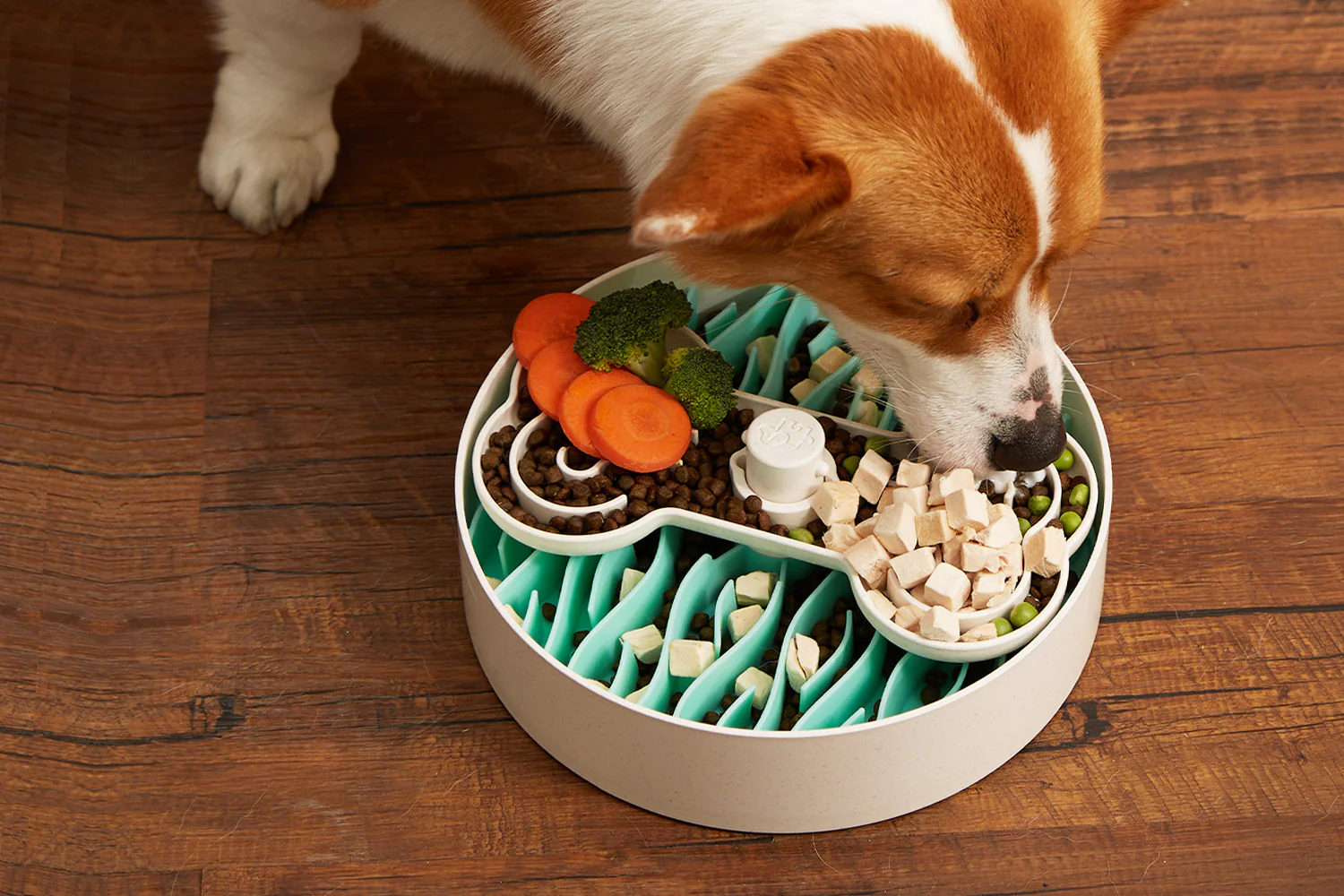
A puzzle feeder is more than a fancy food bowl — it’s a brain workout for your dog. Instead of eating from a plain dish, your dog must manipulate the toy, push levers, roll it around, or lift lids to access food.
This small change transforms feeding into an engaging mental challenge. It encourages problem-solving, slows eating, and keeps your dog’s attention on something rewarding and positive.
When dogs have a “job” to do, they feel more relaxed and fulfilled. Puzzle feeders tap into this need, offering entertainment and satisfaction even when no one’s home.
The Psychology Behind Puzzle Feeders
Dogs are hunters by nature. In the wild, they’d spend hours searching, sniffing, and strategizing for their next meal. Domestic life removes that challenge, and while comfy, it also leaves dogs with extra energy and curiosity that can turn into trouble.
Puzzle feeders replicate that hunting experience in a safe, structured way. When your dog works for food, their brain releases dopamine — a feel-good chemical that promotes calm focus.
It’s the same reason humans feel good after solving a puzzle or finishing a project. For dogs, every kibble earned feels like an accomplishment, easing stress and creating mental satisfaction.
Benefits of Puzzle Feeders During Alone Time
Puzzle feeders aren’t just clever toys; they’re essential tools for healthy, independent dogs. Let’s look at the specific benefits they provide when you’re not around.
Mental Stimulation and Focus
Boredom is one of the biggest challenges for dogs left home alone. Puzzle feeders offer structured mental engagement, keeping your dog busy for long periods.
This focus prevents restlessness and helps your dog stay calm rather than anxious or destructive. Think of it as a mental treadmill — burning energy through thinking rather than running.
A mentally challenged dog is a happy, peaceful one.
Reducing Boredom and Anxiety
When dogs are mentally occupied, they have less room for anxious thoughts or separation stress. Puzzle feeders redirect that nervous energy toward problem-solving and discovery.
Instead of waiting at the door or barking for attention, your dog is focused on an achievable goal: getting food. This builds confidence and emotional balance.
It’s not about distraction — it’s about fulfillment.
Encouraging Calm, Independent Behavior
Dogs thrive on human attention, but independence is a learned skill. Puzzle feeders teach your dog to entertain themselves calmly without needing constant reassurance.
Over time, your dog learns that being alone isn’t scary — it’s rewarding. This independence can drastically reduce separation anxiety and improve overall behavior.
How Puzzle Feeders Mimic Natural Instincts
Dogs are wired to use their senses — smell, sight, and touch — to find food. Puzzle feeders tap into those instincts, turning mealtime into a satisfying hunt.
As your dog sniffs, nudges, and paws at the toy, they activate deep-rooted problem-solving skills that would otherwise go unused. This keeps their mind sharp, reduces frustration, and satisfies their natural desire to work for rewards.
It’s like giving your dog the joy of foraging in the wild — without the mess.
Choosing the Right Puzzle Feeder for Your Dog
Not all puzzle feeders are created equal. The best one depends on your dog’s personality, breed, and skill level.
Beginner-Friendly Puzzle Feeders
If your dog is new to enrichment, start simple. Beginner feeders should be easy enough to build confidence while still offering challenge.
- KONG Classic Toy: Fill it with kibble, peanut butter, or frozen treats for hours of licking and chewing.
- Outward Hound Treat Maze: Great for small dogs or first-time users.
- Snuffle Mats: Perfect for scent-driven dogs that love to sniff and search.
These options help your dog understand the “work for reward” concept without frustration.
Advanced Puzzle Feeders for Problem Solvers
For dogs that master simple puzzles quickly, upgrade to advanced feeders.
- Nina Ottosson Dog Twister: Requires lifting and sliding pieces in sequence.
- Trixie Activity Board: Offers multiple compartments for treat discovery.
- Starmark Bob-a-Lot: Combines motion and treat dispensing for extended playtime.
Advanced feeders challenge your dog’s brain at a deeper level, preventing boredom for even the most intelligent breeds.
How to Introduce Puzzle Feeders to Your Dog
Start slowly. Dogs learn best when they experience success early.
- Show, don’t tell: Demonstrate how the toy works. Let your dog see and smell the treats inside.
- Keep it easy: Use a simple toy or leave treats partially exposed.
- Gradually increase difficulty: Once your dog gains confidence, make it harder by tightening openings or freezing the food.
- Supervise initially: Ensure your dog uses the toy safely before leaving them alone with it.
Patience pays off. The goal is calm engagement, not confusion or frustration.
Common Mistakes to Avoid with Puzzle Feeders
Even well-meaning owners can make mistakes when introducing puzzle feeders. Here are a few to watch out for:
- Making it too hard too soon: Over-challenging your dog can cause stress instead of calm.
- Leaving unsafe toys unsupervised: Always check toy durability before extended use.
- Skipping rotation: Use different feeders throughout the week to keep your dog interested.
- Neglecting cleaning: Puzzle feeders collect food residue — wash them often to avoid bacteria.
Avoiding these mistakes ensures your dog’s experience stays positive and rewarding.
Daily Enrichment Tips for Dogs Left Alone
Puzzle feeders work best as part of a balanced routine. Combine them with other calming enrichment activities for maximum benefit.
- Morning: Give a short walk or sniff session before you leave.
- During Alone Time: Offer one puzzle feeder filled with food or frozen treats.
- Evening: Rotate to a different toy or activity, like a lick mat or chew toy.
Consistency helps your dog associate alone time with comfort, calm, and reward.
Conclusion
Puzzle feeders for dogs aren’t just feeding tools — they’re emotional and mental lifelines. They engage your dog’s instincts, build confidence, and turn alone time into a positive experience.
When your dog works for their food, they feel accomplished, relaxed, and content. It’s one of the simplest ways to nurture independence and prevent anxiety.
So next time you leave home, don’t just fill your dog’s bowl. Fill their mind.
FAQ
1. Are puzzle feeders safe for all dogs?
Yes, most are safe, but always choose one suited to your dog’s size, age, and chewing habits.
2. Can puzzle feeders replace walks or playtime?
No. They complement physical activity, providing mental exercise during downtime.
3. How long should dogs use puzzle feeders each day?
Start with 15–30 minutes. Adjust based on your dog’s interest and energy level.
4. What should I put inside a puzzle feeder?
Dry kibble, small treats, peanut butter, or frozen mixtures of wet food work well.
5. Do puzzle feeders help with separation anxiety?
Yes. They promote focus and calmness, easing anxiety by giving your dog something purposeful to do.