Rottweiler shedding catches many new owners off guard. The coat looks short and neat, yet black hair turns up on the sofa, the car seats and your clothes. This page is a practical checklist for handling that loose hair at home and for knowing when to stop brushing and call the vet.
Disclaimer: This article is for general educational purposes only and is not a substitute for professional veterinary advice, diagnosis or treatment. Always consult your veterinarian about your own dog.
What this guide covers, and what it does not
This guide covers brushing tools, a weekly routine, bathing questions, house cleaning and the warning signs worth showing a vet. It does not diagnose skin disease, recommend medicines or supplements, or give dose amounts. Those questions belong with your veterinarian, who can examine your dog.
Pages worth opening first
Start with the American Kennel Club Rottweiler breed page. Its breed standard describes the coat as straight, coarse and dense, with an undercoat on the neck and thighs. That undercoat is the soft layer you will see collecting in your brush.
Next, bookmark the VCA Animal Hospitals page on hot spots. It explains a common itchy skin problem in plain language. If anything here seems to disagree with those pages, trust the source page and your own vet.
A short coat is not a no-shed coat
A short coat and a low-shedding coat are not the same thing. The undercoat described in the AKC breed standard is still hair, and hair falls out. So plan for some loose hair all year rather than expecting none. Every dog is different, and the most useful guide is your own dog’s pattern.
A simple habit helps here. Write the date in your phone when you notice extra hair starting and stopping. After a year or two, you will have your own record of when your dog tends to shed more, and you can start your daily routine a little earlier next time.
Your brushing kit
- Rubber curry brush: for loosening dead undercoat with a massaging motion.
- Bristle brush: for smoothing the top coat after the curry brush.
- Deshedding comb or undercoat rake: for heavier days, used gently and not too often.
- Grooming glove: handy for dogs that dislike the look of a brush.
- Treats and a towel: for rewards and for a non-slip spot to stand on.
You do not need every tool. Start with one or two, and add others only if you find you need them.
A weekly Rottweiler shedding routine
Here is a simple routine you can adjust to your own dog.
- Choose a calm time, for example after a walk.
- Work outdoors or on an old sheet you can shake out.
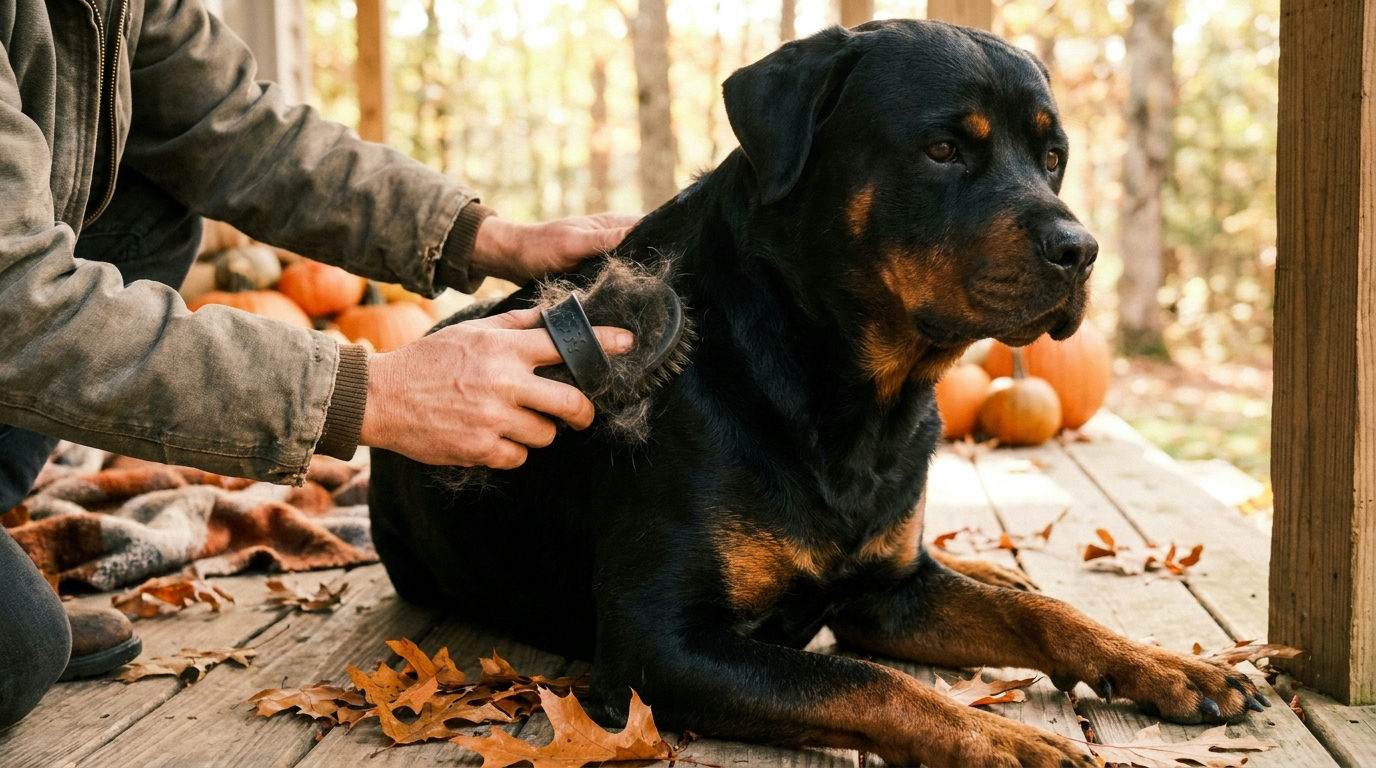
- Use the curry brush in small circles, then follow with the bristle brush in the direction the hair grows.
- Part the hair near the tail and along the back to look at the skin.
- Glance at the ears and paws while your dog is settled.
- Reward your dog and stop before they get restless.
On lighter weeks, a session or two may be enough. When more hair is coming out, try short daily sessions instead of one long one, and see which your dog tolerates better. Keep it pleasant, because a dog that is relaxed during grooming is far easier to check over.
Share the job
If more than one person lives with your dog, agree on who brushes on which days. Keep the brushes in one basket by the door so nobody has to hunt for them. A shared routine also means more people notice early if something about the skin or coat looks different.
Bathing questions to ask your vet
Some owners like to bathe during a heavy shed. If you do, use a shampoo made for dogs, rinse well, dry with a towel and brush again once the coat is fully dry. How often to bathe depends on your dog’s skin, so ask your vet these questions at your next visit:
- How often should I bathe my dog during heavy shedding?
- Is there a shampoo type you suggest, or one I should avoid?
- Should I change anything if my dog has a skin condition?
Write the answers down in your vet’s words, and keep them with your dog’s records.
When shedding is not just shedding
Book a vet visit instead of waiting if you notice any of the following while you brush:
- Bald patches or thinning in one area
- Red, flaky, greasy or smelly skin
- Constant licking, chewing or scratching
- Scabs, bumps or open sores
- Hair loss together with a change in appetite, thirst or energy
Pay special attention to sore, moist patches. The VCA hot spots page describes hot spots as red, inflamed lesions that appear quickly and can grow fast, often triggered by an itch such as fleas or allergies. VCA also warns that many human medications are toxic to dogs. So, do not treat a hot spot with products from your own cabinet. Call your vet.
Parasite prevention check
Keep to the parasite prevention plan your vet set for your dog, including through the cooler months if that is what they advised. During brushing, look for tiny dark specks near the base of the tail. If you find them, or your dog suddenly starts scratching, call the clinic and ask what to do next.
Food, supplements and the coat
Feed a complete and balanced diet made for your dog’s life stage, as agreed with your vet. Our guide to foods that pose risks to Rottweilers lists what to keep away from your dog’s bowl. If you are curious about fish oil or coat supplements, ask your vet first. This article does not recommend any supplement or amount.
Keeping hair off the furniture
Even with good brushing, some hair will end up inside. These habits keep it manageable:
- Wash your dog’s bedding more often while shedding is heavy.
- Keep a lint roller by the front door and another in the car.
- Vacuum little and often instead of one big weekly clean.
- Use washable covers on the sofa or your dog’s favorite spot.
- Brush before guests arrive, not after.
- Keep an old towel on the car seat for trips.
Questions owners ask
Should I shave my Rottweiler to stop shedding?
This guide does not suggest shaving as a shedding fix. Brushing is the practical, everyday answer. If you are thinking about clipping for any reason, talk to your vet or an experienced groomer first.
How long will the heavy shed last?
It varies from dog to dog. If heavy shedding lasts much longer than your dog’s usual pattern, or comes with skin changes, ask your vet to look.
Does lots of hair mean my dog is sick?
Not on its own. The warning signs listed above are the reason to call. If you are unsure, a quick check with your vet is always reasonable.
Is this veterinary advice?
No. It is a home routine. Health questions belong with your vet.
The short version
Rottweiler shedding is part of owning this breed, and a steady routine keeps it under control. Brush a little and often, ask your vet about bathing, stay on your parasite plan and watch the skin for the warning signs above. For more coat care ideas, read our essential Rottweiler grooming tips.