Rottweiler Shedding Season can surprise many owners because this breed looks sleek, short-coated, and easy to maintain. However, that smooth black-and-tan coat has a dense undercoat that releases loose fur more heavily during seasonal changes. Although Rottweilers are not usually the heaviest shedders compared with some double-coated breeds, they still need regular grooming when the weather shifts. With the right routine, you can reduce loose hair, protect your dog’s skin, and keep your home cleaner without turning grooming into a stressful chore.
Most Rottweilers shed all year at a moderate level. However, shedding often increases in spring and fall as the coat adjusts to warmer or cooler weather. During these periods, you may notice more fur on floors, furniture, bedding, clothes, and car seats. This is normal for many healthy dogs, but it can feel frustrating if you are not prepared. Fortunately, shedding becomes much easier to manage when you use a simple plan and stay consistent.
A good shedding routine is not only about removing hair. It also supports skin health, coat shine, and comfort. When loose fur stays trapped in the coat, it can collect dirt, dander, and oils. As a result, your dog may feel itchy or uncomfortable. Regular grooming helps spread natural oils across the coat, removes debris, and gives you a chance to spot dry skin, bumps, irritation, or parasites early.
Managing Rottweiler Shedding Season also helps strengthen your bond with your dog. Many Rottweilers enjoy calm handling when they trust the process. Therefore, grooming should feel gentle, predictable, and rewarding. Short sessions, soft praise, and small treats can turn brushing into a pleasant habit instead of a battle.
Why Rottweilers Shed More During Seasonal Changes
Rottweilers have a short double coat. The topcoat helps protect against dirt, moisture, and daily wear, while the undercoat adds insulation. Because of this coat structure, Rottweilers naturally lose old hair as new hair grows. During seasonal transitions, the body may release more undercoat to adjust to temperature changes. This is why you often see more shedding when winter turns to spring or summer gives way to cooler weather.
Indoor living can also affect shedding patterns. Many Rottweilers spend time in climate-controlled homes with artificial lighting. As a result, they may shed steadily throughout the year instead of having one dramatic seasonal blowout. Still, many owners notice clear increases during certain months. If your dog sleeps indoors, lounges on rugs, and rides in the car often, even moderate shedding can feel like a lot.
Age, hormones, health, and diet can also influence coat changes. Puppies may shed their softer puppy coat as they mature. Adult dogs may shed more during stress, illness, pregnancy, or hormonal shifts. Senior dogs may also develop changes in skin and coat quality. Therefore, you should watch the overall pattern rather than panic over one heavy week.
Rottweiler Shedding Season should still look healthy. Loose fur is normal, but bald patches, sores, redness, strong odor, constant scratching, greasy skin, or sudden heavy hair loss may point to a problem. In that case, a vet visit is wise. Allergies, thyroid issues, fleas, mites, infections, and poor nutrition can all affect the coat. Early attention can prevent discomfort and help your dog recover faster.
A healthy shedding pattern usually includes loose hair across the body, especially along the back, neck, sides, and hindquarters. The coat should still look full and shiny. Your Rottweiler should not seem painful, restless, or intensely itchy. If the coat looks dull or the skin seems flaky, your grooming plan may need support from better nutrition, bathing habits, or veterinary guidance.
Understanding the reason behind shedding makes the process less stressful. Your dog is not doing anything wrong, and the fur is not a sign of poor care by itself. Instead, shedding is part of coat renewal. Once you accept that, you can focus on control, comfort, and consistency.
Building a Simple Grooming Routine That Works
The best way to manage Rottweiler Shedding Season is to brush before loose hair spreads around your home. During lighter months, brushing once or twice a week may be enough. However, during heavier shedding periods, many Rottweilers benefit from brushing three to five times a week. Some may even need short daily sessions for a few weeks.
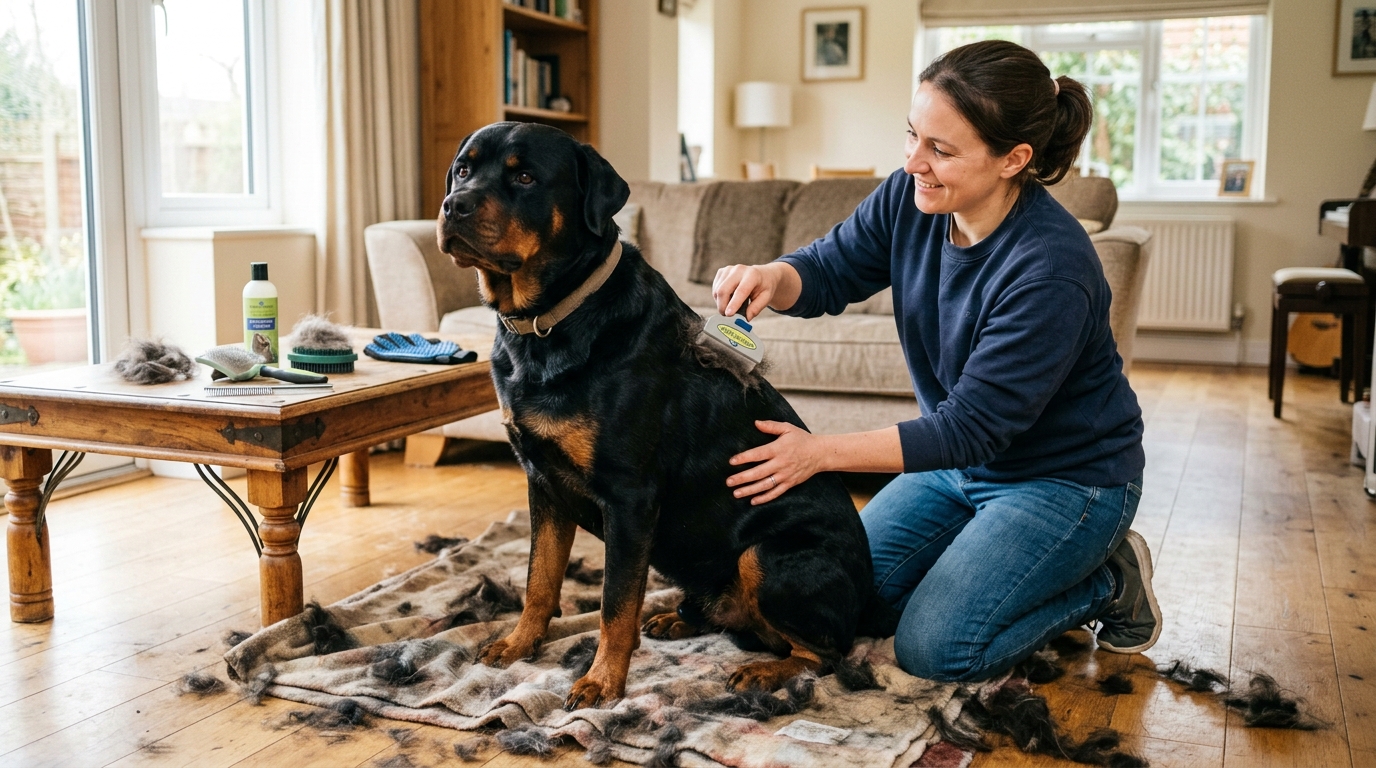
A rubber curry brush, grooming mitt, or short-coat shedding tool often works well for Rottweilers. These tools lift loose hair without scraping the skin. Since Rottweilers have short coats, you usually do not need aggressive tools designed for long or thick fur. In fact, harsh brushing can irritate the skin and make your dog dislike grooming. Use firm but gentle strokes, and always watch your dog’s body language.
Start with short sessions if your Rottweiler is not used to grooming. Brush for a few minutes, reward calm behavior, then stop before your dog gets restless. Over time, you can extend the session. This approach works especially well for young dogs, rescue dogs, or Rottweilers that are sensitive about handling. A calm routine builds trust and makes future grooming easier.
Brush in the direction of hair growth first. Then, use light circular motions with a rubber tool to loosen dead hair. After that, smooth the coat again with long strokes. This simple pattern removes loose fur while helping natural oils spread through the coat. As a result, your dog’s coat may look cleaner and shinier.
Rottweiler Shedding Season can also be easier if you groom outside when weather allows. Loose fur can fly around quickly, especially during heavy coat release. If you brush indoors, choose an easy-to-clean area like a tile floor, laundry room, garage, or covered porch. Keep a vacuum or lint roller nearby, so cleanup does not feel overwhelming.
Bathing can help remove loose hair, but it should not replace brushing. A bath during peak shedding can loosen dead coat and reduce odor. However, too much bathing can dry the skin, especially if you use harsh shampoo. Most Rottweilers do well with occasional baths using a gentle dog shampoo. Always rinse thoroughly because leftover shampoo can cause itching.
After bathing, dry your dog well with towels. If your Rottweiler tolerates it, a low-heat pet dryer can help move loose hair out of the coat. However, introduce dryer sounds slowly and never force the experience. Many dogs need time to accept the noise and airflow. Brushing after the coat is dry can remove even more loosened fur.
Do not forget basic skin checks during grooming. Run your hands along your dog’s body and feel for lumps, scabs, hot spots, fleas, ticks, or tender areas. Because Rottweilers have dark coats, small skin issues can be easy to miss. Regular grooming gives you a better chance to catch problems early.
How Nutrition Supports a Healthier Coat
A strong grooming routine helps on the outside, but coat health also starts from within. During Rottweiler Shedding Season, nutrition can make a noticeable difference in coat quality, skin comfort, and overall shine. A balanced diet gives your dog the protein, fats, vitamins, and minerals needed for healthy hair growth.
Protein is especially important because hair is made mostly from protein. If a dog’s diet lacks enough quality protein, the coat may look dull, thin, or brittle. Therefore, choose a complete dog food that suits your Rottweiler’s age, size, and activity level. Puppies, adults, seniors, and highly active dogs may have different needs.
Healthy fats also support the skin barrier. Omega fatty acids are often linked with softer skin and a shinier coat. Many high-quality dog foods include fat sources that support coat health. Some owners also ask their vet about fish oil or similar supplements. However, supplements should be used carefully because too much can upset digestion or add unnecessary calories.
Hydration matters too. Dry skin can make shedding look worse because flakes and loose hair become more noticeable. Make sure your Rottweiler always has access to clean water. If your dog is active, eats mostly dry food, or spends time in warm weather, water intake becomes even more important.
Rottweiler Shedding Season may feel worse when a dog has food sensitivities or allergies. Some dogs develop itchy skin, ear issues, paw licking, or digestive problems when certain ingredients do not agree with them. If you suspect a food-related problem, speak with your vet before changing diets repeatedly. Random food switches can make it harder to identify the real issue.
Treats should also support your dog’s health. Too many low-quality treats can add calories without much nutrition. Instead, use small training treats in moderation and keep your dog at a healthy weight. Excess weight can affect energy, skin folds, mobility, and overall wellness.
A healthy coat does not appear overnight. If you improve diet quality, give it several weeks to show results. Hair growth and skin repair take time. Meanwhile, keep brushing, monitor changes, and stay consistent. Better nutrition works best when paired with good grooming and regular veterinary care.
Keeping Your Home Cleaner During Heavy Shedding
Even with great grooming, some fur will still end up around the house. Therefore, home care is part of managing Rottweiler Shedding Season. The goal is not to remove every hair. Instead, aim to control buildup before it becomes frustrating.
Start with your dog’s favorite resting areas. Wash bedding weekly during heavy shedding periods. If your Rottweiler uses blankets on the couch or in the crate, choose washable fabrics that release hair easily. Shaking bedding outside before washing can also help prevent fur from clogging your machine.
Vacuuming more often makes a big difference. During peak shedding, quick daily vacuuming in high-traffic areas can be easier than one long cleanup at the end of the week. Focus on rugs, corners, baseboards, couch edges, and places where your dog sleeps. A vacuum designed for pet hair can help, but even a basic vacuum works better when used consistently.
Furniture covers can protect sofas and chairs. Choose covers that are easy to remove and wash. If your Rottweiler rides in the car, use a seat cover or cargo liner. This makes cleanup faster and protects upholstery from hair, dirt, and drool.
Lint rollers, reusable pet hair removers, and damp rubber gloves can help with clothes and furniture. A slightly damp glove can lift hair from fabric with a simple wiping motion. However, avoid soaking surfaces because moisture can create odor or mildew if fabric does not dry well.
Air quality may also improve when you manage loose fur and dander. Replace home air filters regularly, especially if someone in the household has allergies. Although dog hair itself is not always the main allergen, dander and dust can travel with it. Frequent cleaning can make the home feel fresher.
Rottweiler Shedding Season is also easier when you limit fur spread at the source. Keep a towel or grooming mitt near the door after walks. A quick wipe-down can remove dust, pollen, and loose hair before your dog settles indoors. This habit is especially useful during spring, fall, and rainy weather.
Do not let home cleanup become the only strategy. If you only vacuum and never brush, you will chase hair constantly. However, when you combine grooming, bedding care, and regular cleaning, the shedding becomes far more manageable.
When Shedding May Signal a Bigger Problem
Normal shedding should not cause panic, but some signs deserve attention. If your Rottweiler suddenly loses large amounts of hair outside the usual seasonal pattern, something may be wrong. Likewise, bald spots, broken hair, red skin, scabs, strong odor, or constant scratching should not be ignored.
Allergies are a common reason dogs develop skin and coat problems. Environmental triggers like pollen, grass, dust mites, or mold may cause itching. Some dogs also react to flea bites, even if you see only one or two fleas. Because Rottweilers can be stoic, they may not always show discomfort clearly at first. Therefore, pay attention to licking, chewing, rubbing, or restlessness.
Parasites can also affect shedding. Fleas, ticks, and mites may irritate the skin and lead to hair loss. Regular prevention, skin checks, and vet care help reduce this risk. If your dog scratches often or develops patchy hair loss, ask your vet to check for parasites and skin infections.
Hormonal problems may also change the coat. Conditions such as thyroid imbalance can lead to thinning hair, weight changes, low energy, or skin issues. These problems need proper diagnosis, not guesswork. A vet can run tests and recommend treatment if needed.
Stress can trigger shedding as well. Changes in routine, moving homes, boarding, new pets, loud environments, or separation anxiety may affect some dogs. While stress shedding can be temporary, you should still support your Rottweiler with routine, exercise, calm training, and reassurance.
Rottweiler Shedding Season should never include pain, open sores, or extreme discomfort. If brushing seems painful or your dog reacts strongly when touched, stop and inspect the skin. When in doubt, get professional help. A vet can rule out medical causes, while a groomer can help with safe coat care techniques.
Creating a Calm Seasonal Care Plan
A seasonal care plan helps you stay ahead of shedding instead of reacting after fur covers the house. Begin by marking the times of year when your Rottweiler usually sheds more. Many owners notice heavier fur loss in spring and fall. Once you know your dog’s pattern, you can increase brushing before the shedding peaks.
During heavy coat release, create a simple weekly plan. Brush several times, wash bedding, vacuum high-use areas, and check the skin. Keep tools in one place, so the routine is easy to repeat. When grooming supplies are hard to find, sessions often get skipped. A small basket with a brush, grooming mitt, wipes, towel, and treats can make the process smoother.
Exercise can also support coat and skin health. Regular walks, play, and training help circulation, reduce stress, and keep your Rottweiler fit. However, avoid overexercising in heat. Rottweilers can become uncomfortable in warm weather, so choose cooler parts of the day when needed.
Training your dog to cooperate with grooming is part of the plan. Ask for a sit, reward calm behavior, brush briefly, then reward again. If your dog moves away, do not punish them. Instead, make the next session easier. This teaches your Rottweiler that grooming is safe and predictable.
Rottweiler Shedding Season may also be a good time to review your dog’s overall care. Check nail length, ear cleanliness, dental routine, collar fit, and flea prevention. Shedding often draws attention to coat care, but full-body wellness matters too.
Consistency is the secret. A single long brushing session may help for one day, but it will not control weeks of seasonal shedding. Short, repeated sessions work better. In addition, they are less tiring for your dog and less messy for you.
The goal is not perfection. Rottweilers shed, and some hair around the home is part of sharing life with a dog. However, you can greatly reduce the mess with steady grooming, smart cleaning, and good health care. More importantly, your dog will feel better when loose coat, dander, and debris do not build up.
Rottweiler Shedding Season becomes much less stressful when you treat it as a normal part of dog ownership. Once you understand your Rottweiler’s coat, you can respond with patience instead of frustration. Regular brushing removes loose hair before it spreads. Balanced nutrition supports the skin from within. Clean bedding and frequent vacuuming keep your home under control. Finally, careful observation helps you know when shedding is normal and when it needs veterinary attention.
Your Rottweiler does not need a complicated beauty routine to look and feel good. Instead, they need steady care, gentle handling, and an owner who pays attention. With a simple seasonal plan, shedding becomes manageable, your home stays cleaner, and your dog’s coat can remain healthy, smooth, and comfortable all year.
FAQ
1. How often should I brush my Rottweiler during heavy shedding?
During heavy shedding, many Rottweilers do well with brushing three to five times a week. Some dogs may need short daily sessions for a few weeks, especially when loose undercoat is coming out quickly.
2. Do Rottweilers shed all year?
Yes, most Rottweilers shed lightly or moderately throughout the year. However, many shed more in spring and fall when their coat adjusts to seasonal changes.
3. What type of brush works best for a Rottweiler coat?
A rubber curry brush, grooming mitt, or short-coat shedding tool usually works well. Choose a tool that removes loose hair without scratching or irritating the skin.
4. Can diet help reduce my dog’s shedding?
A balanced diet can support healthier skin and coat quality. However, it will not stop normal shedding completely. Good food, hydration, grooming, and vet care work together.
5. When should I worry about my Rottweiler’s hair loss?
Contact your vet if you notice bald spots, red skin, scabs, odor, constant scratching, or sudden heavy hair loss. These signs may point to allergies, parasites, infection, or another health issue.