
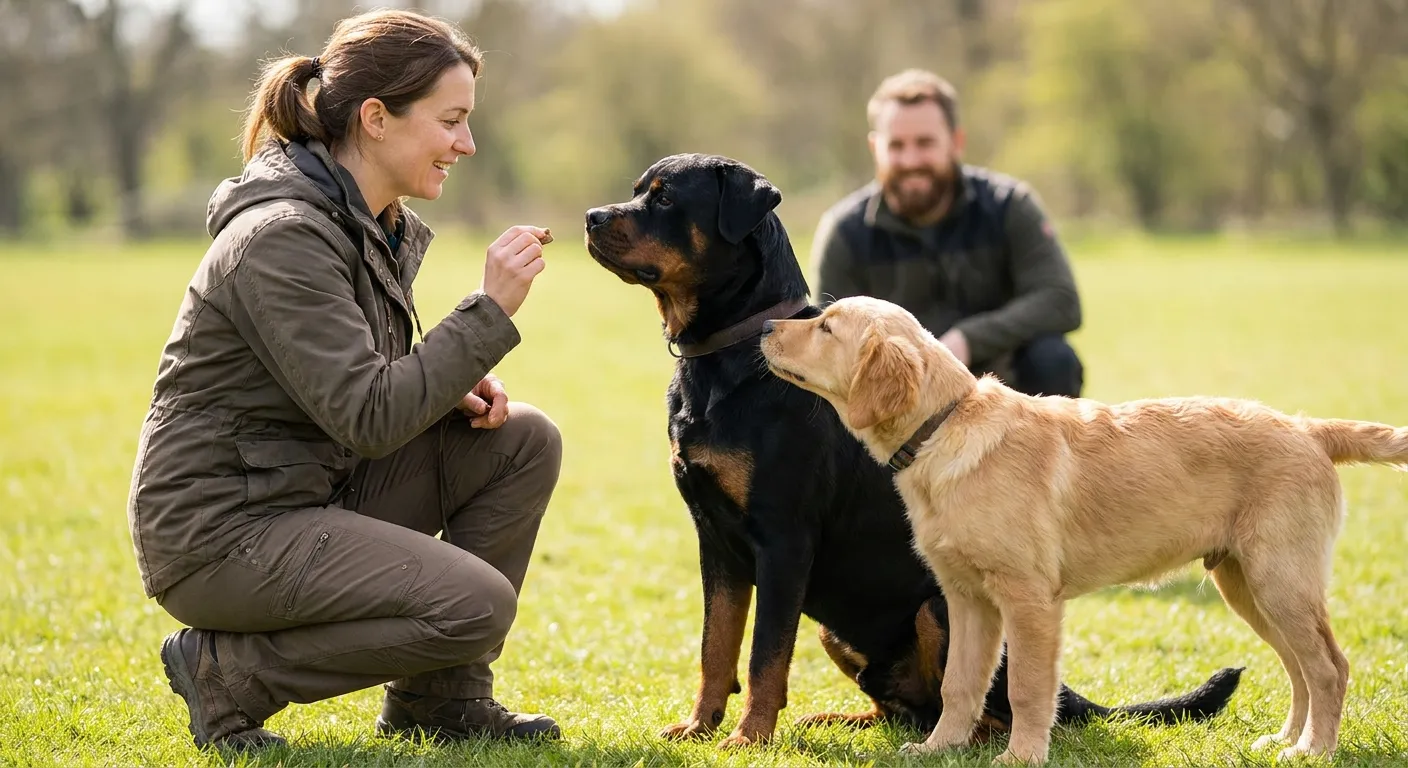
The Rottweiler is a magnificent breed, known for its powerful presence, unwavering loyalty, and deep affection for its family. However, to truly unlock their potential as a well-balanced and confident companion, early and consistent training and socialization are non-negotiable. This isn’t just about obedience; it’s about building a foundation of trust, clear communication, and mutual respect. Mastering Rottweiler training and socialization creates an unbreakable bond that enriches both your lives.
At RottweilerDogGuide.com, we provide expert information on training and behavior to help owners raise well-balanced, confident, and happy dogs. Investing in your Rottweiler’s development from puppyhood is a lifelong commitment. We will explore effective strategies to achieve this.
The Rottweiler Temperament: A Foundation for Training
Rottweilers are naturally confident, courageous, and calm. They possess strong protective instincts. However, they are affectionate and playful with their families when properly socialized. They thrive with clarity, trust, and consistent positive reinforcement rather than harsh corrections. Understanding their innate temperament is the first step toward effective training. Consequently, this knowledge will guide your approach.
The Critical Window: Early Socialization (8-16 Weeks)
This period is the most crucial for shaping your Rottweiler’s temperament. Early exposure to diverse people, sounds, environments, and other animals is critical. This builds confidence and prevents unwarranted suspicion or aggression later in life. Think of it as building their ‘experience library’ in a positive way. Therefore, prioritize this stage.
- Diverse People: Introduce your puppy to people of all ages, sizes, and appearances (hats, glasses, uniforms). This helps them generalize positive interactions.
- Sounds: Expose them to common household noises, city sounds, and even loud but distant noises. Always pair these with positive experiences like treats.
- Environments: Take them to pet-friendly stores, parks, and busy streets. Carry them if they are not fully vaccinated.
- Other Animals: Supervised, positive interactions with calm, vaccinated dogs and other species are important if appropriate. This teaches proper dog-dog etiquette.
- Group Classes: Puppy kindergarten or obedience classes are highly valuable for structured socialization in a controlled environment. They also provide crucial bite inhibition training. Moreover, they offer a chance for professional guidance.
Essential Rottweiler Training Principles
Consistent, positive reinforcement-based training fosters a strong bond. It also ensures your Rottweiler learns to respond reliably to commands. Rottweilers are intelligent and eager to please, making them highly trainable. Furthermore, their desire to work with you makes training enjoyable.
- Start Early: Begin basic obedience commands (sit, stay, come, down, heel) as soon as you bring your puppy home. Even short, daily sessions are effective.
- Positive Reinforcement: Reward desired behaviors with treats, praise, and toys. This makes training a fun and motivating experience for your Rottweiler.
- Consistency is Key: Everyone in the household should use the same commands and expectations. This prevents confusion for your dog.
- Short, Frequent Sessions: Rottweilers, especially puppies, have shorter attention spans. Aim for 5-10 minute training sessions multiple times a day.
- Patience and Persistence: Training takes time and effort. Celebrate small victories and remain patient through challenges.
- Build on Success: Gradually increase the difficulty and distractions as your Rottweiler masters each command.
Core Obedience Commands for Your Rottweiler
Establishing a solid foundation of obedience commands is paramount. These commands ensure your Rottweiler’s safety and your control in various situations. They also strengthen your communication.
- Sit: A fundamental command for control and calmness.
- Stay: Crucial for safety, especially in public or when doors open.
- Come (Recall): Potentially life-saving, teaching your Rottweiler to return to you immediately. Practice this in a secure area first.
- Down: Another command for control and settling, often used in conjunction with
Explore more: More from Rottweiler Dog Guide