Senior rottweiler enrichment becomes essential as your loyal companion enters the golden years. Although your dog may move a bit slower, the desire for engagement never disappears. In fact, mental stimulation becomes even more important with age.
You might notice your Rottweiler sleeping more. Walks may be shorter. However, boredom can quietly creep in if enrichment is ignored. Just like people, aging dogs thrive when their brains stay active.
Senior rottweiler enrichment is not about intense physical activity. Instead, it focuses on thoughtful stimulation, gentle movement, and emotional connection. With the right approach, your older dog can stay confident, content, and engaged every single day.
Why Senior Rottweiler Enrichment Matters
As Rottweilers age, physical changes occur gradually. Joints stiffen. Energy levels dip. However, mental sharpness can be preserved with consistent stimulation.
Without enrichment, cognitive decline may accelerate. You might notice confusion or restlessness. Fortunately, senior rottweiler enrichment helps slow that process.
Engaging activities encourage neural connections. They reduce anxiety and increase confidence. Additionally, enrichment provides purpose. Even older dogs want to feel useful.
Think of your senior Rottweiler as a retired athlete. The intensity changes, yet the drive remains. With gentle guidance, that drive can be redirected into meaningful activities.
Mental Stimulation for Senior Rottweiler Enrichment
Mental exercise is just as valuable as physical movement. In many cases, it is even more important for aging dogs.
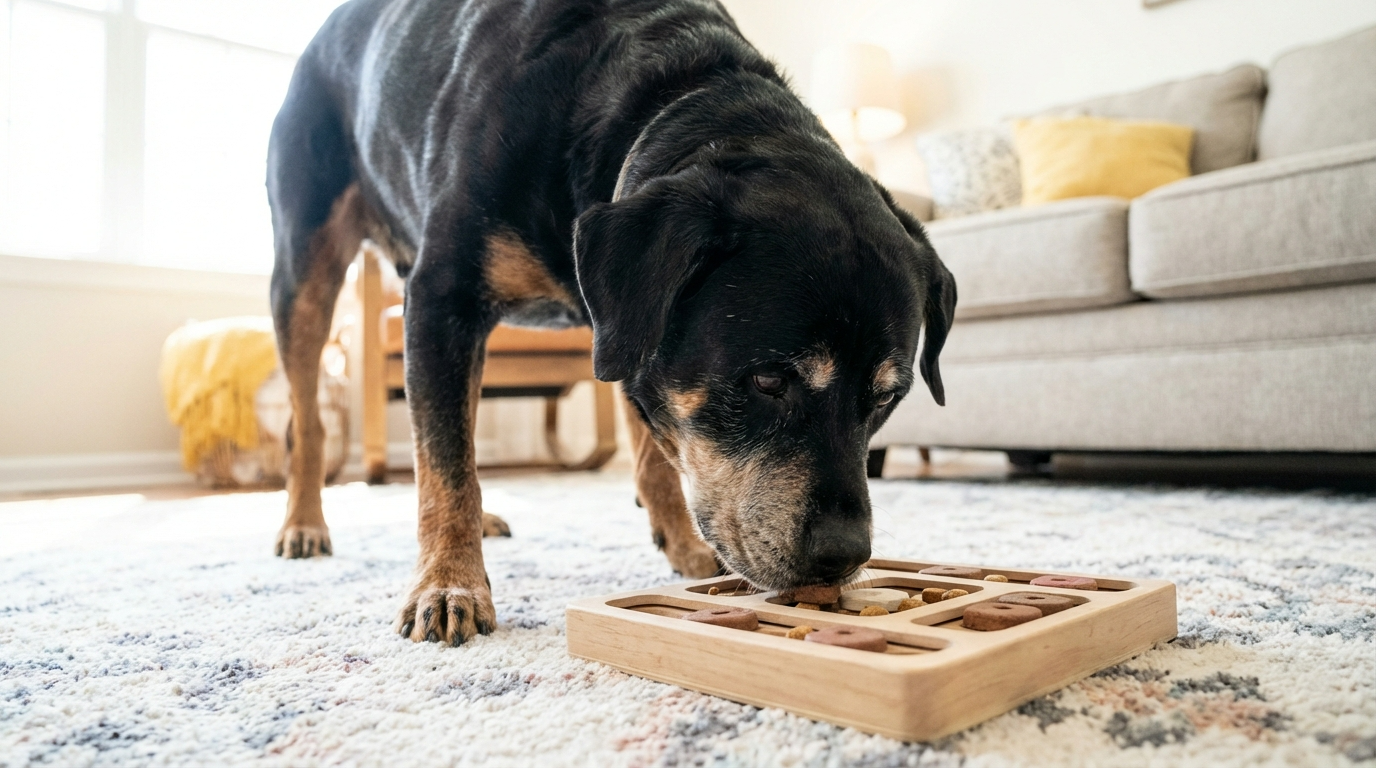
Puzzle toys offer excellent senior rottweiler enrichment. Choose slow feeders or treat-dispensing toys that require problem-solving. Keep difficulty moderate. The goal is engagement, not frustration.
Scent games also stimulate the brain. Hide small treats around a room and encourage your dog to find them. Because Rottweilers possess strong noses, scent work feels natural and rewarding.
Additionally, practice simple obedience refreshers. Short sessions of sit, stay, and gentle recall keep communication sharp. Even five minutes daily can make a difference.
These activities build confidence while maintaining cognitive health.
Gentle Physical Activities for Aging Bodies
Senior rottweiler enrichment must consider joint health. While intense play may no longer be appropriate, controlled movement supports mobility.
Short, slow walks are ideal. Choose softer surfaces when possible. Grass and dirt reduce joint impact compared to concrete.
Swimming can be excellent enrichment if accessible. Water supports weight while allowing muscle engagement. Always supervise carefully.
Light tug sessions may also be included. However, keep them brief and controlled. Watch for signs of fatigue.
Movement should feel refreshing, not exhausting. After activity, your dog should appear satisfied, not sore.
Interactive Bonding as Enrichment
Emotional connection is powerful enrichment. Senior Rottweilers often deepen their bond with family over time.
Spend quiet time together. Gentle brushing can become a soothing ritual. Massage promotes circulation and relaxation.
Talk to your dog. Although it may sound simple, communication reinforces security. Your voice provides reassurance.
Senior rottweiler enrichment thrives on this connection. Aging dogs may become more sensitive to environmental changes. Therefore, consistent affection builds emotional stability.
Even sitting together in the yard can be meaningful.
Food-Based Senior Rottweiler Enrichment Ideas
Food motivates most Rottweilers. Therefore, incorporating meals into enrichment is highly effective.
Instead of feeding from a bowl, scatter kibble in the yard. This encourages natural foraging behavior. Alternatively, use snuffle mats indoors.
Frozen treat toys provide longer engagement. Fill a durable toy with soft food and freeze it. This extends the challenge while soothing gums.
However, monitor calorie intake carefully. Senior dogs may require adjusted portions. Balance enrichment with nutritional needs.
When used thoughtfully, food becomes both stimulation and reward.
Rotate Enrichment to Prevent Boredom
Variety keeps senior rottweiler enrichment exciting. If the same toy is offered daily, novelty fades.
Create a rotation system. Offer different puzzle toys on alternate days. Introduce new scent challenges weekly.
Occasionally rearrange furniture slightly. Small environmental changes encourage exploration.
Because aging dogs can become set in routines, introduce changes gently. Sudden disruptions may cause stress.
Consistency combined with variation keeps enrichment fresh without overwhelming your dog.
Adapt Senior Rottweiler Enrichment to Health Conditions
Arthritis, vision loss, or hearing decline may appear with age. Therefore, enrichment should adapt accordingly.
For dogs with joint pain, focus on mental tasks. Puzzle feeders and scent games reduce physical strain.
If vision declines, rely more heavily on scent-based activities. Hide treats in accessible areas. Avoid obstacles.
For hearing loss, use hand signals during training refreshers. Visual communication keeps interaction strong.
Senior rottweiler enrichment should support comfort. Watch your dog closely. Adjust activities if fatigue or discomfort appears.
Encourage Confidence Through Small Challenges
Even senior dogs enjoy learning. Introduce simple new tricks at a relaxed pace. For example, teach nose targeting or gentle paw touches.
Short sessions prevent overwhelm. Always end on success. Positive reinforcement builds enthusiasm.
Confidence can fade with age. However, achievable challenges reignite engagement. Senior rottweiler enrichment does not need complexity. It needs consistency.
Think of enrichment as polishing a treasured instrument. Regular attention keeps it vibrant.
Social Interaction as Enrichment
If your senior Rottweiler enjoys other dogs, controlled social time can be enriching. Choose calm companions. Avoid chaotic playgroups.
Short visits with familiar friends maintain social confidence. However, respect your dog’s comfort level.
Some seniors prefer human company over canine interaction. Observe preferences carefully.
Balanced social exposure prevents isolation. At the same time, overstimulation should be avoided.
Create a Comfortable Rest Environment
Enrichment includes quality rest. Senior Rottweilers require supportive bedding. Orthopedic beds reduce pressure on joints.
Place beds in quiet yet connected areas. Isolation can increase anxiety. However, too much noise disrupts relaxation.
After engaging activities, allow uninterrupted rest. Recovery supports overall well-being.
Senior rottweiler enrichment balances stimulation with restoration.
Monitor Changes and Celebrate Progress
As your dog ages, needs will evolve. Therefore, observe closely. Notice energy shifts, appetite changes, or mobility differences.
Adjust enrichment accordingly. What worked last year may require modification now.
Celebrate small victories. A successful puzzle session or a confident walk deserves praise.
Aging does not eliminate joy. In fact, with thoughtful senior rottweiler enrichment, happiness can flourish in new ways.
Conclusion
Senior rottweiler enrichment is a gift you give your aging companion. Although physical abilities may shift, mental and emotional needs remain strong. Through gentle activity, thoughtful challenges, and consistent affection, you preserve confidence and vitality. By adapting enrichment to your dog’s changing abilities, you ensure that the golden years are filled with purpose and comfort. With patience and creativity, your senior Rottweiler can continue to thrive, proving that age is simply another chapter in a remarkable life.
FAQ
- How much enrichment does a senior Rottweiler need daily?
Short mental sessions and gentle walks each day are ideal. Even 15 to 30 minutes of structured activity makes a difference. - Are puzzle toys safe for older Rottweilers?
Yes, if difficulty matches ability. Choose durable toys and supervise initial use. - Can senior Rottweilers still learn new tricks?
Absolutely. Older dogs can learn at a steady pace. Keep sessions brief and positive. - What if my senior Rottweiler has arthritis?
Focus more on scent games and mental puzzles. Reduce high-impact activities. - When should I adjust enrichment routines?
Adjust whenever you notice changes in energy, mobility, or health. Regular observation ensures comfort and engagement.