
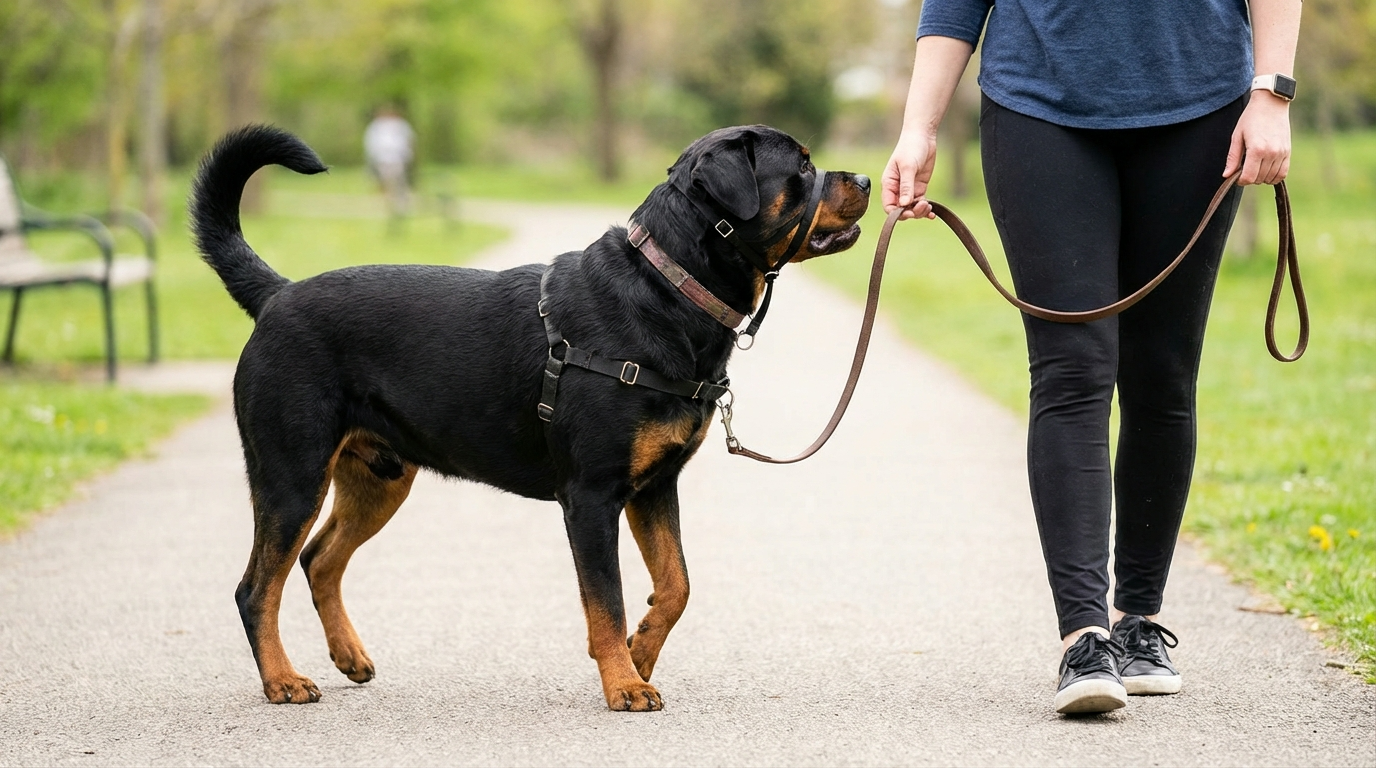
If you want to stop leash pulling in your adolescent dog, you are not alone. The teenage phase can feel like walking a tornado on a string. One moment your dog walks nicely. The next, you are being dragged down the sidewalk like a sled.
Adolescent dogs are full of energy. Their curiosity is high. Their impulse control, however, is still developing. Because of this, leash manners often disappear during this stage. Fortunately, leash pulling is a skill issue, not a personality flaw.
With patience and consistent training, you can stop leash pulling and build calm, enjoyable walks. Think of it like teaching a teenager to drive. Structure, repetition, and guidance create confidence and control.
Why Adolescent Dogs Pull on the Leash
Before you can truly stop leash pulling, you need to understand why it happens. Most adolescent dogs pull because the world feels exciting. Every smell, sound, and movement demands investigation.
During adolescence, dogs test boundaries. Their brains are still maturing. Impulse control is weaker than it was during early puppy training. Therefore, behaviors you thought were mastered may suddenly fade.
Additionally, leash pulling works. When a dog pulls and reaches a tree or another dog, the behavior is reinforced. The environment rewards the pulling. As a result, the habit strengthens.
In order to stop leash pulling, you must change what gets rewarded. Calm walking should lead to forward movement. Pulling should not.
Shift Your Mindset to Stop Leash Pulling
Many owners focus on stopping the behavior physically. They tug back. They hold tight. They brace themselves. However, constant tension creates more tension.
Instead, focus on teaching your adolescent dog what you want. Loose leash walking is a learned skill. It is not automatic.
To stop leash pulling, think of the leash as a communication line. When it is slack, things move forward. When it tightens, everything pauses. Clear, consistent feedback builds understanding.
This shift in mindset makes training smoother and less frustrating.
Start Training Indoors First
If your goal is to stop leash pulling outside, begin inside. Indoor spaces have fewer distractions. Therefore, your dog can focus more easily.
Attach the leash. Take a few steps. Reward your dog for walking beside you with a loose leash. Keep sessions short. Five minutes is enough.
When your dog surges ahead, stop moving. Stand still. Wait for slack. The moment the leash loosens, move forward again.
This simple exercise teaches a powerful lesson. Pulling stops progress. Calm walking makes good things happen.
Practice daily. Consistency matters more than duration.
Use the Stop-and-Go Method to Stop Leash Pulling
The stop-and-go method is one of the most effective ways to stop leash pulling in adolescent dogs.
Here is how it works:
- Walk forward with a relaxed leash
- The moment tension appears, stop
- Wait silently for slack
- Resume walking once the leash relaxes
It may feel slow at first. However, patience pays off. Dogs learn through repetition. When pulling never leads to forward movement, the habit weakens.
Importantly, stay calm. Do not yank the leash. Avoid verbal frustration. Your calm response teaches emotional regulation.
Over time, your adolescent dog will check in more often.
Reward Attention During Walks
To stop leash pulling, reinforce engagement. Adolescents are easily distracted. Therefore, reward moments when your dog looks at you voluntarily.
Carry small treats. When your dog glances back, praise and reward immediately. This builds a habit of checking in.
Additionally, change directions unexpectedly. When you turn, encourage your dog to follow. This keeps walks interactive rather than automatic.
Engagement creates connection. Connection reduces pulling.
Teach Impulse Control Exercises
Impulse control plays a major role in leash manners. Adolescents struggle because excitement overrides patience.
Practice exercises such as:
- Waiting at doorways
- Sitting before crossing streets
- Pausing before greeting people
- Holding position before play
These small rituals strengthen self-control. As impulse control improves, it becomes easier to stop leash pulling outdoors.
Think of impulse control as the brake system in your dog’s brain. The stronger it is, the smoother the walk.
Manage the Environment While You Train
Although training is essential, management prevents setbacks. Choose quiet walking routes at first. Avoid busy parks during early stages.
If your adolescent dog reacts strongly to other dogs, increase distance. Training below the excitement threshold allows learning to happen.
Gradually introduce more distractions as skills improve. Each success builds confidence.
Trying to stop leash pulling in highly stimulating environments too early can slow progress. Therefore, build difficulty step by step.
Use Equipment Wisely
Certain tools can assist while you work to stop leash pulling. Front-clip harnesses, for example, can reduce forward momentum. However, equipment should support training, not replace it.
Avoid relying solely on corrective devices. True leash manners come from understanding, not force.
When equipment is used properly, pulling is reduced while your dog learns better habits. Eventually, less assistance is needed.
Stay Consistent to Stop Leash Pulling
Consistency determines success. If pulling sometimes works, the behavior persists.
Every walk is a training session. Even short potty breaks matter. Therefore, apply the same rules each time.
Family members must follow the same approach. Mixed signals confuse adolescent dogs. When everyone responds consistently, learning accelerates.
Stopping leash pulling is not about one perfect walk. It is about hundreds of small, steady corrections.
Handle Setbacks Calmly
Adolescence is unpredictable. Some days will feel effortless. Other days may feel chaotic.
When setbacks happen, stay composed. Return to basic exercises. Shorten walks if needed. Reinforce engagement more frequently.
Remember, brain development is ongoing. Patience is essential. Frustration slows progress.
Each challenge offers another opportunity to reinforce calm behavior.
Build Focus Through Structured Walks
Structured walks create clarity. Instead of wandering aimlessly, set small goals. Walk one block focusing on loose leash. Then allow a brief sniff break as a reward.
This balance keeps your adolescent dog motivated. Sniffing is natural and enriching. However, access to sniffing should be earned through calm walking.
When structure is consistent, leash manners improve steadily.
Encourage Calm Energy Before Leaving the House
Excitement often begins before the leash is even attached. If your dog jumps or spins before a walk, pause.
Ask for a sit. Wait for calm behavior. Attach the leash only when your dog relaxes.
This small step makes a big difference. Calm departures set the tone for the entire walk.
To stop leash pulling, training begins before the front door opens.
Practice Patience as Your Dog Matures
Adolescent dogs eventually grow into adults. As brain development completes, impulse control improves naturally. However, good habits must be reinforced during this phase.
Your consistency now shapes future behavior. Every calm walk builds muscle memory. Over time, loose leash walking becomes automatic.
Stopping leash pulling is not about perfection. It is about progress.
Conclusion
Learning how to stop leash pulling in adolescent dogs requires patience, structure, and consistency. While the teenage phase can feel challenging, it is also a powerful opportunity to build lifelong habits. By reinforcing calm behavior, managing distractions, and rewarding engagement, you teach your dog to walk with focus and confidence. In the end, relaxed walks are not achieved through force but through steady guidance and clear communication. With commitment and calm leadership, you can stop leash pulling and transform daily walks into enjoyable shared experiences.
FAQ
- Why does my adolescent dog suddenly start pulling again?
Adolescence affects impulse control. Temporary regression is normal as brain development continues. - How long does it take to stop leash pulling?
Progress varies, but consistent training often shows improvement within a few weeks. - Should I use a front-clip harness?
A front-clip harness can help manage pulling, but training remains essential for lasting results. - Is leash pulling a sign of dominance?
No. Pulling usually reflects excitement, curiosity, or lack of training, not dominance. - Can older adolescent dogs still learn loose leash walking?
Yes. With patience and structured practice, dogs of any age can improve leash manners.