The Rottweiler’s imposing stature and historical working roles often lead to misconceptions about their training. Many owners are told they need to establish ‘dominance’ or be the ‘alpha’ to control such a powerful breed. However, at RottweilerDogGuide.com, we advocate for a far more effective and humane approach: an empathy-first strategy when training young Rottweiler dogs. This method builds a strong, trusting bond, fostering cooperation rather than coercion, and ultimately leads to a more reliable and happier companion.
Why ‘Dominance Theory’ Fails Rottweilers (and All Dogs)
Decades of canine behavior research have largely debunked the dominance theory as it applies to dog-human relationships. Dogs are not constantly vying for pack leadership over their human families. Instead, they thrive on clear communication, consistency, and positive reinforcement. Using outdated dominance-based methods – like alpha rolls, scruff shakes, or harsh corrections – can severely damage trust, create fear, and often exacerbate behavioral issues in a sensitive breed like the Rottweiler. It teaches your dog to avoid punishment, not to understand and comply with your requests. In fact, many professional organizations, such as the American Veterinary Medical Association (AVMA), strongly advise against dominance-based training due to its potential for harm and ineffectiveness.
The Pillars of Empathy-First Training for Your Rottweiler Puppy
Our empathy-first approach focuses on understanding your Rottweiler’s motivations, learning style, and natural instincts, then using that knowledge to guide their learning positively.
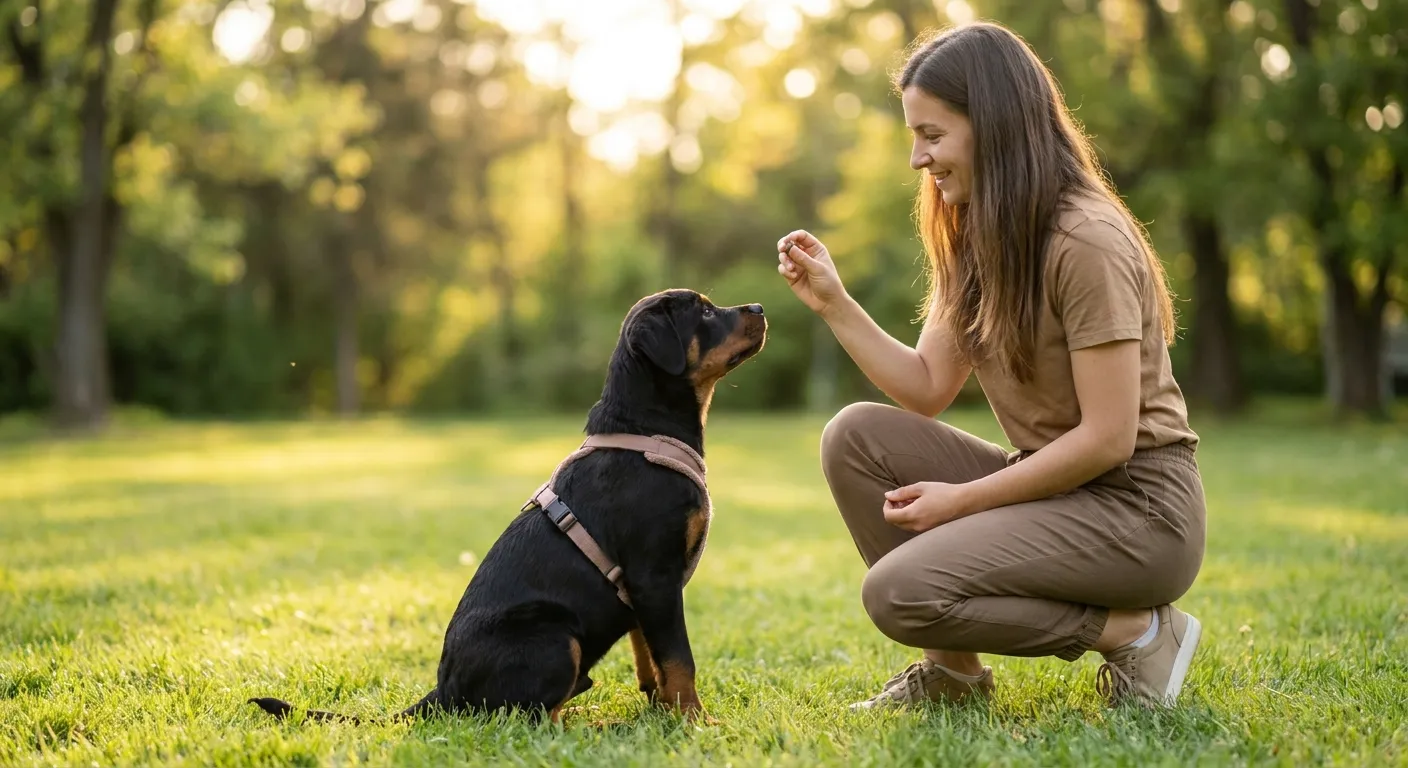
1. Positive Reinforcement is Key: Reward desired behaviors immediately and enthusiastically with high-value treats, praise, or toys. This makes your Rottweiler eager to repeat actions that earn them good things. It’s not bribery; it’s clear communication that tells them, “Yes, that’s exactly what I want!” Consequently, your puppy learns to associate good behavior with positive outcomes.
2. Clear Communication & Consistency: Use consistent verbal cues and hand signals. Everyone in the household should use the same commands and expectations. Inconsistency confuses a young Rottweiler and slows down learning. Therefore, establishing a unified approach is crucial for successful development.
3. Understanding Their Temperament: Rottweilers are intelligent and often eager to please their families, but they can also be stubborn or sensitive. Tailor your training pace and methods to your individual dog. Some may learn quickly, others might need more repetitions or different motivators. For example, some puppies respond better to toys, while others are highly food-motivated.
4. Building a Strong Bond: Training should be a bonding experience. Spend quality time together, engage in play, and show affection. A dog that trusts and loves you is far more likely to listen and cooperate than one that fears you. Furthermore, a strong bond enhances your Rottweiler’s overall well-being and confidence.
5. Patience and Persistence: Puppies and young dogs have short attention spans. Keep training sessions short, fun, and frequent. Celebrate small successes and don’t get discouraged by setbacks. Every dog learns at their own pace. Remember, consistency over time yields the best results.
Essential Commands for Your Young Rottweiler
When training young Rottweiler puppies, focus on these foundational commands:
- Sit, Stay, Down: These provide basic control and are fundamental for good manners. For instance, a reliable “stay” can be life-saving in certain situations.
- Come (Recall): A strong recall is paramount for safety, especially when off-leash. Practice this in various environments, gradually increasing distractions.
- Leave It: This command teaches your Rottweiler to ignore tempting items, which is vital for preventing them from ingesting harmful objects.
- Drop It: Useful for getting your dog to release items they shouldn’t have in their mouth.
- Loose-Leash Walking: Teach your puppy to walk politely on a leash without pulling. This makes walks more enjoyable for both of you and is important for their socialization. Consider exploring Training & Control Gear that can assist with this, such as front-clip harnesses.
- Crate Training: When introduced positively, a crate becomes a safe den for your Rottweiler, aiding in house-training and providing a secure space. More information on creating a comfortable home setup can be found in our section on Crates, Bedding & Home Setup.
Socialization: A Critical Component for Your Young Rottweiler
Proper socialization is just as important as formal command training for your young Rottweiler. It involves exposing your puppy to a wide variety of sights, sounds, people, and other friendly dogs in a controlled, positive manner during their critical developmental period (roughly 3-16 weeks). A well-socialized Rottweiler is more confident, less fearful, and less likely to develop behavioral issues like aggression or extreme shyness. Therefore, prioritize safe and positive experiences.
How to Socialize Effectively:
- Early Exposure: Introduce your puppy to different surfaces, noises (e.g., vacuum cleaner, traffic), and environments (e.g., parks, pet-friendly stores) from a young age.
- Positive Interactions with People: Ensure your puppy meets people of all ages, sizes, and appearances. Always supervise interactions to ensure they are gentle and positive.
- Controlled Dog-Dog Play: Enroll your puppy in a reputable puppy class or arrange playdates with known, vaccinated, friendly dogs. This teaches appropriate canine social skills.
- Avoid Overwhelm: Don’t force your puppy into situations where they appear stressed or fearful. Instead, let them observe from a distance and offer treats to create positive associations. Gradually increase proximity as they become comfortable.
Addressing Common Challenges When Training Young Rottweiler Puppies
Even with an empathy-first approach, you may encounter common puppy challenges. Knowing how to address them positively is key to successful training young Rottweiler dogs.
Nipping and Biting:
Puppies explore the world with their mouths. When your Rottweiler puppy nips, redirect them to an appropriate chew toy. If the nipping is persistent or painful, yelp loudly (like another puppy would), withdraw attention, or leave the room for a few seconds. This teaches bite inhibition. Consistency is vital for this lesson.
House-Training Accidents:
Establish a consistent potty schedule. Take your puppy out frequently, especially after waking up, eating, and playing. Reward them enthusiastically when they eliminate outside. Clean up accidents thoroughly with an enzymatic cleaner to remove odors that might attract them back to the same spot. Never punish your puppy for accidents; this only teaches them to hide their elimination.
Chewing:
Rottweilers are natural chewers. Provide a variety of appropriate chew toys to satisfy this instinct. Rotate toys to keep them interesting. If your puppy chews something inappropriate, redirect them to an approved toy. Bitter sprays can also be used on items you want them to avoid. For durable and engaging options, check out our Toys & Enrichment section.
Jumping:
When your puppy jumps on people, turn your back and ignore them until all four paws are on the floor. Only then, reward them with attention or a treat. Teach an incompatible behavior, such as “sit,” and reward them for sitting to greet. This method prevents inadvertent reinforcement of the jumping behavior.
Advanced Training and Mental Stimulation for Your Growing Rottweiler
As your Rottweiler matures, their intelligence and desire to work will become more apparent. Continuing their education beyond basic commands is crucial for their mental and physical well-being. Keeping their minds engaged prevents boredom, which can often lead to destructive behaviors. Moreover, advanced training strengthens your bond even further.
Consider Dog Sports and Activities:
Rottweilers excel in various canine activities due to their strength, intelligence, and trainability. Consider exploring:
- Obedience Trials: A great way to refine commands and work as a team.
- Rally Obedience: A fun, less formal version of obedience, focusing on teamwork.
- Agility: Excellent for physical exercise and mental challenge, requiring your dog to navigate an obstacle course.
- Tracking or Scent Work: Taps into their natural scenting abilities and provides immense mental stimulation.
- Protection Sports (e.g., IPO/Schutzhund): For experienced owners and dogs with the right temperament, these sports harness the Rottweiler’s protective instincts in a controlled environment. If you’re interested in specialty gear for such activities, visit our Specialty Sport & Work Gear page.
Puzzle Toys and Enrichment:
Even daily life can offer mental challenges. Incorporate puzzle feeders that make your dog work for their food. Hide-and-seek games with treats or toys are also fantastic for mental enrichment. Regularly providing new challenges keeps your Rottweiler engaged and happy. Furthermore, these activities are excellent for building confidence and problem-solving skills.
Continued Education:
Never stop learning! Reading up on canine behavior, positive training techniques, and Rottweiler-specific care can greatly benefit you and your dog. Our Rottweiler Care Books section offers a wealth of knowledge to support you on your journey. Additionally, attending advanced training classes can provide new skills and opportunities for socialization.
The Long-Term Benefits of Empathy-First Training
Adopting an empathy-first approach to training young Rottweiler puppies is an investment in a lifelong, harmonious relationship. It cultivates a dog that is not only well-behaved but also confident, happy, and secure in their place within your family. Such a dog is a joy to live with, a true companion who trusts and respects you because you have consistently treated them with understanding and kindness. This method also minimizes the risk of aggression or fear-based reactions, which can sometimes arise from harsh, confrontational training techniques. Ultimately, you are fostering a balanced individual.
Moreover, a well-trained Rottweiler is a fantastic ambassador for the breed, helping to dispel negative stereotypes. Their calm demeanor and responsiveness reflect positively on the owner’s dedication and the effectiveness of humane training methods. Therefore, your efforts contribute to a better understanding of this magnificent breed. For further insights into canine behavior, consider resources like the Association of Professional Dog Trainers (APDT), which advocates for positive, science-based training.
Conclusion
Training young Rottweiler dogs doesn’t have to be a battle of wills. By embracing an empathy-first approach, focusing on positive reinforcement, clear communication, and building a strong, trusting bond, you can raise a well-adjusted, confident, and obedient companion. Remember that patience, consistency, and understanding your Rottweiler’s unique temperament are your most powerful tools. This journey will be incredibly rewarding, leading to a profound connection with your loyal and loving Rottweiler.
FAQ: How do I begin training my new Rottweiler puppy?
Start with basic commands like “sit” and “stay” using positive reinforcement. Keep sessions short, fun, and frequent. Focus on building a strong, trusting bond through play and affection.
FAQ: What is the best way to socialize a Rottweiler puppy?
Expose your puppy to a variety of sights, sounds, people, and friendly dogs in positive, controlled environments during their critical developmental period. Ensure all interactions are positive and never force them into fearful situations.
FAQ: Why should I avoid dominance-based methods when teaching my Rottweiler?
Dominance theory is largely debunked and can damage trust, create fear, and exacerbate behavioral issues. Positive, empathy-based methods are more effective and humane for developing a cooperative and confident companion.
FAQ: How often should I practice with my young Rottweiler?
Aim for several short training sessions (5-10 minutes) throughout the day rather than one long one. Young dogs have limited attention spans, so frequent, brief practices are more effective for learning.
FAQ: What are some good activities for an energetic Rottweiler?
Beyond basic obedience, consider dog sports like agility, rally, or scent work. Puzzle toys and interactive games are also excellent for mental stimulation and burning off energy. These activities help keep their intelligent minds engaged.