
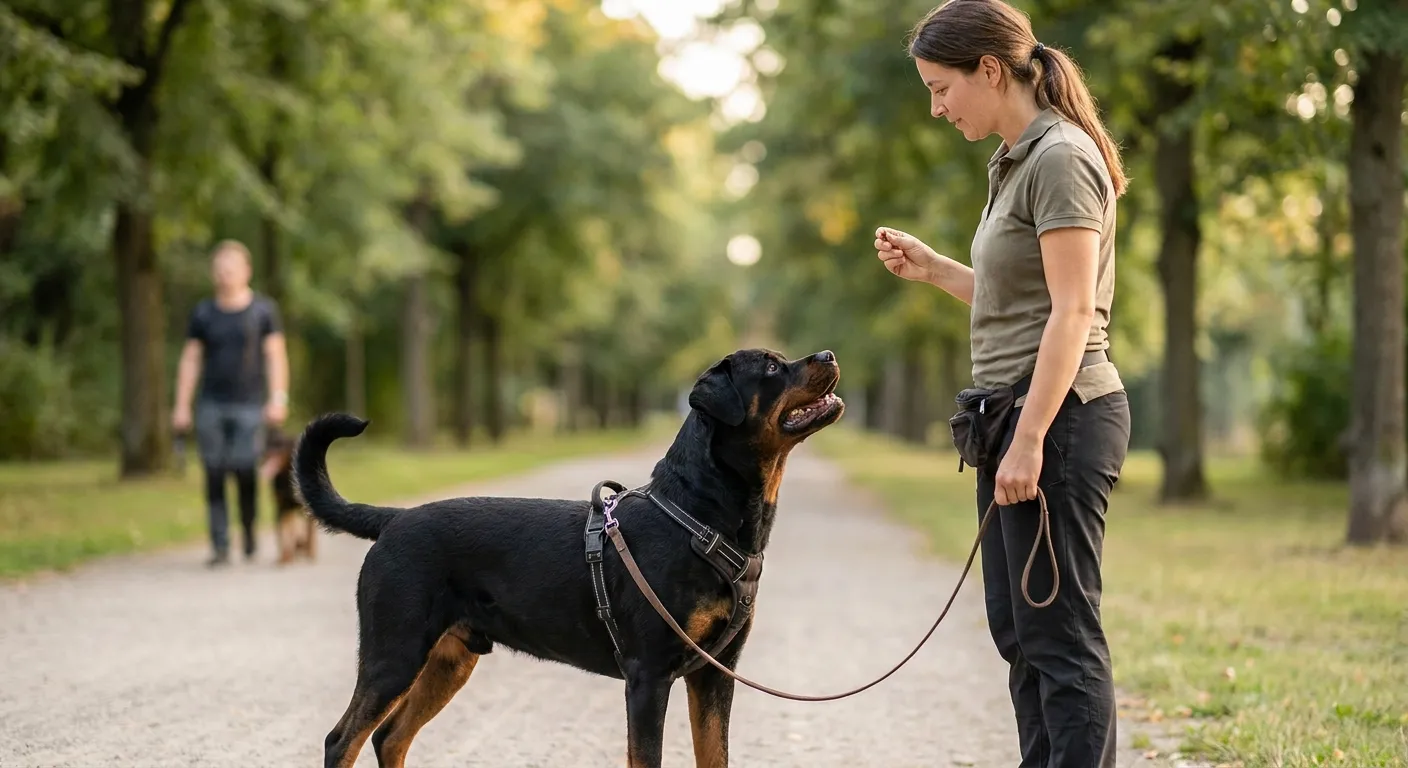
For many Rottweiler owners, walks are a cherished routine. However, encountering another dog or even a person can sometimes trigger what’s known as Rottweiler leash reactivity training, transforming a pleasant stroll into a challenging ordeal. Leash reactivity isn’t aggression; it’s often rooted in fear, frustration, or over-excitement, manifesting as barking, lunging, or pulling. Understanding the nuances of your Rottweiler’s reactions is the first step toward building confidence and calmness on walks. This guide will provide a structured approach to help you manage and mitigate your Rottweiler’s reactive behaviors, fostering a more harmonious walking experience for both of you.
Understanding the Roots of Leash Reactivity in Rottweilers
Rottweilers are powerful, protective, and intelligent dogs. Their natural guarding instincts, combined with a strong prey drive or a lack of early socialization, can contribute to reactive displays on leash. It’s crucial to identify the specific triggers for your dog. Is it other dogs, strangers, cyclists, or specific environments? Observing body language – stiff posture, whale eye, tail tucked or rigid – before the full reaction can offer valuable insights. Often, reactivity is a dog’s way of saying, “Stay away!” because they feel trapped or overwhelmed.
Essential Management Strategies for Leash Reactive Dogs
Before diving into training, effective management is key to prevent your Rottweiler from practicing reactive behaviors, which can reinforce them. Furthermore, consistent management sets the stage for successful long-term progress. Therefore, prioritizing these strategies is paramount.
1. Avoidance and Distance
Initially, the simplest strategy is to avoid known triggers or create significant distance. If you see another dog approaching, cross the street, turn around, or step behind a car. The goal is to keep your dog under their threshold – the point at which they can still notice a trigger without reacting. Consequently, this prevents your dog from rehearsing unwanted behaviors.
2. Equipment Choices
Ensure your Rottweiler is securely equipped. A well-fitting front-clip harness or a head halter can provide better control than a standard collar, distributing pressure more evenly and redirecting their focus. Avoid retractable leashes, which can teach dogs to pull and offer little control in reactive situations. A sturdy 6-foot leash is ideal. Importantly, proper equipment can significantly aid in managing reactive episodes.
3. Predictability and Routine
Rottweilers thrive on routine. Consistent walking times and routes can reduce anxiety. Varying your routes once your dog shows improvement can help generalize their calm behavior to different environments. This consistency provides a sense of security, which is beneficial for a reactive dog. In addition, predictable routines can lower overall stress levels.
Step-by-Step Training Techniques for a Calm Rottweiler
Effective training for leash sensitivity focuses on changing your dog’s emotional response to triggers through positive reinforcement. This approach builds confidence rather than suppressing behavior through punishment. Therefore, patience and consistency are vital.
1. Counter-Conditioning: Changing Associations
This technique aims to change your Rottweiler’s negative association with a trigger into a positive one. When your dog sees a trigger (e.g., another dog) at a distance where they are still calm, immediately reward them with high-value treats. The moment the trigger appears, treats appear. When the trigger disappears, the treats disappear. Over time, your Rottweiler will begin to associate the appearance of the trigger with good things happening. This process is fundamental to effective Rottweiler leash reactivity training.
2. Desensitization: Gradual Exposure
Desensitization involves gradually exposing your Rottweiler to their triggers at increasing levels of intensity, always staying below their reactivity threshold. Start at a distance where your dog barely notices the trigger. As they remain calm, slowly decrease the distance in subsequent sessions. This slow and steady approach is crucial for success. Furthermore, it prevents your dog from becoming overwhelmed.
3. “Look at That” (LAT) Game
The LAT game is a powerful tool for reactive dogs. The moment your Rottweiler looks at a trigger without reacting, say “Yes!” or click, and reward them. The goal is for your dog to look at the trigger, then voluntarily look back at you for a reward. This teaches them to check in with you rather than fixate on the trigger. Consequently, it builds a positive coping mechanism. More information on similar training approaches can be found on resources like the ASPCA website.
4. Engage-Disengage Game
Similar to LAT, this game teaches your dog to look at a trigger, then disengage and focus on you. When your Rottweiler notices a trigger, mark the moment and reward them for looking at it. Then, immediately ask for a simple command like “sit” or “touch” and reward them again. This encourages them to engage with the trigger briefly, then disengage and re-focus on you. This can be particularly helpful for managing frustration-based reactivity.
5. Practicing Loose Leash Walking
A solid foundation in loose leash walking is essential for managing reactivity. If your Rottweiler is constantly pulling, they are already in a heightened state, making reactivity more likely. Practice walking calmly in low-distraction environments before gradually introducing more challenging situations. For detailed guidance, refer to our article on Mastering Loose Leash Walking: A Step-by-Step Guide for Your Rottweiler. Ultimately, a relaxed dog is less likely to react.
Advanced Strategies and Considerations
Once your Rottweiler shows improvement with basic counter-conditioning and desensitization, you can incorporate more advanced techniques. Always remember that progress is not linear, and setbacks can occur. Therefore, maintain patience and consistency.
1. Pattern Games
Pattern games, such as “open bar, closed bar,” involve creating a predictable sequence of events around a trigger. For example, walk towards a trigger (open bar – treats), turn away (closed bar – no treats), walk towards it again (open bar – treats). This predictability helps reduce anxiety and teaches your Rottweiler what to expect. This can be a very effective component of Rottweiler leash reactivity training.
2. “Find It” Game
When a trigger appears, scatter high-value treats on the ground for your Rottweiler to sniff out. This engages their natural sniffing behavior, which is a calming activity. It also redirects their attention away from the trigger and onto a positive, rewarding task. Consequently, this can interrupt a potential reactive outburst.
3. Environmental Management and Controlled Set-ups
Consider setting up controlled encounters with a calm, known dog from a safe distance. This allows for controlled practice without the unpredictability of public spaces. Always ensure these set-ups are positive experiences. Furthermore, it’s vital to have a helper who understands reactive dog behavior. For further reading on canine behavior, explore resources like the American Kennel Club (AKC).
4. Enrichment and Mental Stimulation
A mentally stimulated and physically tired Rottweiler is generally a calmer dog. Provide plenty of appropriate chew toys, puzzle feeders, and opportunities for mental engagement at home. This can reduce overall stress and frustration, making your Rottweiler less prone to reactivity on walks. In fact, mental exercise can be just as tiring as physical exercise.
5. Addressing Underlying Health Issues
Occasionally, pain or discomfort can exacerbate reactive behaviors. If your Rottweiler’s reactivity suddenly worsens or appears without prior history, a veterinary check-up is advisable to rule out any underlying medical conditions. Sometimes, a physical ailment can manifest as behavioral changes. This is an important aspect to consider when managing any behavioral challenge.
When to Seek Professional Help
While this guide offers comprehensive strategies, some Rottweilers may benefit from the guidance of a certified professional dog trainer or a veterinary behaviorist. If your dog’s reactivity is severe, you feel unsafe, or you are not seeing progress, do not hesitate to seek expert assistance. A professional can assess your specific situation and develop a tailored plan. For instance, they might identify nuances you’ve missed. Remember, getting help is a sign of responsible pet ownership.
Moreover, understanding your Rottweiler’s overall temperament can provide valuable context for their reactivity. Our guide on Understanding Rottweiler Temperament: Nurturing Their Best Qualities offers insights into their natural predispositions. This knowledge can enhance your training approach.
Consistency and Patience: The Keys to Success
Training a reactive Rottweiler requires immense patience, consistency, and a positive attitude. There will be good days and challenging days. Celebrate small victories and don’t get discouraged by setbacks. Every successful interaction, no matter how small, builds confidence in your dog and strengthens your bond. Remember, you are teaching your Rottweiler a new way to interact with the world. This journey of behavior modification is a marathon, not a sprint. With dedicated Rottweiler leash reactivity training, you can transform walks into enjoyable, stress-free experiences for both you and your loyal companion. Ultimately, your commitment makes all the difference.
Conclusion
Mastering Rottweiler leash reactivity requires a multi-faceted approach, combining careful management with consistent, positive reinforcement training. By understanding your dog’s triggers, implementing effective strategies like counter-conditioning and desensitization, and maintaining a patient and consistent approach, you can help your Rottweiler overcome their reactive tendencies. Remember to prioritize safety, keep training sessions positive, and seek professional guidance when needed. With dedication, you and your Rottweiler can enjoy calm, confident walks together, strengthening the bond you share and enriching both your lives. This journey towards a calmer companion is incredibly rewarding.
Frequently Asked Questions About Managing Leash Reactivity
What is leash reactivity, and how is it different from aggression?
Leash reactivity refers to a dog’s over-the-top reactions to triggers while on a leash, such as barking, lunging, or pulling. It’s often driven by fear, frustration, or over-excitement rather than an intent to harm. True aggression typically involves biting or attempts to bite. While reactive behavior can look aggressive, it usually stems from an emotional response to feeling trapped or overwhelmed.
How long does it take to train a reactive Rottweiler?
The timeline for training a reactive Rottweiler varies greatly depending on the dog’s individual history, the severity of their reactivity, and the owner’s consistency. It can take several weeks to many months, and for some dogs, it’s an ongoing management process. Patience and commitment are crucial for success.
Can a reactive Rottweiler ever be completely cured?
While many reactive Rottweilers can make significant progress and learn to walk calmly, it’s often more accurate to think of it as management and behavior modification rather than a “cure.” The goal is to change their emotional response and provide them with coping mechanisms, but they may always have a predisposition to reactivity. Consistent training helps them manage it effectively.
What should I do if my Rottweiler has a reactive outburst during a walk?
If your Rottweiler has an outburst, the primary goal is to safely disengage from the trigger and create distance. Do not punish your dog, as this can increase their fear and worsen reactivity. Instead, calmly remove them from the situation. Once you are at a safe distance, help them settle and resume your walk if possible, or head home if they are too stressed. Review the situation to understand what went wrong and adjust your management strategy for the next walk.
Are there specific types of leashes or harnesses that help with reactive dogs?
Yes, equipment can make a difference. A front-clip harness can help redirect your Rottweiler’s pulling power without putting pressure on their throat. Head halters can also offer excellent control and help guide their head away from triggers. Avoid retractable leashes, as they give very little control. A standard 6-foot leash is generally recommended for training and safety.