
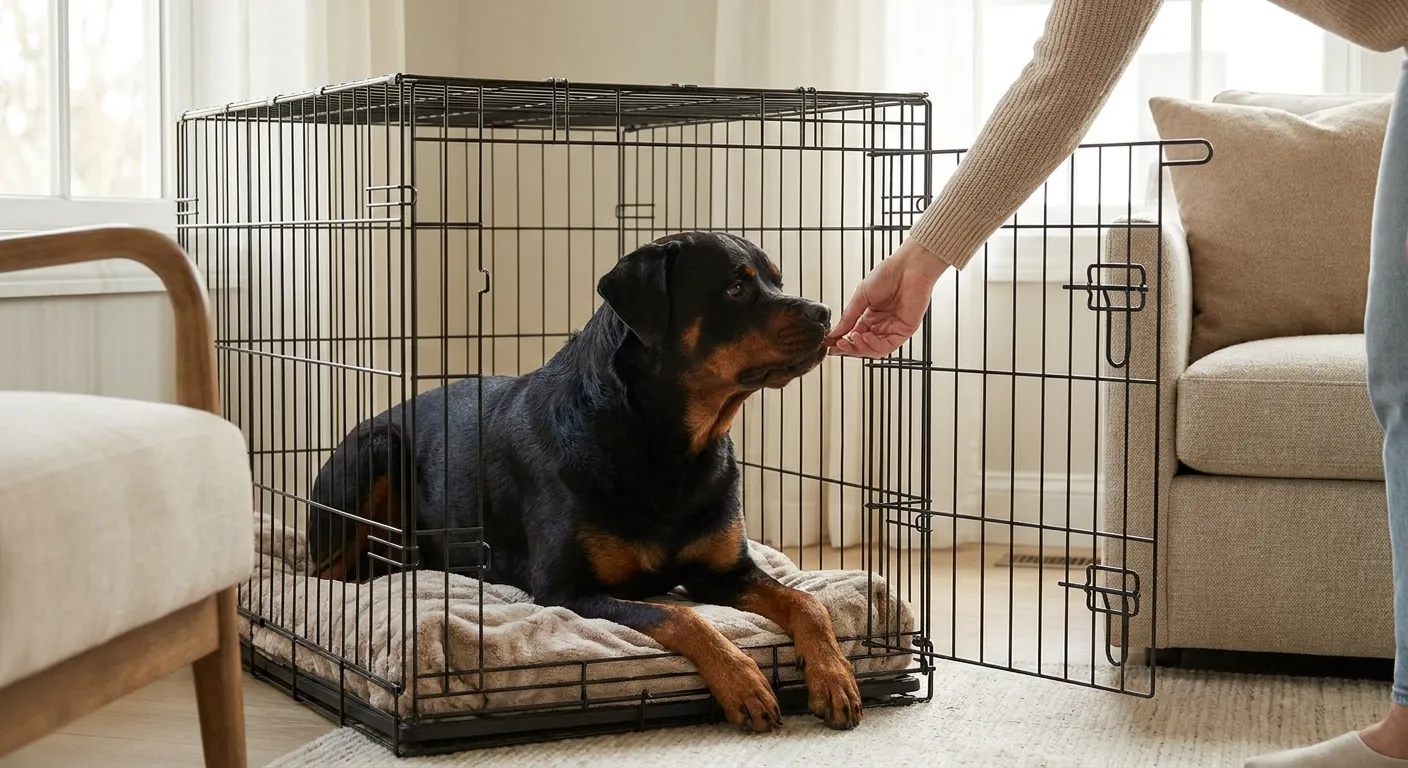
For Rottweiler owners, embracing crate training Rottweilers offers a multitude of benefits. It transforms what some perceive as a cage into a safe, secure den for your dog. When introduced correctly, a crate becomes a valuable tool for house training, managing behavior, and providing a personal sanctuary.
Why Crate Train Your Rottweiler?
Crate training leverages a dog’s natural instinct to keep their sleeping area clean. This makes it an incredibly effective aid for house training. Furthermore, it helps prevent destructive behaviors when you can’t supervise your puppy or adult dog. Ultimately, this protects both your home and your dog from potential harm. Moreover, a crate provides a secure, private space for your Rottweiler to retreat to when they need quiet time, feel overwhelmed, or are recovering from an illness. In emergencies, during travel, or at the vet’s office, a dog accustomed to a crate will experience less stress. This is because it’s a familiar and comforting space. It’s not about confinement, but about providing security and structure for your companion.
Best Practices for Successful Crate Training Rottweilers
Introduce the crate positively and gradually. Start by making the crate inviting with comfortable bedding, toys, and treats. Never force your Rottweiler into the crate or use it as punishment. Begin with short periods, such as feeding meals inside the crate with the door open, then closed for a few minutes. Gradually increase the duration, always ensuring your dog is comfortable before extending the time. If they whine, ignore it initially. However, if they show signs of genuine distress, let them out and try again later with a shorter duration. Ensure the crate is appropriately sized – large enough for them to stand up, turn around, and lie down comfortably. Consistency and patience are key; your Rottweiler will soon view their crate as a safe, personal haven.
Ultimately, crate training Rottweilers responsibly fosters independence, good habits, and provides a safe space for your canine companion.
Understanding the Rottweiler’s Instincts and the Crate
Rottweilers, like many dog breeds, possess a natural denning instinct. In the wild, canids seek out small, enclosed spaces for safety, to raise their young, and to rest. A properly introduced crate mimics this natural den. This provides a sense of security and belonging. Consequently, understanding this instinct is fundamental to successful crate introduction. It helps your Rottweiler perceive the crate not as a punishment, but as their personal refuge. This positive association is vital for long-term success. Moreover, it aids in managing their energy levels and providing a predictable environment, which Rottweilers thrive on.
The Role of Crate Training in Housebreaking
One of the most significant advantages of proper dog crate training is its effectiveness in housebreaking. Dogs instinctively avoid soiling their sleeping areas. Therefore, a crate encourages your Rottweiler to hold their bladder and bowels. This teaches them to wait until they are outside. Initially, take your puppy out immediately after waking from the crate and after meals. This establishes a routine. Consistency is paramount during this phase. As a result, your dog learns to associate outdoor trips with elimination. This method significantly speeds up the house training process, especially for young puppies. Remember, accidents can happen, so always clean the crate thoroughly to remove any lingering odors.
Setting Up the Ideal Crate Environment
The right setup is crucial for your Rottweiler’s comfort and acceptance of their crate. First, choose a sturdy, appropriately sized crate. It should be large enough for your Rottweiler to stand, turn around, and lie down comfortably, but not so large that they can designate a separate potty area. Wire crates are popular for their ventilation and visibility, while plastic crates offer more of a den-like feel. Place comfortable bedding inside, such as a soft blanket or a dog bed. Include a few safe toys to keep them occupied. Consider a KONG filled with peanut butter or a durable chew toy. This creates positive associations. Position the crate in a common area of your home, like the living room, so your Rottweiler still feels part of the family, even when inside their den. This helps prevent feelings of isolation.
Crate Training for Behavioral Management
Beyond house training, a crate is an invaluable tool for managing your Rottweiler’s behavior. When you cannot directly supervise your dog, placing them in their crate can prevent destructive chewing, digging, or other unwanted behaviors. For instance, during meal preparation or when guests arrive, the crate provides a safe, contained space. This prevents your dog from getting underfoot or becoming overstimulated. It also teaches them to settle and be calm. Furthermore, it’s an excellent way to manage a rambunctious puppy’s energy, providing forced quiet time when they are over-tired. This structure is beneficial for a breed like the Rottweiler, which thrives on clear boundaries and routines.
Introducing the Crate: Step-by-Step Guide
Successful crate introduction requires patience and a positive approach. Here’s a step-by-step guide:
- Make it Inviting: Place the crate in a quiet yet accessible area. Leave the door open. Toss treats and toys inside to encourage exploration.
- Positive Association: Feed your Rottweiler meals near, then inside, the crate. Start with the door open. Gradually close the door for short periods while they eat.
- Short Stays: Once your dog is comfortable eating inside, begin short, supervised stays. Ask your Rottweiler to go into the crate. Offer a treat and praise. Close the door for a few minutes. Stay nearby.
- Increase Duration: Slowly increase the time your Rottweiler spends in the crate. Never force them. If they become anxious, shorten the duration and try again later.
- Ignore Whining: Initially, ignore whining or barking. If you let them out every time, they learn that noise gets them released. Only let them out when they are quiet for a brief moment.
- Overnight Stays: Once comfortable with longer periods during the day, introduce overnight stays. Place the crate in your bedroom initially for comfort.
- Never as Punishment: Crucially, never use the crate as punishment. This will create negative associations and undo all your hard work.
Addressing Common Crate Training Challenges
While crate training Rottweilers is highly beneficial, challenges can arise. Persistent whining or barking is common, especially in the beginning. It’s important to distinguish between attention-seeking and genuine distress. If your dog is panicking, you need to intervene and re-evaluate your training pace. For attention-seeking, ignore it until they are quiet for a few seconds, then release them. Separation anxiety can also manifest. If your Rottweiler exhibits extreme distress, consult a professional dog trainer or vet. They can provide tailored advice. Moreover, some dogs may resist entering the crate. In such cases, make the crate even more appealing with high-value treats and favorite toys. Play games around the crate. Always maintain a positive, encouraging attitude.
Crate Training and Travel Safety
A significant benefit of crate training is preparing your Rottweiler for travel. A dog accustomed to a crate will be much calmer and safer during car rides, plane travel, or stays in unfamiliar places. A crate prevents your dog from distracting the driver. It also offers protection in case of an accident. When traveling, the crate provides a familiar, secure space in new environments, reducing stress. For longer trips, ensure your dog has opportunities for potty breaks and stretching. This preparation makes trips to the vet or visits to friends and family much less stressful for everyone involved. For additional safety considerations, explore our resources on Outdoor, Travel & Safety gear.
The Long-Term Benefits of a Crated Rottweiler
A Rottweiler that is well-adjusted to its crate reaps numerous long-term benefits. They learn self-control and patience. The crate becomes a reliable space for them to decompress. This is particularly useful in multi-pet households or during chaotic family gatherings. Furthermore, it aids in recovery from injuries or surgeries by providing a quiet, confined space for rest. This can be critical for their health & wellness. It also provides peace of mind for owners, knowing their dog is safe and secure when left alone. This structure contributes to a confident and well-behaved adult Rottweiler. Ultimately, it strengthens the bond between you and your companion.
Choosing the Right Crate for Your Rottweiler
Selecting the appropriate crate is vital for your Rottweiler’s comfort and safety. As a large breed, Rottweilers require a spacious and robust crate. Consider materials like heavy-duty wire or sturdy plastic. Wire crates offer excellent ventilation and allow your dog to see their surroundings, which some dogs prefer. Plastic crates, often called