It’s easy to think of vet visits as something reserved for emergencies or vaccinations. However, for a powerful and predisposed breed like the Rottweiler, routine checkups are the unsung heroes of long-term health. These appointments aren’t just about shots; they’re comprehensive health assessments. They form the bedrock of preventative care. Neglecting them can mean missing subtle signs of serious conditions. In fact, regular vet checkups for Rottweilers are perhaps the most crucial element in proactive pet parenting.
At RottweilerDogGuide.com, we firmly believe that proactive care is the best way to ensure a long and vibrant life for your Rottweiler. Investing in your Rottweiler’s health with expert-backed information starts with prioritizing consistent veterinary care. Therefore, understanding the value of these visits is paramount for every owner.
Why Routine Visits Matter More Than You Think
Unlike humans, dogs can’t tell us when something feels off. They often instinctively hide pain or discomfort until it becomes severe. This is where your veterinarian’s trained eye becomes invaluable. During a routine checkup, they can detect issues before they escalate. Often, these issues are easier and less costly to treat at an early stage. Consequently, regular health assessments are a cornerstone of responsible dog ownership.
What Happens During a Checkup?
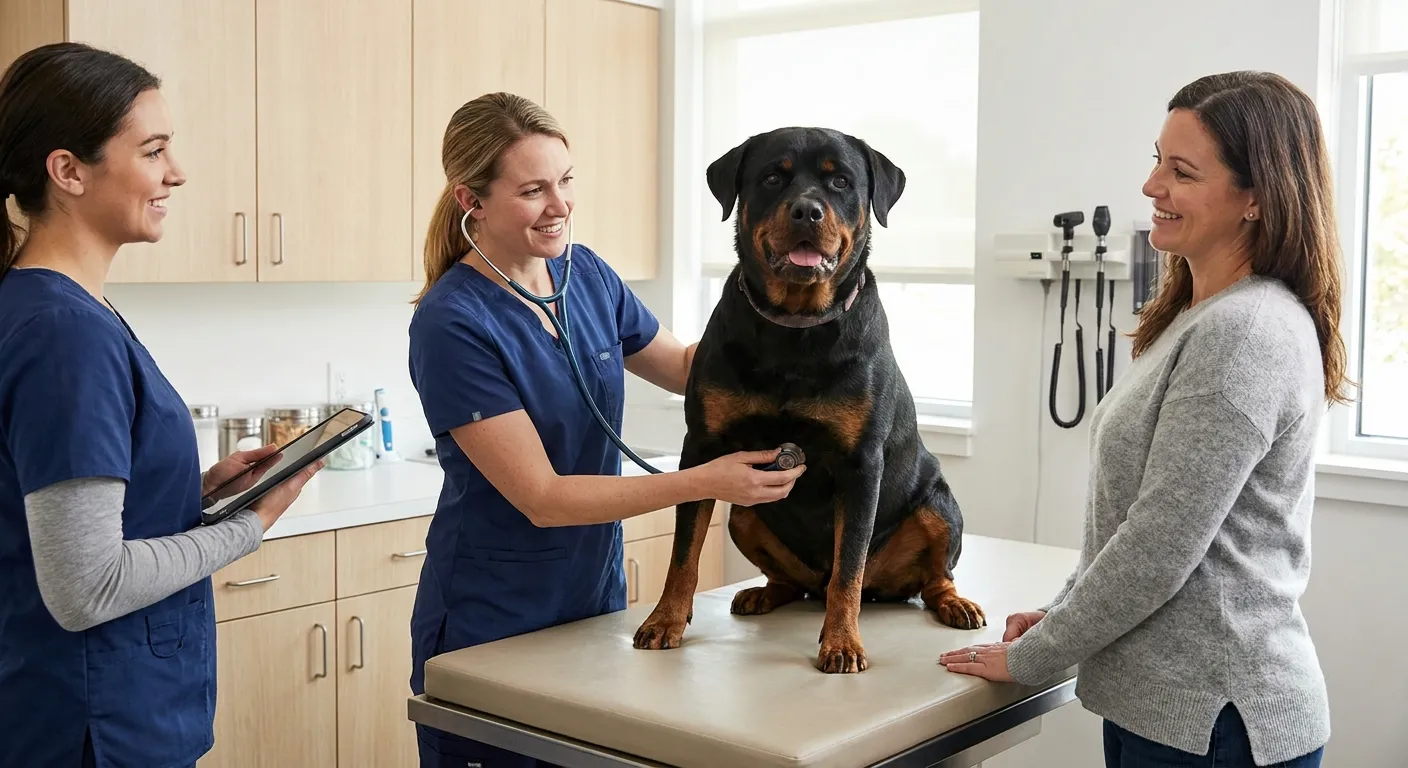
A thorough veterinary visit for your Rottweiler typically includes several key components. First, a comprehensive physical examination is performed. Your vet will check everything from nose to tail – eyes, ears, teeth, skin, coat, paws, and vital organs. They’ll palpate joints, check for lumps, and listen to heart and lungs. This detailed inspection helps identify any visible or palpable abnormalities.
Next, a weight assessment is crucial. Maintaining a lean body condition is critical for Rottweilers. This reduces pressure on their joints. Your vet will advise on ideal weight and nutrition. Furthermore, vaccination review ensures your Rottweiler is up-to-date on necessary vaccinations. This depends on their age, lifestyle, and local risks. Parasite control is also discussed. This involves providing appropriate flea, tick, and heartworm prevention tailored to your dog’s needs.
Dental health check is another vital part of the visit. Oral health is often a gateway to other systemic issues. Your vet will assess for plaque, tartar, and gum disease. A behavioral assessment offers an opportunity to discuss any new or concerning behaviors. Finally, health screenings are important. For Rottweilers, specific screenings (e.g., for hip and elbow dysplasia, heart conditions, hypothyroidism) are often recommended. Sometimes these start as early as six months of age for joint issues. These screenings are vital for early detection of breed-specific ailments.
The Preventative Power of Early Detection
Consider the common Rottweiler health issues. These include hip and elbow dysplasia, osteosarcoma (bone cancer), heart conditions like aortic stenosis, and hypothyroidism. Many of these conditions have better prognoses when detected early. For instance, early diagnosis of joint issues can lead to lifestyle modifications or interventions. These significantly improve long-term outcomes. Regular veterinary evaluations are therefore indispensable.
Your vet can also offer guidance on nutrition tailored to your Rottweiler’s age and activity level. They will discuss appropriate exercise routines. They may also suggest genetic testing if applicable. This holistic approach to health is a significant benefit of consistent vet visits. Moreover, your vet can provide advice on managing common behavioral challenges. This ensures your Rottweiler is not only physically healthy but also mentally well-adjusted.
Addressing Common Rottweiler Health Concerns
Rottweilers, like many large breeds, are predisposed to certain health conditions. Understanding these and actively working with your veterinarian is key. Hip and elbow dysplasia are genetic conditions. They affect the joints. Early screening and management can greatly improve your dog’s quality of life. Osteosarcoma, a type of bone cancer, is another concern. Its early detection through regular examinations can be life-saving. For example, a veterinarian might notice a subtle lameness or swelling during a routine physical.
Heart conditions such as aortic stenosis are also prevalent in the breed. Regular heart auscultation by a vet can identify murmurs. These might indicate underlying issues. Hypothyroidism, a thyroid gland disorder, can manifest with symptoms like weight gain, lethargy, and skin problems. Blood tests during routine checkups can diagnose this condition. Furthermore, the American Kennel Club provides excellent resources on breed-specific health concerns. This information reinforces the importance of informed veterinary care.
The Role of Nutrition and Exercise in Preventative Care
While vet checkups are central, they are part of a larger picture of preventative care. Proper nutrition is fundamental. A high-quality diet supports overall health, strengthens the immune system, and helps maintain an ideal weight. Overweight Rottweilers are at increased risk for joint problems and other health issues. Your vet can recommend specific diets or supplements. This guidance ensures your dog receives optimal nutrition.
Exercise is equally vital. Rottweilers are active dogs. They require regular, structured exercise to maintain muscle mass, joint health, and mental well-being. However, excessive or inappropriate exercise, especially in growing puppies, can exacerbate joint problems. Your veterinarian can help you design an exercise regimen. This plan will be suitable for your dog’s age, health status, and energy levels. Moreover, they can advise on safe activities. This prevents injuries while promoting fitness.
Behavioral Health and Socialization
A healthy Rottweiler is not just physically sound; they are also well-adjusted behaviorally. Early socialization and consistent training are crucial for this breed. They are intelligent and powerful. Behavioral issues can sometimes be linked to underlying medical conditions. For example, sudden aggression or lethargy might indicate pain or illness. During regular vet checkups for Rottweilers, your vet can help differentiate between behavioral problems and medical symptoms. They can also offer referrals to certified dog trainers or behaviorists if needed. This integrated approach addresses both physical and mental well-being.
Partnering with Your Veterinarian: A Lifelong Commitment
Establishing a strong relationship with your veterinarian is essential. Think of your vet as a partner in your Rottweiler’s health journey. They are your primary resource for all medical advice and preventative strategies. Don’t hesitate to ask questions. Discuss any concerns you have about your dog’s health or behavior. A good veterinarian will take the time to explain diagnoses, treatment options, and preventative measures clearly. This collaborative approach empowers you as an owner.
Maintaining accurate records of your dog’s health history is also important. This includes vaccination dates, previous illnesses, medications, and any behavioral changes. Sharing this information with your vet helps them provide the best possible care. Furthermore, adhering to their recommendations for follow-up appointments and specialized screenings is crucial. This is particularly true for conditions common in the Rottweiler breed. The American Veterinary Medical Association emphasizes the importance of regular veterinary care for all pets. This underscores our advice.
Financial Planning for Veterinary Care
It’s a reality that veterinary care can be costly, especially for a large breed like the Rottweiler. Planning for these expenses is a responsible part of pet ownership. Consider pet insurance. Many plans cover routine checkups, vaccinations, and emergency care. Alternatively, setting aside a dedicated savings fund for veterinary expenses can provide peace of mind. Discuss payment options with your vet’s office. Many offer payment plans or accept third-party financing. Prioritizing regular vet checkups for Rottweilers is an investment. It pays off in your dog’s long-term health and your peace of mind.
The Critical Importance of Consistent Care
In conclusion, while emergencies grab our attention, the true foundation of a Rottweiler’s health lies in consistent, preventative care. Regular vet checkups for Rottweilers are not just appointments; they are crucial health interventions. They allow for early detection, proactive management, and personalized care. These visits ensure your powerful companion remains healthy, happy, and vibrant for as long as possible. By prioritizing these checkups, you are fulfilling your commitment to your Rottweiler’s well-being. You are providing them with the best chance at a full, active life. Remember, a healthy Rottweiler is a happy Rottweiler, and it all starts with their vet.
FAQ
Why are routine vet visits so important for my Rottweiler?
Routine veterinary visits are essential because Rottweilers, like many large breeds, are prone to specific health issues. These visits allow for early detection of conditions like hip dysplasia, heart problems, or certain cancers. Early diagnosis often leads to more effective and less costly treatment. Also, dogs tend to hide pain, so a professional examination can uncover hidden problems.
How often should my adult Rottweiler see the vet?
Generally, healthy adult Rottweilers should have a comprehensive veterinary examination at least once a year. However, your veterinarian might recommend more frequent visits. This could happen if your dog has an ongoing health condition, is a senior, or has specific risk factors. Always follow your vet’s personalized advice.
What specific health screenings are recommended for Rottweilers during checkups?
For Rottweilers, veterinarians often recommend screenings for hip and elbow dysplasia, heart conditions (like aortic stenosis), and hypothyroidism. Additionally, your vet may suggest genetic testing or specific cancer screenings, especially as your dog ages. These proactive measures are crucial for this breed’s well-being.
Can my vet help with my Rottweiler’s diet and exercise?
Absolutely. Your veterinarian is an excellent resource for personalized advice on your Rottweiler’s nutrition and exercise needs. They can recommend specific diets based on age, activity level, and health status. They can also help design a safe and effective exercise plan to maintain optimal weight and joint health.
What are some signs that my Rottweiler might need an unscheduled vet visit?
Look out for changes in appetite or water intake, sudden lethargy, vomiting or diarrhea, limping, difficulty breathing, excessive panting, unusual lumps or bumps, changes in urination, or any sudden behavioral shifts like aggression or withdrawal. If you notice any of these symptoms, contact your veterinarian promptly.
Explore more: More from Rottweiler Dog Guide