
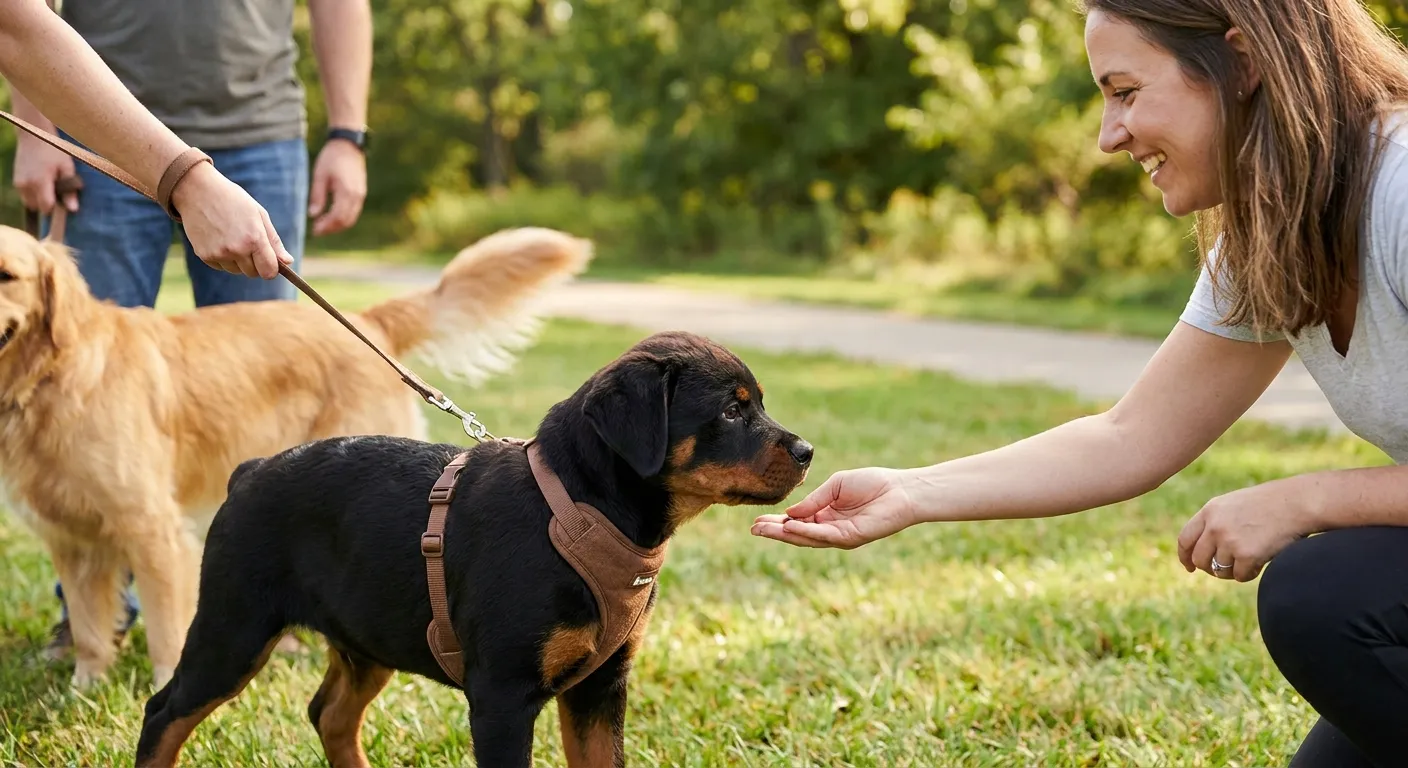
For any Rottweiler owner, understanding and implementing effective Rottweiler puppy socialization tips is not just beneficial; it’s absolutely crucial. The period between 3 and 16 weeks is a critical window for a Rottweiler’s development, profoundly shaping their temperament and behavior as an adult. Neglecting early socialization can lead to fear, aggression, or anxiety, traits that are particularly challenging in a powerful breed like the Rottweiler. This guide will walk you through essential strategies to help your Rottweiler puppy grow into a well-adjusted, confident, and beloved family member.
The Critical Window for Puppy Socialization
The first few months of a Rottweiler’s life are akin to a sponge absorbing information about the world. During this critical socialization period, puppies are most receptive to new experiences and least likely to develop lasting fears. Every positive interaction during this time builds a foundation of confidence and resilience. Conversely, negative or absent experiences can create lasting anxieties. Our goal is to expose your Rottweiler pup to a wide variety of sights, sounds, people, and other animals in a controlled, positive manner, ensuring they perceive the world as a safe and interesting place rather than a source of threats. Remember, a well-socialized Rottweiler is a joy to live with and a true testament to responsible ownership.
Safe & Effective Socialization Strategies
Effective social training for Rottweiler puppies requires a thoughtful, gradual approach, always prioritizing safety and positive reinforcement. Here are key areas to focus on:
People Exposure
Introduce your puppy to a diverse range of people: men, women, children, people wearing hats, glasses, or uniforms, and individuals of different ages and ethnicities. Ensure these interactions are always positive. Ask friends and family to offer treats or gentle praise. Avoid overwhelming your puppy; short, positive encounters are far more effective than long, stressful ones. Teach children how to interact respectfully with puppies, emphasizing gentle touches and calm voices. Furthermore, varied experiences with different people help your puppy develop a balanced view of human interaction.
Sound Desensitization
Puppies can be startled by common household noises or outdoor sounds. Gradually expose your Rottweiler pup to various sounds like vacuum cleaners, doorbells, traffic, thunder, and even children playing. Start at a low volume and reward calm behavior. You can find sound desensitization tracks online specifically designed for puppies. The goal is to normalize these sounds, so they don’t trigger a fear response later. In fact, consistent exposure helps build resilience.
Controlled Dog Interactions
While important, interactions with other dogs must be carefully managed. Ensure your puppy meets only fully vaccinated, calm, and well-behaved adult dogs. Puppy classes are an excellent way to facilitate supervised play with other puppies of similar size and temperament. Avoid dog parks until your puppy is fully vaccinated and has a solid foundation of good behavior. Instead, arrange playdates with trusted dogs known to be gentle and friendly. This careful approach helps prevent negative experiences that could lead to fear or aggression later on. Therefore, selecting appropriate playmates is paramount.
Exploring New Environments
Take your Rottweiler puppy to various safe, public places that are not overly crowded. Consider visiting pet-friendly stores, quiet parks, or even just walking around different neighborhoods. The goal is to expose them to new sights, smells, and textures. Always keep your puppy on a leash and ensure their safety. Moreover, bring treats to make these new experiences positive and rewarding. This broad exposure contributes significantly to a well-rounded and adaptable temperament. For additional guidance on managing behavior in new settings, you might find our article on Solving Common Rottweiler Behavior Challenges: Chewing & Excessive Barking helpful.
Handling and Grooming
Regularly handle your puppy’s paws, ears, tail, and mouth. Make these experiences positive by offering treats and praise. This practice will make future vet visits and grooming sessions much less stressful. Similarly, introduce brushing, nail trims, and even baths gradually. Early positive experiences with handling are crucial for cooperation throughout their life. In addition, consistent positive reinforcement during these sessions will foster trust. Our guide on Essential Rottweiler Grooming: A Complete Routine for Health and Shine offers further insights.
The Importance of Positive Reinforcement
Positive reinforcement is the cornerstone of effective socialization. Always reward calm, confident behavior with treats, praise, or gentle petting. Never force your puppy into a situation they find frightening. If your puppy shows signs of fear (tail tucked, ears back, cowering), gently remove them from the situation and try again later with a less intense exposure. The goal is to create positive associations, not to traumatize. Consequently, patience and understanding are key. Remember, every interaction is a learning opportunity for your young Rottweiler.
Preventing Overwhelm and Negative Experiences
While broad exposure is important, it’s equally vital to prevent your puppy from becoming overwhelmed. Too many new experiences at once, or experiences that are too intense, can be counterproductive. Always observe your puppy’s body language. If they seem stressed or fearful, it’s time to take a break. Short, positive sessions are far more effective than long, stressful ones. Furthermore, always ensure that any interactions with other dogs or people are supervised and safe. A single negative experience can have a lasting impact, especially during the critical socialization window. Therefore, careful management is essential.
Continuing Socialization Beyond Puppyhood
Socialization isn’t a one-time event; it’s an ongoing process throughout your Rottweiler’s life. While the puppy phase is critical, continued exposure to new situations, people, and well-behaved dogs will help maintain their confidence and adaptability. Regular walks in different areas, visits to pet-friendly establishments, and enrolling in advanced obedience classes can all contribute to lifelong good behavior. Moreover, consistent positive experiences will reinforce their early learning. For example, continuing to expose them to various environments will help them remain comfortable and calm. This ongoing effort will ensure your Rottweiler remains a well-adjusted companion.
Addressing Specific Challenges with Rottweiler Puppy Socialization Tips
Some Rottweiler puppies might be naturally more timid or more boisterous. For timid puppies, a slower, more gradual approach is necessary. Start with very brief exposures and gradually increase the duration and intensity as they gain confidence. For more boisterous puppies, focus on teaching calm greetings and impulse control. Both types of puppies benefit from consistent training and clear boundaries. Likewise, early intervention is always best if you notice any concerning behaviors. If you are struggling, consider consulting a professional dog trainer or behaviorist. They can provide tailored Rottweiler puppy socialization strategies. Remember, their expertise can be invaluable.
The Role of a Reputable Breeder
The foundation for good socialization often starts before you even bring your puppy home. A reputable breeder will have already begun the socialization process, exposing puppies to various sights, sounds, and gentle handling. They will also prioritize healthy genetics, which can influence temperament. Choosing a puppy from a breeder who understands the importance of early development significantly sets you up for success. Consequently, this initial effort makes your job easier. You can learn more about finding the right breeder in our guide on Choosing a Reputable Rottweiler Breeder: Your Guide to a Healthy Puppy.
Integrating Training into Socialization
Socialization and training go hand-in-hand. Teaching basic commands like