
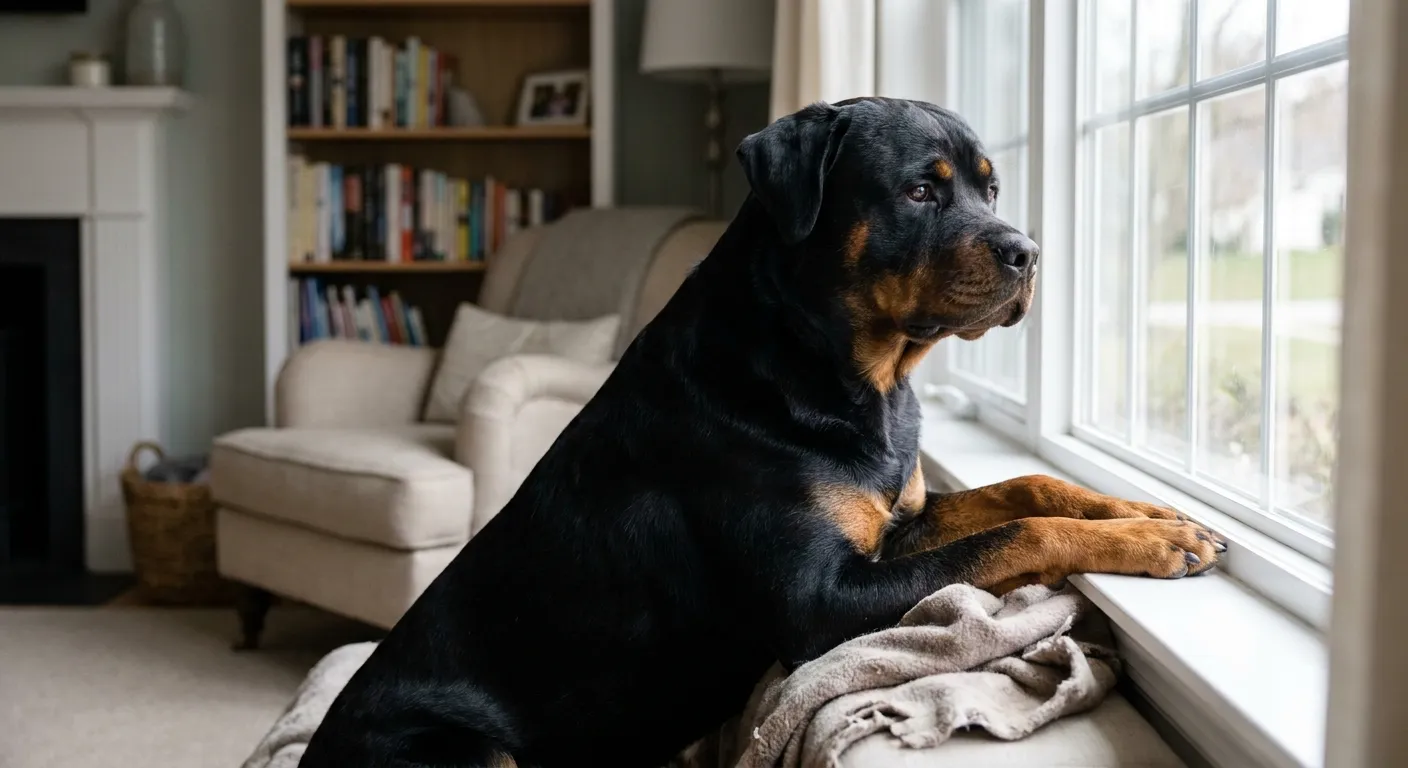
Rottweilers are renowned for their unwavering loyalty and deep bonds with their human families. Consequently, this strong attachment can sometimes lead them to develop Rottweiler separation anxiety. This condition manifests as significant distress when they are left alone, ranging from subtle whining to more pronounced destructive behaviors, excessive barking, house soiling, and even self-harm. Recognizing these signs early and implementing compassionate, proactive strategies is absolutely vital for your dog’s overall well-being and, moreover, for maintaining a harmonious and peaceful home environment.
Understanding the Roots of Rottweiler Separation Anxiety
Separation anxiety in Rottweilers isn’t merely about misbehavior; rather, it’s an underlying panic disorder. Your dog isn’t acting out of spite; they are genuinely experiencing fear and distress. Several factors can contribute to the development of this condition. For instance, a sudden change in routine, such as an owner starting a new job or moving to a new home, can trigger anxiety. Similarly, a traumatic event, like being rehomed or experiencing a prolonged period of isolation, might also play a role. Furthermore, some Rottweilers, especially those with particularly strong protective instincts, may be more predisposed to developing this issue if they feel their ‘pack’ is incomplete without them. Understanding these potential triggers is the first step toward effective management.
Moreover, the breed’s inherent desire for companionship means they thrive on interaction. When this interaction is abruptly removed, especially for long periods, it can create a void that manifests as anxiety. It’s crucial for owners to remember that this isn’t a reflection of poor training, but rather an emotional response that requires empathy and a structured approach. Consequently, addressing the emotional core of the problem, not just the symptoms, is paramount for lasting success.
Recognizing the Specific Signs of Rottweiler Separation Anxiety
It is essential to differentiate between normal puppy behavior or simple boredom and genuine separation anxiety. True signs of separation anxiety invariably occur only when your Rottweiler is left alone or separated from their primary attachment figure. These indicators can include: incessant pacing, excessive drooling, persistent panting, destructive chewing (often focused around doors, windows, or other exit points), continuous howling or barking, and inappropriate urination or defecation inside the house. You might also notice a frantic greeting upon your return, even after a short absence. Observing these specific patterns consistently can help confirm if you’re indeed dealing with true Rottweiler separation anxiety rather than a straightforward training or boredom issue.
Furthermore, some Rottweilers might try to escape their confinement, potentially injuring themselves in the process. They may chew on crates, scratch at doors, or even try to jump through windows. Such behaviors are clear distress signals. Additionally, a dog with separation anxiety might refuse to eat or drink when left alone, despite being offered food and water. These subtle and overt signs collectively paint a picture of a dog struggling with intense emotional discomfort when solitary. Therefore, careful observation before, during (via cameras), and after your absence is incredibly helpful.
Effective Strategies for Managing and Preventing Rottweiler Separation Anxiety
Addressing separation anxiety requires a compassionate and multi-faceted approach. Initially, focus on desensitization training. Practice leaving your Rottweiler for very brief periods, perhaps just seconds, gradually increasing the duration as they consistently remain calm. This gradual exposure helps them learn that your departures are not permanent and that you will always return. In addition, vary your departure cues; for example, don’t always grab your keys right before you leave. This helps decouple specific actions from the anxiety of your absence.
Creating a safe, comfortable, and predictable space for your dog is also crucial. This could be a crate, a specific room, or a designated bed. Ensure this area contains familiar scents, calming music, or interactive puzzle toys to keep them mentally occupied. These items can provide comfort and distraction during your absence. For instance, a KONG filled with frozen peanut butter can keep a Rottweiler engaged for a significant period. Consequently, this helps associate alone time with positive, rewarding experiences.
The Role of Exercise and Mental Stimulation
Ensure your Rottweiler receives adequate physical exercise and mental stimulation before you leave. A tired dog is, quite often, a calm dog. A brisk walk, a vigorous play session, or a trip to the dog park can significantly reduce their energy levels and make them more likely to rest while you’re away. Moreover, engaging their minds with training exercises or scent work can be just as tiring as physical activity. Consider activities like obedience training or teaching new tricks, which can be found in many Rottweiler care books. This proactive approach can greatly mitigate the onset of Rottweiler separation anxiety symptoms.
Furthermore, mental enrichment is paramount. Puzzle feeders, snuffle mats, and chew toys can provide engaging activities that redirect anxious energy into productive outlets. Regularly rotating these items can keep your Rottweiler interested and prevent boredom. Therefore, a comprehensive approach that combines physical exertion with mental challenges is far more effective than just one or the other.
Establishing Healthy Departure and Return Routines
Avoid making a big fuss when you leave or return. Overly enthusiastic greetings or prolonged goodbyes can inadvertently heighten your Rottweiler’s anxiety, signaling that your departure is a significant, stressful event. Instead, aim for calm, understated departures and arrivals. For example, give your dog a quiet pat and a treat a few minutes before you walk out the door, then simply leave. Upon returning, wait a few minutes until your dog is calm before offering a calm greeting. This teaches them that your comings and goings are normal parts of the day, not dramatic events. This consistency is key to reducing stress associated with Rottweiler separation anxiety.
In addition, establishing a predictable daily routine can provide a sense of security for your Rottweiler. Consistent feeding times, walk schedules, and play sessions help them understand what to expect throughout the day, which can reduce overall anxiety. Similarly, ensuring their feeding gear is always available can also contribute to this sense of routine. Predictability, in essence, creates a stable emotional environment.
Considering Professional Help for Severe Cases
In severe cases of Rottweiler separation anxiety, consulting with a professional certified dog trainer or a veterinary behaviorist is highly recommended. These experts can provide tailored advice, conduct thorough assessments, and develop a comprehensive treatment plan specific to your dog’s needs. They might suggest advanced behavioral modification techniques, specific counter-conditioning exercises, or environmental adjustments. For example, a behaviorist might recommend specific pheromone diffusers or calming supplements as part of the overall strategy. They can also help rule out any underlying health issues that might be contributing to the behavior.
In some instances, medication may be considered as part of a comprehensive treatment plan, especially when anxiety levels are debilitating. This is typically a temporary measure, used in conjunction with behavioral therapy to help your Rottweiler feel more secure and less anxious when alone. Always discuss medication options thoroughly with your veterinarian or a board-certified veterinary behaviorist. They can prescribe appropriate medications and monitor your dog’s response. For more information on animal behavior and treatment, resources like the American College of Veterinary Behaviorists website can be invaluable.
Building Independence and Confidence
Beyond direct training for alone time, fostering overall independence and confidence in your Rottweiler can significantly reduce their reliance on your constant presence. Encourage independent play with toys, engage in training that builds their problem-solving skills, and ensure they have a strong foundation in basic obedience. Confidence-building activities, such as agility or scent work, can empower your dog. You can find excellent training and control gear to assist with these endeavors. Moreover, ensuring they have positive interactions with other dogs and people can broaden their comfort zone. A well-adjusted, confident Rottweiler is less likely to panic when left alone, therefore making them more resilient to developing intense Rottweiler separation anxiety.
It’s also beneficial to teach your Rottweiler a ‘settle’ command. This involves rewarding them for calmly lying down on their bed or in their designated safe space. Practicing this when you are home can help them generalize the behavior to when you are away. Furthermore, providing a variety of stimulating toys, perhaps from the Rottweiler Shop, can keep them engaged even when you are present but not directly interacting. This reinforces the idea that they can entertain themselves effectively.
Long-Term Management and Patience
Managing Rottweiler separation anxiety is often a long-term commitment that requires immense patience and consistency. There will likely be setbacks, but it’s important not to get discouraged. Celebrate small victories and remain consistent with your training and routine. Remember that your Rottweiler is learning to cope with a deeply ingrained emotional response, which takes time and understanding. Regularly review your strategies and be prepared to adjust them as your dog progresses. Maintaining a positive and calm demeanor yourself will also greatly benefit your dog, as they are highly attuned to your emotions. For additional insights on managing dog behavior, the ASPCA’s resources on separation anxiety offer excellent guidance.
In conclusion, addressing Rottweiler separation anxiety involves a holistic approach that combines behavioral modification, environmental enrichment, consistent routines, and, when necessary, professional guidance. By understanding the root causes, recognizing the signs, and implementing compassionate strategies, you can help your loyal companion feel secure, confident, and content, even when they are alone. Your dedication will undoubtedly lead to a happier, healthier Rottweiler and a more peaceful home.
FAQ
What are the first signs of separation distress in a Rottweiler?
The earliest signs often include mild whining or pacing when you prepare to leave. You might also notice them becoming increasingly clingy or following you more closely around the house before your departure. These subtle cues indicate growing unease.
Can specific toys help with a dog’s anxiety when left alone?
Yes, interactive puzzle toys and durable chew toys can significantly help. Toys that dispense treats or require mental effort can keep your Rottweiler occupied and redirect their focus from your absence. Long-lasting chews are also excellent.
Is it true that making a big deal of leaving makes the problem worse?
Absolutely. Overly emotional goodbyes or greetings can inadvertently reinforce to your Rottweiler that your departure is a highly significant and potentially distressing event. Aim for calm, understated interactions to minimize this association.
When should I consider professional help for my dog’s alone-time issues?
You should seek professional help if your Rottweiler’s anxiety leads to destructive behavior, self-harm, excessive vocalization that bothers neighbors, or if your own efforts are not yielding significant improvement. A certified trainer or veterinary behaviorist can offer expert guidance.
Are there any natural remedies for canine anxiety?
Some owners find success with natural calming aids like pheromone diffusers, calming supplements containing ingredients like L-theanine or chamomile, or even specialized calming music designed for dogs. However, these should always be used in conjunction with behavioral training and discussed with your vet.