
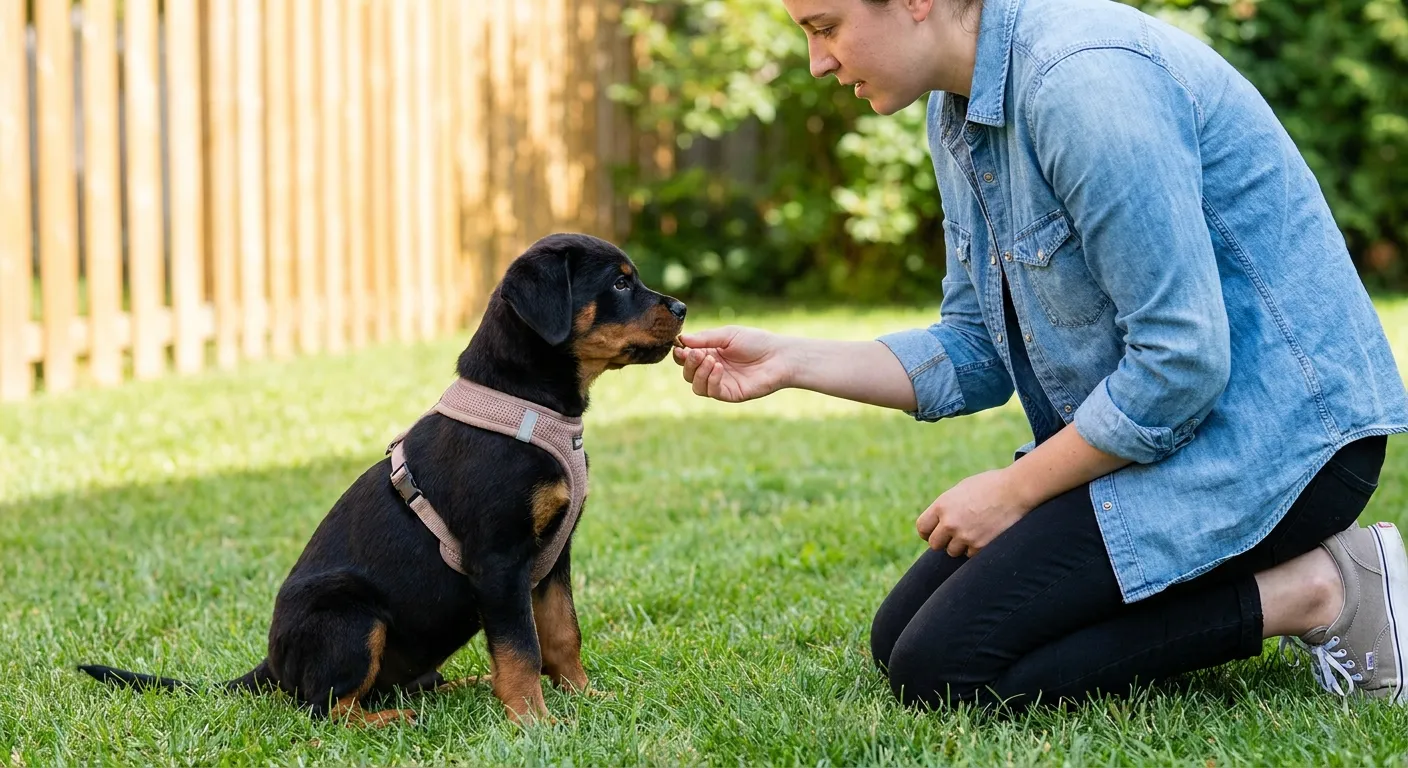
Rottweilers are renowned for their intelligence, loyalty, and protective instincts. These traits, while admirable, also underscore the critical importance of early and consistent training. Learning how to train a Rottweiler puppy effectively isn’t just about teaching commands; it’s about shaping their character, building a strong bond, and ensuring they grow into a well-behaved, confident, and socially responsible adult dog. Without proper guidance, their powerful physique and strong will can become challenging. This guide focuses on positive reinforcement methods to harness their potential from a young age.
Understanding the Rottweiler Temperament: A Foundation for Training
Before diving into specific techniques, it’s vital to understand the Rottweiler’s inherent nature. They are:
- Intelligent: Rottweilers are quick learners, but their intelligence means they can also learn undesirable behaviors just as quickly if not guided properly. Therefore, consistency is key.
- Loyal and Protective: They form deep bonds with their families and have a natural guarding instinct. Early socialization and training help channel this protectiveness appropriately. For more insight into their nature, read our guide on Understanding Rottweiler Temperament.
- Confident and Strong-Willed: A Rottweiler needs a confident, consistent, and fair leader. Inconsistency can lead to confusion and a dog that tests boundaries.
- Energetic: Puppies, especially, have boundless energy. Training sessions should be short, engaging, and frequent to match their attention span and energy levels.
The Power of Positive Reinforcement to Train a Rottweiler Puppy
When you train a Rottweiler puppy, positive reinforcement is your most effective tool. This method focuses on rewarding desired behaviors, making it more likely your puppy will repeat them. Avoid harsh corrections or punishment, which can damage your bond and lead to fear or aggression in a Rottweiler. Instead, strive for a relationship built on trust and mutual respect.
- Treats: High-value, small, soft treats are excellent motivators. These should be given immediately after the desired action.
- Praise: Enthusiastic verbal praise (‘Good boy!’, ‘Yes!’) is crucial. Use a happy, upbeat tone.
- Play: A quick game with a favorite toy can also be a reward. This is especially good for puppies with a strong play drive.
Essential Basic Commands for Your Rottweiler Puppy
Start with these foundational commands as soon as your puppy settles in. Keep sessions short (5-10 minutes), fun, and frequent throughout the day. Repetition in short bursts is far more effective than long, infrequent sessions. Furthermore, always end on a positive note.
1. Sit
Hold a treat near your puppy’s nose. Slowly move it up and back over their head. As their head goes up, their rear naturally lowers. As soon as their bottom touches the ground, say ‘Sit!’ and reward them. Practice this in various locations. Consequently, your puppy will generalize the command.
2. Stay
Once your puppy can ‘Sit,’ ask them to ‘Sit.’ Then, with your palm facing them, say ‘Stay.’ Take one step back. If they remain, reward them. Gradually increase distance and duration. If they move, gently guide them back to the original spot and start again. Patience is key here.
3. Come (Recall)
This is perhaps the most critical command for safety. Start in a quiet, enclosed space. Get down to your puppy’s level, open your arms, and excitedly say ‘Come!’ As they approach, reward them generously. Gradually introduce distractions and practice in different environments. This command can literally save your dog’s life.
4. Down
With your puppy in a ‘Sit’ position, hold a treat directly in front of their nose. Slowly lower the treat to the floor between their paws, then drag it away from them along the floor. Their nose should follow the treat, causing their body to lie down. As they lie down, say ‘Down!’ and reward. This command requires a bit more coordination.
5. Leave It
This command teaches impulse control. Place a treat on the floor and cover it with your hand. When your puppy tries to get it, say ‘Leave It!’ As soon as they look away from your hand, uncover the treat and give them a different, higher-value treat from your other hand. This teaches them that ignoring something leads to a better reward. Practice with various tempting items.
Socialization: Beyond Basic Commands for Your Rottweiler Puppy
While mastering commands is crucial, proper socialization is equally vital for a well-adjusted Rottweiler. Early exposure to various sights, sounds, people, and friendly dogs helps prevent fear-based aggression or excessive shyness. For detailed guidance, consult our resource on Rottweiler Puppy Socialization.
The Critical Socialization Window
The prime socialization window for puppies is between 3 and 16 weeks of age. During this time, puppies are most receptive to new experiences. Positive encounters during this period significantly impact their adult behavior. Therefore, make every interaction a good one.
Safe Socialization Practices
- Controlled Encounters: Arrange playdates with vaccinated, friendly adult dogs. Ensure interactions are supervised and positive.
- New Environments: Take your puppy to different places – parks (before they are fully vaccinated, carry them), pet-friendly stores, and quiet streets. Expose them to different surfaces, noises, and smells.
- Meet New People: Introduce your puppy to a variety of people – men, women, children, people with hats or glasses, people of different ethnicities. Always ensure these interactions are gentle and positive.
- Sound Exposure: Play recordings of various sounds, such as thunderstorms, city traffic, or vacuum cleaners, at a low volume. Gradually increase the volume as your puppy becomes comfortable.
Addressing Common Puppy Challenges When You Train a Rottweiler Puppy
Puppyhood comes with its unique set of challenges. Understanding how to address these effectively will strengthen your bond and ensure smoother progress as you train a Rottweiler puppy.
Potty Training
Consistency is paramount. Take your puppy out frequently: first thing in the morning, last thing at night, after waking from naps, after eating, and every 1-2 hours in between. Reward immediately when they eliminate outside. Clean accidents thoroughly with an enzymatic cleaner to remove odors that might attract them back to the same spot. Crate training can be a valuable tool, as dogs naturally avoid soiling their sleeping area.
Nipping and Biting
Puppies explore the world with their mouths. However, Rottweiler puppies have strong jaws, so teaching bite inhibition is crucial. When your puppy nips too hard, yelp loudly and immediately withdraw attention for a few seconds. This mimics how littermates teach each other. Redirect nipping to appropriate chew toys. Persistent nipping may require professional guidance.
Chewing
Rottweilers love to chew, and this instinct intensifies during teething. Provide a variety of appropriate chew toys – durable rubber toys, puzzle feeders, and safe dental chews. Rotate toys to keep them interesting. If your puppy chews something inappropriate, redirect them to an approved toy. Importantly, puppy-proof your home to remove tempting, unsafe items. For more tips on managing this, see our article on Solving Common Rottweiler Behavior Challenges: Chewing & Excessive Barking.
Leash Training
Introduce the collar and leash early, allowing your puppy to wear them for short periods indoors under supervision. Make it a positive experience with treats. Once they are comfortable, begin practicing loose leash walking in a quiet area. Reward every step taken without pulling. This foundational skill is essential for enjoyable walks. For further assistance, check out our guide on Mastering Loose Leash Walking.
Advanced Training and Continued Learning
While early obedience is foundational, training is a lifelong journey with a Rottweiler. After mastering basic commands, consider advancing to more complex skills. This keeps their intelligent minds engaged and strengthens your partnership.
Beyond Basic Obedience
- Advanced Commands: Teach commands like ‘heel,’ ‘front,’ ‘place,’ and ‘send away.’ These commands build on the basics and offer more control.
- Trick Training: Teaching tricks like ‘shake a paw,’ ‘roll over,’ or ‘fetch’ is a fantastic way to bond with your Rottweiler and provide mental stimulation.
- Canine Sports: Rottweilers excel in various dog sports such as obedience, rally, agility, and protection work. These activities provide an outlet for their energy and intelligence.
Maintaining Good Behavior
Regularly practice all learned commands. Even once your Rottweiler knows a command perfectly, periodic refreshers help maintain consistency. Introduce new challenges and distractions to ensure they can perform commands reliably in any situation. Furthermore, continue to provide ample mental and physical exercise. A bored Rottweiler is often a mischievous Rottweiler.
The Importance of Consistency and Patience
To successfully train a Rottweiler puppy, consistency and patience are your most valuable assets. Every member of the household should use the same commands, rewards, and rules. Inconsistency can confuse your puppy and slow down progress. Remember that puppies learn at different paces; celebrate small victories and don’t get discouraged by setbacks. Each training session should be a positive experience for both you and your puppy. Building a strong, trusting relationship is the ultimate goal.
Moreover, consider enrolling in puppy classes. These classes provide a structured environment for learning, offer valuable socialization opportunities, and allow you to consult with professional trainers. A good trainer can offer personalized advice and help you navigate specific challenges. The American Kennel Club (AKC) offers resources for finding qualified trainers and puppy classes in your area. Finding a Dog Trainer is a great place to start.
Health and Wellness: Supporting Your Training Efforts
A healthy puppy is a happy puppy, and a happy puppy is more receptive to training. Ensure your Rottweiler puppy receives optimal nutrition, regular veterinary care, and sufficient rest. A balanced diet provides the energy needed for learning and play. Regular check-ups help catch any health issues early that might impact behavior or training. Furthermore, sufficient sleep is crucial for a puppy’s development and ability to concentrate. The American Veterinary Medical Association (AVMA) offers comprehensive puppy care guidelines.
Remember that training is an ongoing process. As your Rottweiler grows from puppyhood into adolescence and adulthood, their needs and challenges will evolve. Continuing to provide consistent training, socialization, and mental stimulation will ensure they remain a well-behaved, confident, and cherished member of your family for years to come. Ultimately, the effort you put into training your Rottweiler puppy now will pay dividends in a loyal and obedient companion.
Conclusion
Learning how to train a Rottweiler puppy effectively sets the foundation for a lifetime of companionship and good behavior. By understanding their unique temperament, employing positive reinforcement, focusing on early socialization, and addressing common challenges with patience and consistency, you can nurture your Rottweiler into a confident, well-adjusted, and cherished family member. Remember, training is a journey of bonding and mutual respect. Enjoy every step of the process with your intelligent and loyal Rottweiler companion.
Frequently Asked Questions
What age is best to start training a Rottweiler puppy?
You can begin basic obedience training and socialization as soon as your Rottweiler puppy comes home, typically around 8 weeks of age. Short, positive sessions daily are most effective at this young age.
Are Rottweilers difficult to train?
Rottweilers are highly intelligent and eager to please their owners, making them very trainable. However, their strong will and protective instincts mean they require consistent, firm, but fair leadership and early socialization to prevent undesirable behaviors.
What are the most important commands for a young Rottie?
Essential commands for a young Rottweiler include ‘Sit,’ ‘Stay,’ ‘Come’ (recall), ‘Down,’ and ‘Leave It.’ These commands form the foundation for good behavior and ensure their safety.
How long should training sessions be for a Rottweiler puppy?
Keep training sessions short and frequent, ideally 5-10 minutes each, several times a day. Puppies have short attention spans, so brief, engaging sessions prevent boredom and maintain their focus.
What is positive reinforcement, and why is it recommended for Rottweilers?
Positive reinforcement involves rewarding desired behaviors with treats, praise, or play, making the puppy more likely to repeat those actions. It is recommended for Rottweilers because it builds a strong, trusting bond and encourages cooperation without fear or aggression, which can be counterproductive for this strong breed.
When should I introduce my Rottweiler puppy to other dogs and people?
Early and safe socialization is crucial, ideally during the critical window of 3 to 16 weeks. Introduce your puppy to a variety of vaccinated, friendly dogs and different people in controlled, positive environments to help them become well-adjusted adults.