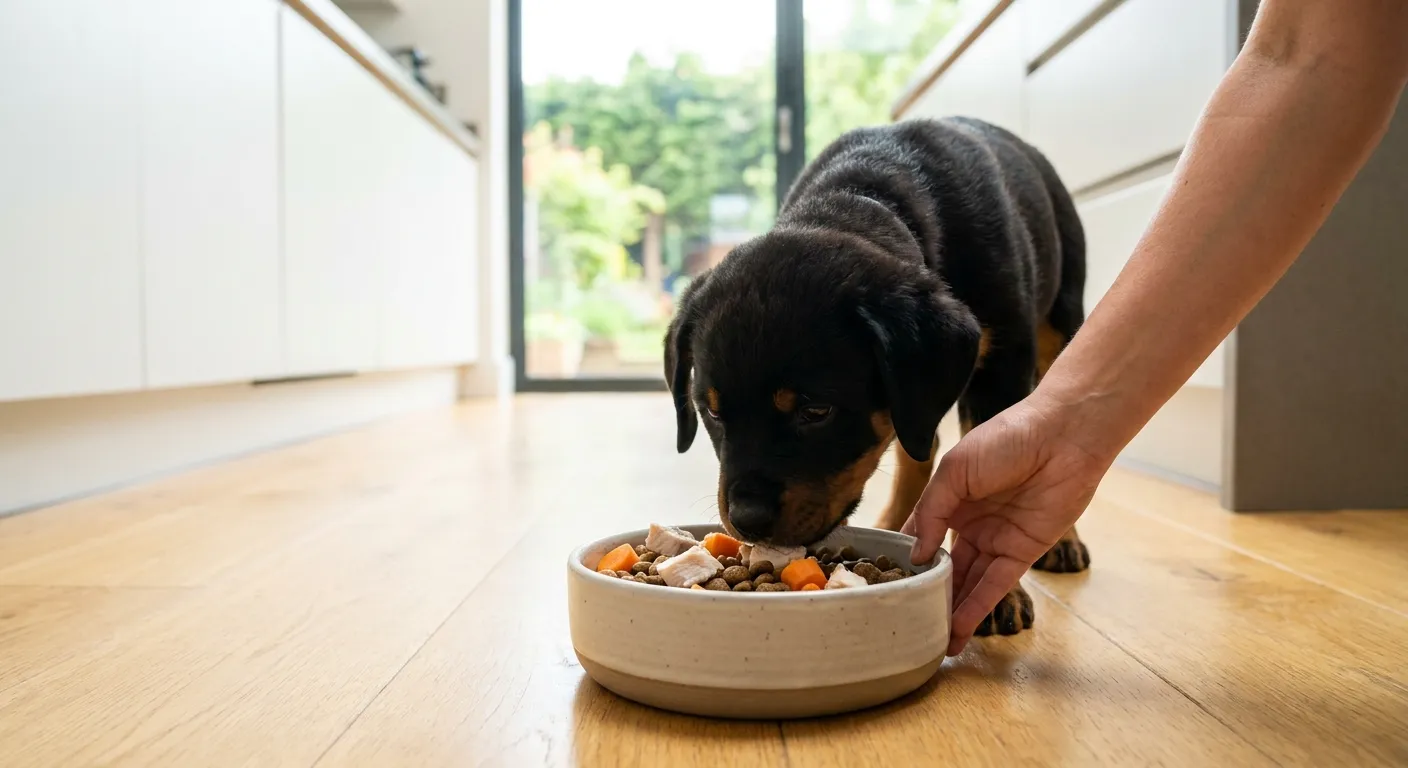
Bringing a Rottweiler puppy home is an exciting time, filled with boundless energy and adorable moments. But beneath that cute, clumsy exterior is a rapidly developing body with specific nutritional demands. The foundation laid during puppyhood, particularly concerning diet, profoundly impacts your Rottweiler’s health and development into adulthood. Ensuring optimal Rottweiler puppy nutrition is paramount for preventing future health issues like skeletal damage and joint problems, which are common in large breeds.
At RottweilerDogGuide.com, we emphasize that from puppyhood to their golden years, we provide the nutritional and wellness guidance you need. Investing in your Rottweiler’s health starts with a well-balanced diet from day one. Therefore, understanding the nuances of feeding a growing Rottweiler is crucial.
The Unique Needs of Rottweiler Puppies
Rottweiler puppies grow incredibly fast, but this rapid growth needs to be carefully controlled. Too much, too fast, can put undue stress on developing joints and bones. This is why a diet specifically formulated for large breed puppies is crucial. These diets are designed to support steady, controlled growth rather than accelerated weight gain. Consequently, choosing the right food is a primary concern for new owners.
Key Nutritional Components for Growing Rottweilers
When evaluating dog food for your Rottweiler puppy, pay close attention to the following. These elements are vital for proper development.
- Protein: High-quality animal protein (e.g., chicken, lamb, beef) is essential for muscle development. Look for identifiable meat sources as the first ingredient. Moreover, ensure the protein content is appropriate for large breed puppies.
- Fats: Healthy fats provide concentrated energy and support brain and vision development. Omega-3 fatty acids are particularly beneficial. In addition, fats aid in nutrient absorption.
- Calcium and Phosphorus: The balance of these minerals is critical for bone development. Large breed puppy foods have carefully controlled ratios to prevent skeletal abnormalities. Avoid supplementing calcium unless directed by a vet. Specifically, an imbalance can lead to serious orthopedic issues.
- Vitamins and Minerals: A complete and balanced diet should provide all necessary micronutrients. Over-supplementation can be harmful. Therefore, always consult with your veterinarian before adding any supplements.
What to Avoid in Your Rottweiler Puppy’s Diet
Just as important as what to include is what to exclude. Avoid feeding puppy foods not specifically designed for large breeds, as these can promote excessively rapid growth. Also, be wary of diets with vague ingredient lists, excessive fillers, or artificial additives. These can hinder proper development and lead to health problems.
- Excessive Calories: Leading to rapid weight gain and putting stress on developing joints. This is a common pitfall for many puppy owners.
- Incorrect Calcium-Phosphorus Ratios: Crucial for skeletal health; imbalances can lead to serious bone deformities. Always check the nutritional analysis on the food packaging.
- Human Foods: Many human foods are toxic or unhealthy for dogs, including chocolate, grapes, onions, and excessive fatty scraps. For example, even small amounts of certain foods can be dangerous.
Feeding Guidelines for Your Growing Rottweiler
Always follow the feeding guidelines on the dog food packaging, but adjust based on your puppy’s individual activity level and body condition. Your vet can help you determine the ideal weight for your growing Rottweiler. Overfeeding is a common mistake that can lead to rapid, unhealthy growth. Consequently, precise portion control is essential.
Establishing a Feeding Schedule
Consistency is key when feeding your Rottweiler puppy. Establish a regular feeding schedule to aid digestion and house-training. Puppies typically need to eat 3-4 times a day until they are about six months old. Afterward, you can gradually transition to two meals daily. Furthermore, avoid leaving food out all day, as this can lead to overeating.
Transitioning Food Types
When changing your puppy’s food, do so gradually over 7-10 days. Mix increasing amounts of the new food with decreasing amounts of the old food. This slow transition helps prevent digestive upset. Similarly, any dietary changes should be introduced thoughtfully.
Choosing the Best Food for Rottweiler Puppy Nutrition
Selecting the right commercial dog food is perhaps the most critical decision for your Rottweiler puppy’s health. Look for brands that conduct feeding trials and meet AAFCO (Association of American Feed Control Officials) nutritional standards for large breed puppy growth. This ensures the food is complete and balanced. In fact, many reputable brands offer excellent large breed puppy formulas.
Understanding Ingredient Labels
Deciphering dog food labels can be daunting. Prioritize foods with: identifiable meat as the first ingredient (e.g., chicken meal, lamb meal), healthy fats (e.g., chicken fat, flaxseed), and appropriate levels of calcium and phosphorus. Avoid vague terms like
Explore more: More from Rottweiler Dog Guide