Maintaining a consistent essential Rottweiler grooming routine is vital, not just for their appearance, but also for their overall health and hygiene. While Rottweilers have a relatively low-maintenance coat compared to some breeds, regular grooming prevents skin issues, keeps their coat healthy and shiny, and allows you to routinely check for any lumps, bumps, or parasites. Establishing a routine early on makes the process less stressful for both you and your dog. Furthermore, consistent care builds a stronger bond between you and your cherished companion.
Why Regular Grooming is More Than Just Appearance
Beyond aesthetics, regular grooming sessions serve as a proactive health check. Brushing helps distribute natural oils, remove loose hair, and stimulate circulation. Nail trims prevent painful overgrowth and potential foot problems. Ear cleaning helps avoid infections, and dental care is crucial for preventing periodontal disease, which can lead to more serious health issues. Consequently, by consistently engaging in thorough Rottweiler grooming, you become more attuned to your dog’s body, enabling early detection of any health concerns. This proactive approach can save on veterinary costs and ensure your Rottweiler lives a comfortable life.
Your Complete Rottweiler Grooming Checklist
A structured approach to your Rottweiler’s care ensures no aspect is overlooked. Here’s a detailed guide to each component of their grooming routine, designed to keep them in peak condition. Importantly, gather all your supplies before you begin. You can find many necessary items in our Grooming & Hygiene section.
Brushing: The Foundation of a Healthy Coat
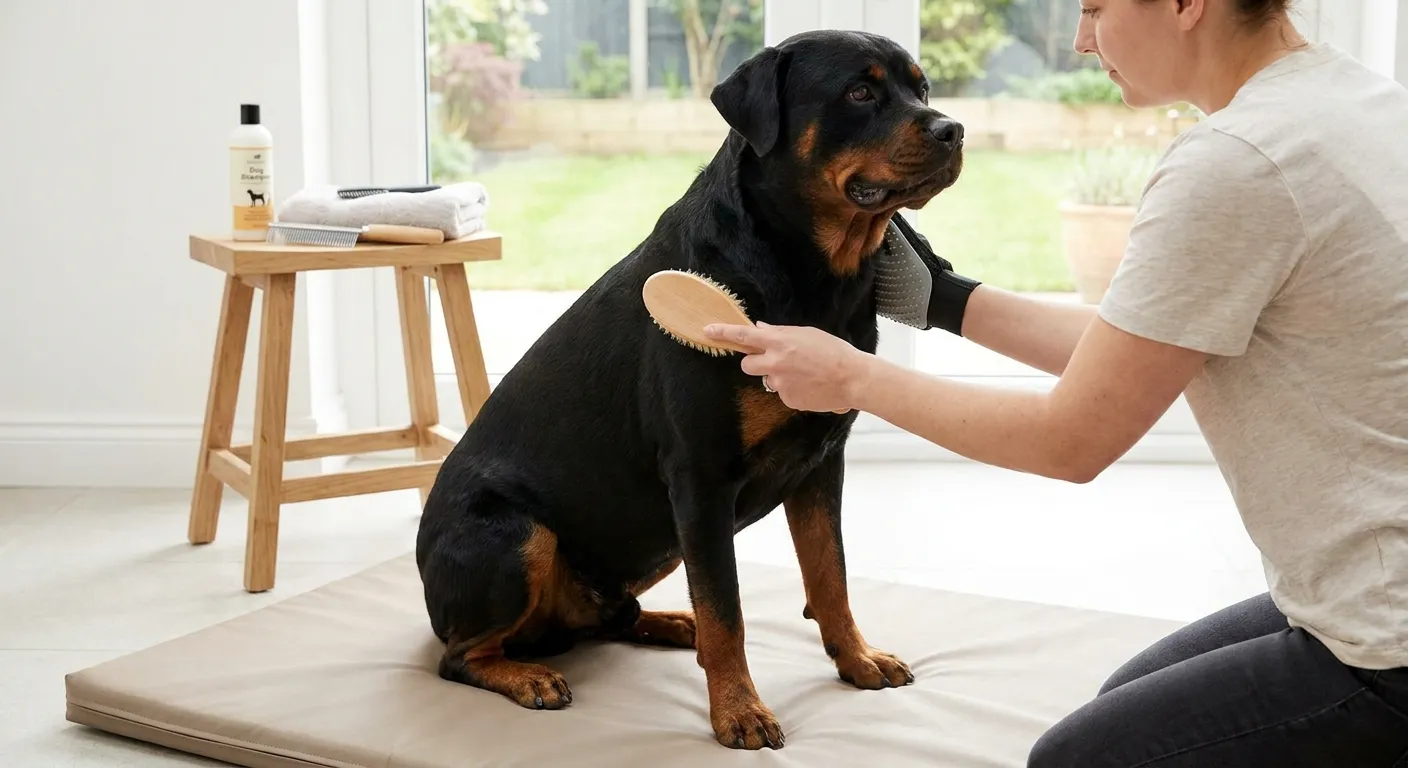
Rottweilers possess a short, dense double coat that sheds moderately year-round, with heavier shedding periods typically in spring and fall. Regular brushing is paramount for managing this shedding, distributing natural skin oils, and keeping their coat sleek and healthy. For instance, a rubber curry brush or a shedding blade works wonders for removing loose hair and stimulating the skin. Aim to brush your Rottweiler at least weekly. During shedding seasons, however, increase this to two or three times a week to effectively remove dead hair before it ends up on your furniture. This also helps prevent matting, though less common with their short coat, and keeps their skin breathing properly.
Bathing: When and How to Wash Your Rottweiler
Rottweilers don’t require frequent bathing. In fact, over-bathing can strip their skin of natural oils, leading to dryness and irritation. Bathe your Rottweiler only when necessary, typically every 4-6 weeks, or if they’ve rolled in something particularly dirty. Always use a dog-specific shampoo that is pH-balanced for canine skin. Human shampoos are too harsh and can cause issues. Begin by thoroughly wetting their coat with lukewarm water. Apply shampoo, working it into a lather, and pay close attention to areas like their belly and paws. Rinse thoroughly until no shampoo residue remains, as leftover product can irritate the skin. Finally, towel dry vigorously and, if your dog tolerates it, use a low-heat hairdryer to ensure they are completely dry, especially in colder weather. This comprehensive Rottweiler grooming step keeps their coat clean without compromising skin health.
Nail Trimming: Preventing Discomfort and Injury
Long nails can cause significant discomfort for your Rottweiler. They can affect their gait, lead to splayed toes, and even cause painful injuries if they snag or break. Therefore, trimming your Rottweiler’s nails every 2-4 weeks, or as needed, is crucial. You’ll know it’s time when you hear their nails clicking on hard surfaces. Use strong, sharp dog nail clippers or a grinder. Be extremely careful to avoid cutting into the quick, which is a sensitive area containing blood vessels and nerves. A quick cut is painful and can bleed profusely. If you’re unsure, ask your vet or a professional groomer for a demonstration. Gradually introduce nail trimming to puppies to make it a positive experience, using treats and praise. Many owners find a dremel tool less intimidating and safer than clippers. Investing in quality grooming tools can make this task much easier.
Ear Cleaning: Guarding Against Infections
Rottweilers have floppy ears, which can create a warm, moist environment prone to yeast and bacterial infections. Checking their ears weekly for redness, odor, or discharge is an important part of essential Rottweiler grooming. Any of these signs could indicate an infection and warrant a vet visit. For routine cleaning, use a vet-approved ear cleaner and cotton balls. Never use cotton swabs inside the ear canal, as this can push debris further in and potentially damage the eardrum. Gently wipe the visible parts of the ear, removing any wax or dirt. If your dog frequently swims or gets their ears wet, consider using an ear drying solution after exposure to water to help prevent moisture-related issues. This preventative care is vital for their comfort.
Dental Care: A Cornerstone of Overall Health
Often overlooked, dental hygiene is paramount for your Rottweiler’s overall health. Periodontal disease is incredibly common in dogs and can lead to bad breath, painful infections, tooth loss, and even impact vital organs like the heart and kidneys. Consequently, brushing your Rottweiler’s teeth several times a week with dog-specific toothpaste and a toothbrush is highly recommended. Never use human toothpaste, as it contains ingredients toxic to dogs. Start slowly, allowing your dog to taste the toothpaste first. Gradually introduce the brush. You can also supplement brushing with dental chews approved by your veterinarian, or consider professional dental cleanings as recommended by your vet. This consistent attention to their oral health is a critical aspect of complete Rottweiler grooming.
Eye Care: Keeping Them Clear and Healthy
While Rottweilers generally have healthy eyes, it’s still important to include eye checks in your routine. Look for any redness, excessive tearing, discharge, or cloudiness. A small amount of clear discharge is normal, but anything colored or excessive could indicate an infection or allergy. Gently wipe away any crusts or debris from the corners of their eyes using a soft, damp cloth or a vet-approved eye wipe. Always wipe away from the eye. If you notice any persistent irritation or changes in their eyes, consult your veterinarian promptly. Early intervention can prevent minor issues from becoming more serious. This simple step contributes significantly to their overall well-being.
Paw Care: Protecting Their Foundation
Your Rottweiler’s paws endure a lot, from walks on various terrains to exposure to different temperatures. Regular paw care is an integral part of essential Rottweiler grooming. Check their paw pads frequently for cuts, cracks, thorns, or any foreign objects lodged between their toes. In addition, keep the hair between their paw pads trimmed to prevent matting and to allow for better grip. Consider applying a paw balm or moisturizer, especially in extreme weather conditions, to prevent dryness and cracking. During winter, protect their paws from ice melt chemicals with booties or by washing their paws thoroughly after walks. Healthy paws are crucial for their mobility and comfort.
Scent Glands and Rear End Hygiene
While not a daily task, monitoring your Rottweiler’s anal glands and maintaining rear-end hygiene is important. Anal glands can sometimes become impacted, causing discomfort and scooting behavior. If you notice your dog excessively licking or scooting their rear, or if there’s a strong, unpleasant odor, it might be time for an anal gland expression. This is typically done by a veterinarian or a professional groomer. Furthermore, after bathing, always ensure the area around their tail and anus is clean and dry to prevent skin irritation. This often overlooked aspect of Rottweiler grooming ensures their complete comfort and health.
Making Grooming a Positive Experience
Grooming doesn’t have to be a chore for either you or your Rottweiler. In fact, with the right approach, it can become a bonding experience. Start grooming early in puppyhood to acclimate your dog to being handled. Keep sessions short and positive, especially at first. Use plenty of high-value treats and praise to reward calm behavior. For example, if your dog is anxious about nail trims, introduce the clippers slowly, letting them sniff them, then giving a treat. Gradually progress to touching their paws, then clipping one nail, always rewarding. Consider investing in Training & Control Gear to help manage your dog during grooming sessions if they are particularly squirmy. If your dog shows signs of stress or aggression, take a break and try again later. Never punish them during grooming, as this will only create negative associations. Consistency and patience are truly key to a healthy, happy, and well-groomed Rottweiler. Regular, gentle handling also allows you to familiarize yourself with your dog’s body, making it easier to spot any abnormalities early on. This proactive approach to essential Rottweiler grooming fosters trust and cooperation.
Common Grooming Challenges and Solutions
Even with the best intentions, grooming can present challenges. For instance, some Rottweilers might be reluctant to have their paws handled. To overcome this, start by gently touching their paws for a few seconds, then reward them. Gradually increase the duration and intensity of the touch, eventually simulating a nail trim without actually clipping. Similarly, if your dog resists brushing, try using a softer brush initially and combine it with gentle massages and treats. If bathing is a struggle, consider using a non-slip mat in the tub and a lick mat smeared with peanut butter to distract them. For dogs with severe anxiety around grooming, consulting a professional trainer or veterinary behaviorist might be beneficial. They can offer tailored strategies to make the process less stressful. Remember, every dog is an individual, and finding what works best for your Rottweiler might require some experimentation. However, persistence with positive reinforcement will yield results. Rottweiler grooming should always be a calm and reassuring process.
The Benefits of Professional Grooming
While DIY Rottweiler grooming is essential, there are times when professional help can be invaluable. Professional groomers have specialized tools, expertise, and facilities that can make certain tasks, like complex de-shedding treatments or anal gland expressions, much easier and safer. They are also adept at handling dogs with behavioral challenges during grooming. If you struggle with nail trims, or if your Rottweiler has particularly thick undercoat during shedding season, a professional groomer can provide relief for both of you. Furthermore, they can often spot skin issues or health concerns that a pet owner might miss. Consider scheduling occasional professional grooming sessions to supplement your home routine, especially for tasks you find difficult or intimidating. This can be a great way to ensure all aspects of your Rottweiler’s grooming needs are met without undue stress.
Conclusion: Embracing a Holistic Approach to Rottweiler Grooming
In conclusion, establishing and maintaining a consistent essential Rottweiler grooming routine is a cornerstone of responsible pet ownership. It goes far beyond simply keeping your dog looking good; it’s a vital component of their overall health, hygiene, and well-being. From regular brushing and bathing to diligent nail, ear, eye, and dental care, each step plays a crucial role in preventing potential health issues and ensuring your Rottweiler remains comfortable and happy. Remember to approach grooming with patience, positive reinforcement, and consistency, transforming it into a bonding experience rather than a stressful chore. By integrating these practices into your daily life, you’ll ensure your Rottweiler not only shines on the outside but thrives from within. This holistic approach to their care will undoubtedly contribute to a longer, healthier, and more joyful life for your beloved companion. For more guidance on their health and wellness, explore our Health & Wellness section.
FAQ: Answering Your Rottweiler Grooming Questions
How often should I brush my Rottweiler?
You should brush your Rottweiler at least once a week to manage shedding and distribute natural oils. During heavy shedding seasons (typically spring and fall), increase brushing to two or three times a week for optimal coat health. Regular brushing is a key part of their coat care.
What kind of shampoo is best for a Rottweiler?
Always use a dog-specific, pH-balanced shampoo. Avoid human shampoos, as they can dry out your Rottweiler’s skin and cause irritation. Look for shampoos designed for sensitive skin if your dog has any dermatological concerns. We offer a range of suitable products in our Grooming & Hygiene section.
How do I trim my Rottweiler’s nails without hurting them?
Use sharp, strong dog nail clippers or a grinder. Only trim the tip of the nail, carefully avoiding the quick, which contains blood vessels and nerves. If you’re unsure, ask your veterinarian or a professional groomer for a demonstration. Introduce nail trims gradually with treats and praise.
Is dental care really necessary for Rottweilers?
Absolutely. Dental care is crucial for preventing periodontal disease, which can lead to pain, infections, and even affect your dog’s vital organs. Brush your Rottweiler’s teeth several times a week with dog-specific toothpaste and a toothbrush to maintain good oral hygiene.
When should I take my Rottweiler to a professional groomer?
Consider professional grooming if you struggle with specific tasks like nail trims, if your dog has excessive shedding, or if you notice any skin issues you can’t manage at home. Professional groomers have specialized tools and expertise. It’s a great way to supplement your regular home care routine.
What are some signs of ear infection in a Rottweiler?
Signs of an ear infection include redness, a strong unpleasant odor, excessive scratching of the ears, head shaking, or a dark discharge. If you notice any of these symptoms, consult your veterinarian for diagnosis and treatment. Regular ear checks are part of effective Rottweiler care.