
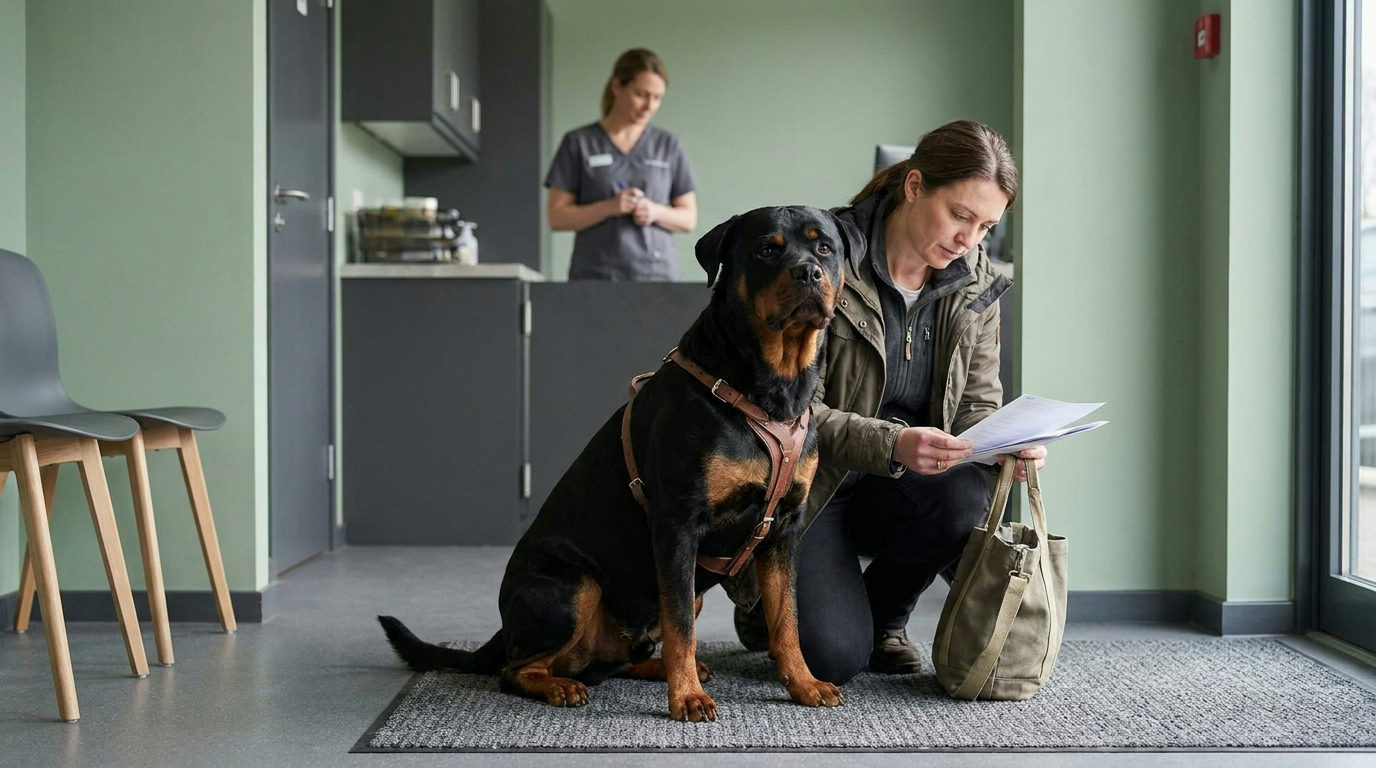
Early detection of cancer in Rottweilers begins with reporting a concerning change to your veterinarian, not deciding at home that a lump or limp is cancer. Describe what you have noticed, arrange the assessment the clinic recommends and keep track of the next step. A symptom list cannot confirm a diagnosis or guarantee that every cancer will be found early.
This is general information, not veterinary advice, a diagnosis or treatment plan. Consult a qualified veterinarian about new or changing concerns. Seek urgent veterinary attention for breathing difficulty, collapse, severe distress or a distended abdomen. Do not delay because you are trying to complete a home check or compare your dog with a breed-risk statistic.
Understand why a change needs assessment
The AVMA’s cancer-in-pets brochure explains that cancer signs may be subtle, absent or similar to signs of other conditions. It describes concerns including changing lumps, appetite or weight changes, persistent sores and unexplained pain or lameness. These observations deserve veterinary attention, but they do not prove that cancer is their cause.
Begin with the specific change that applies to your dog. Write when you first noticed it and how it differs from the familiar routine. A breed article’s disease list should not replace that description. You can tell the clinic that you are worried about cancer while still keeping the actual observation distinct from the suspected explanation.
Avoid assigning a prognosis from a photograph or another owner’s story. Different conditions can appear similar, and a confirmed cancer diagnosis still needs individual assessment. The useful first question is what examination is appropriate for this Rottweiler. Leave outcome predictions for the treating team after it has the relevant information.
Make a clear first-call note
Prepare the dog’s identification, your contact information and the main observation. Explain when it began, whether it has changed and whether eating, movement or general comfort has also changed. Mention existing diagnoses and treatment. If a detail is uncertain, say so instead of turning an estimate into a settled fact.
Ask how promptly the clinic wants to see the dog and what should trigger an emergency call before the appointment. Record the answer and the service to use after hours. This article does not prescribe a fixed number of days to monitor a lump or a universal age to begin testing. The clinical team can determine the appropriate arrangement.
If you suspect ingestion of a harmful substance or another immediate hazard, include that in the call. Do not focus so narrowly on cancer that you omit information about a different possible emergency. The clinician needs the full relevant history rather than a narrative already shaped around one diagnosis.
Describe a lump without repeatedly manipulating it
If you notice a new lump during ordinary care, note its location and when it was first noticed. Ask the clinic whether a photograph or another simple record would be useful. Do not squeeze, puncture, apply a product or repeatedly press the area to determine what is inside. A home description should not become an improvised procedure.
The AAHA oncology diagnostic guidance explains that a mass’s type and likely behaviour cannot be determined solely from touch or imaging. It discusses sampling for microscopic assessment. A lump that seems soft or moves under the skin should not be declared harmless from that observation alone.
If several areas concern you, make a location list so you can point them out at the visit. Keep each observation separate rather than assume they share one cause. Ask how the team wants future changes reported. An earlier assessment of one lump does not automatically classify every new lump the dog develops.
Record movement changes in ordinary language
Write which activity has changed: getting up, walking along a familiar route, using a step or resting comfortably. Describe the circumstances and timing. A note about the dog avoiding a particular movement is more useful than a label such as definitely bone cancer. Do not force the movement again to demonstrate the concern.
Ask the clinic about appropriate activity while you await assessment. Follow its instructions and explain if they are difficult to carry out. Do not start a strengthening exercise, manipulate a limb or use human pain medicine based on an online suggestion. The current assessment determines what care is appropriate.
If a video already exists from an ordinary situation, ask how to send it. Do not create a stressful demonstration or delay an urgent call for better footage. A change in movement can have different explanations. The recording supports the examination; it cannot replace one or establish the diagnosis on its own.
Bring eating and weight information with context
Copy the exact foods, amounts and measuring units currently used. Include treats, supplements and access to another animal’s food. If appetite has changed, explain what was offered and what the dog actually ate as far as you know. An empty shared bowl may not tell you which animal ate its contents.
Bring reliable weight records with dates if available. Ask the team which future measurements are useful and how they should be taken. Do not calculate a predicted cancer stage or restrict feeding because the dog appears different. The record should make the change easier to assess without turning it into a home diagnosis.
Report refusal to eat or a concern about comfort promptly. Do not keep switching foods to postpone assessment. If you have already made a change, tell the clinic exactly what changed and when. It needs the real timeline, including actions taken before the appointment, to understand the situation.
Prepare for the examination and any proposed test
Gather prior reports and the current medicine and supplement list. Follow the clinic’s preparation instructions for this visit. Do not invent a fasting rule or stop a prescription from a general article. Tell the team if handling, travel or the waiting environment is difficult so it can advise on a suitable arrangement.
When a test is proposed, ask what question it is intended to answer. Is the team examining cells, obtaining tissue information or assessing another aspect of health? Request an explanation of the result’s possible limits and how it could affect the next decision. These are discussion questions, not a recommendation that every dog receive the same test panel.
Ask when and how the results will be communicated. Write who you should contact if you have not heard by the clinic’s stated time. Keep a copy of the report. An unanswered test result should not disappear into a household assumption that no news means there is no concern.
Distinguish diagnosis from further assessment
AAHA describes tumour grade and stage as different concepts: grade concerns microscopic appearance, while stage concerns the extent of disease. Ask the clinician which information is known for your dog and which remains to be assessed. Do not combine these terms into an outcome prediction from a general internet table.
If the team suggests additional assessment, ask its purpose, available alternatives and how the information would influence care. Explain practical constraints candidly so the plan can be discussed. This guide does not quote treatment prices, expected survival times or guaranteed benefits. Those questions require the actual findings and individual clinical conversation.
A specialist referral can raise its own practical questions. Ask which records are needed, who arranges the appointment and whom to contact about changes while waiting. Keep the current care instruction accessible. Referral paperwork and an appointment date do not replace the plan for the dog’s needs in the meantime.
Keep urgent contacts and a current care card
Cornell’s urgent-care information identifies collapse, respiratory distress and a distended abdomen among emergency situations. Contact the appropriate emergency service in your area if these occur. Do not continue routine observation because a diagnostic appointment is already booked.
After the clinical discussion, make a dated card with the confirmed findings if any, current instructions, next step and contact details. Tell other caregivers which changes should prompt a call. Keep uncertain questions separate from confirmed diagnoses so they do not become misleading facts during a handover.
Early detection of cancer in Rottweilers is an aim supported by attention and veterinary assessment, not a promise from a checklist. Notice meaningful changes during ordinary care, report them clearly and follow through on the agreed examination and results. Your next useful action is a conversation about this dog, with accurate observations and a clear route to help.